Non Weight Bearing Challenges: Solutions For Caregivers
After a loved one’s surgery, many caregivers find themselves learning to manage one challenge after another. Adding weight bearing restrictions can add a whole new level of difficulty. You may find yourself breaking down small tasks and movements in ways you’ve never thought of before in order to support their safety.
Whether your care recipient had an operation after a bone fracture or is recovering after a planned surgery, it can be overwhelming to deal with a hospital discharge. That’s why Trualta has educational resources dedicated to helping you manage this time of transition. Check if you have free access.
First, let’s start with the basics. What is non weight bearing?
Defining Non Weight Bearing
Weight bearing restrictions are rules from a surgeon that a patient must follow after surgery. They dictate how much body weight a person can put on a certain body part, which might be called the:
- Injured limb
- Operated limb
- Affected limb
The rules are in place to allow the injured area time to heal properly after the operation. The surgeon will decide how long weight bearing restrictions need to be followed. For example, 6 weeks after the operation. If the rules aren’t followed, your care recipient could re-injure the surgery site, and the operation could fail.
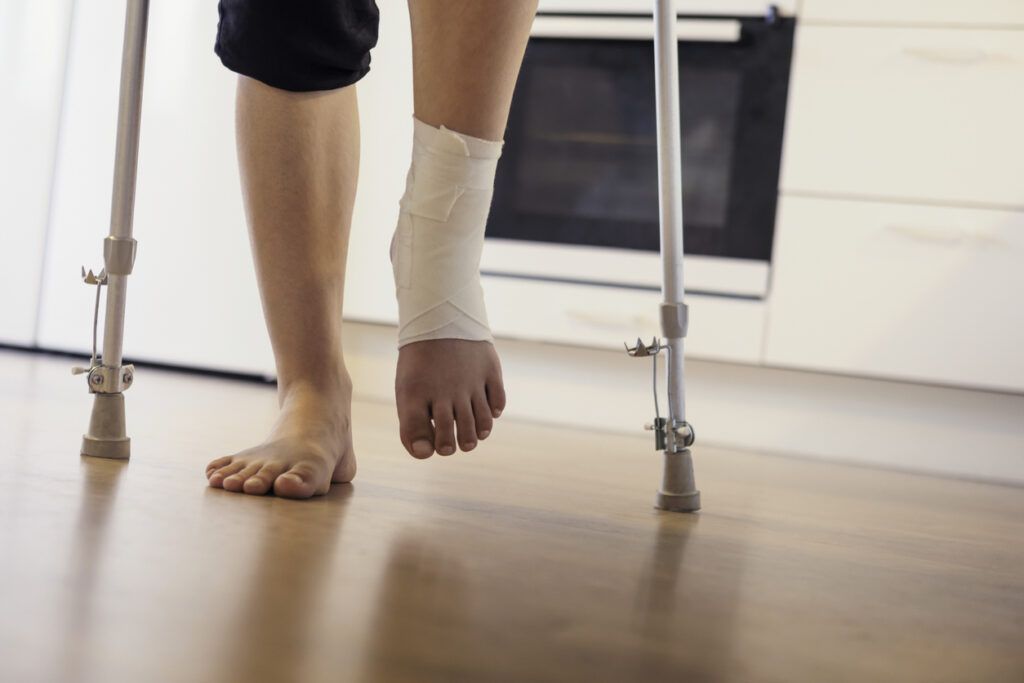
If the surgeon says your care recipient is non weight bearing, this means they aren’t allowed to put any body weight through that limb (the arm or the leg). They aren’t allowed to lean on their arm (if upper extremity surgery), or they aren’t allowed to stand on their leg (if lower extremity surgery).
The surgeon may adjust the weight bearing status as your care recipient heals:
- Toe touch weight bearing (if lower extremity)
- Partial weight bearing
- Weight bearing as tolerated
- Full weight bearing
3 Solutions To Non Weight Bearing Challenges
The specific difficulties your care recipient faces with mobility and activities will depend on factors like:
- Whether their arm or leg is the affected limb (and whether it’s their dominant or non-dominant side)
- Strength
- Balance
- Pain
- Other chronic conditions
- Cognition
In general, here are some strategies you can try with your care recipient while they have non weight bearing restrictions.
Solution 1: Get Expert Training
Depending on your care recipient’s injury, you may need to help them with certain activities of daily living, including transfers:
- In and out of bed
- Up and down from a chair, wheelchair, or toilet
- In and out of the shower
Research shows that caregivers are at high risk for musculoskeletal discomfort from caregiving activities, including transfers. This is likely due to the fact that caregivers receive little to no training on how to do this properly to avoid injury. Learning how to properly assist with mobility and transfers can keep you both safe.
Talk to your care recipient’s occupational therapist (OT) or physical therapist (PT) before discharge. Ask them to train you on how to help with common transfers using your care recipient’s mobility device, like a walker or cane. They can also show you and your care recipient how to keep weight off of their limb during these transfers. If possible, ask for a step-by-step guide or videos on how to do it properly, so you can review and practice on your own.
Solution 2: Make Your Home Safe
While your care recipient can’t put weight on one of their limbs, it’s common to worry about how they’ll move around or perform activities safely. Talk to the OT or PT on your care recipient’s healthcare team for specific recommendations that meet your care recipient’s needs. The equipment and assistive device recommendations will likely change depending on where your care recipient is non weight bearing.
Here are examples of possible changes you could make to each room for a person who is non weight bearing on their lower extremity:
- Living room: Add a sturdy cushion or furniture risers to their favorite chair to add extra seat height. This can make it easier to stand up. Remove throw rugs and clutter to prevent tripping. Make a clear path for their mobility device.
- Kitchen: Remove commonly used items from cupboards and cabinets and place them on the countertops for easy reach. Remove throw rugs that could cause tripping. Set up a sturdy chair with armrests to sit at a table while eating or doing tasks.
- Bathroom: In the shower, add a grab bar, tub transfer bench, or shower chair. Use a handheld shower to control the stream. Use a nonslip bathmat. At the toilet, add grab bars, a toilet safety frame, or a raised toilet seat to make it easier to stand up. Ensure all equipment is medical-grade.
- Bedroom: Set up a temporary bedroom on the same floor as the bathroom, or add a bedside commode. Ensure the bed isn’t too low or too high. Add a bed rail to give them something to hold onto while standing up.
- Hallways: Remove throw rugs and clutter. Add nightlights or motion-sensor lighting to prevent falls.
Solution 3: Get Creative
Use these tips to support your care recipient’s independence while they heal, and also lighten your load. Talk to the OT or PT before using these tips, as some may not be appropriate for all types of non weight bearing restrictions:
- Use containers with lids. Pack all food and drinks into containers with tight lids to make them easier for your care recipient to carry around the house without spilling.
- Get a backpack to carry items from place to place. For example, if they use a walker but want to carry a container of food to the microwave, they can put it into their backpack.
- Make activity baskets. Put commonly used items in a basket so they have everything they need in one place. You can make one for each room and put it on side tables, counters, and nightstands. For example, next to their favorite easy chair, make a basket filled with a tissue box, the remote, their glasses, a book, and a snack.
- Make dressing easier. Look into companies that create adaptive clothing and shoes. These garments are designed to be easier to take on and off with velcro or snaps. In some cases, the wearer can get dressed by shifting their weight instead of having to reach, bend, or stand up.
- Use dressing aids. A long-handled reacher can make it easier to pick items up off the ground or pull up pants. A sock aid can help them put on socks. A long-handled shoe horn can help them put shoes on without bending.
- Attach a bag or basket to their walker. If they use a metal frame walker, they can attach this to carry items like their phone, a snack, a notepad and pen, or anything else around the house with them. Ensure the bag or basket doesn’t drag on the floor. A fanny pack is also a great option if they don’t use a walker.
Want to watch videos to better understand or chat with a care coach for more guidance? Check if you have free access to Trualta.
References