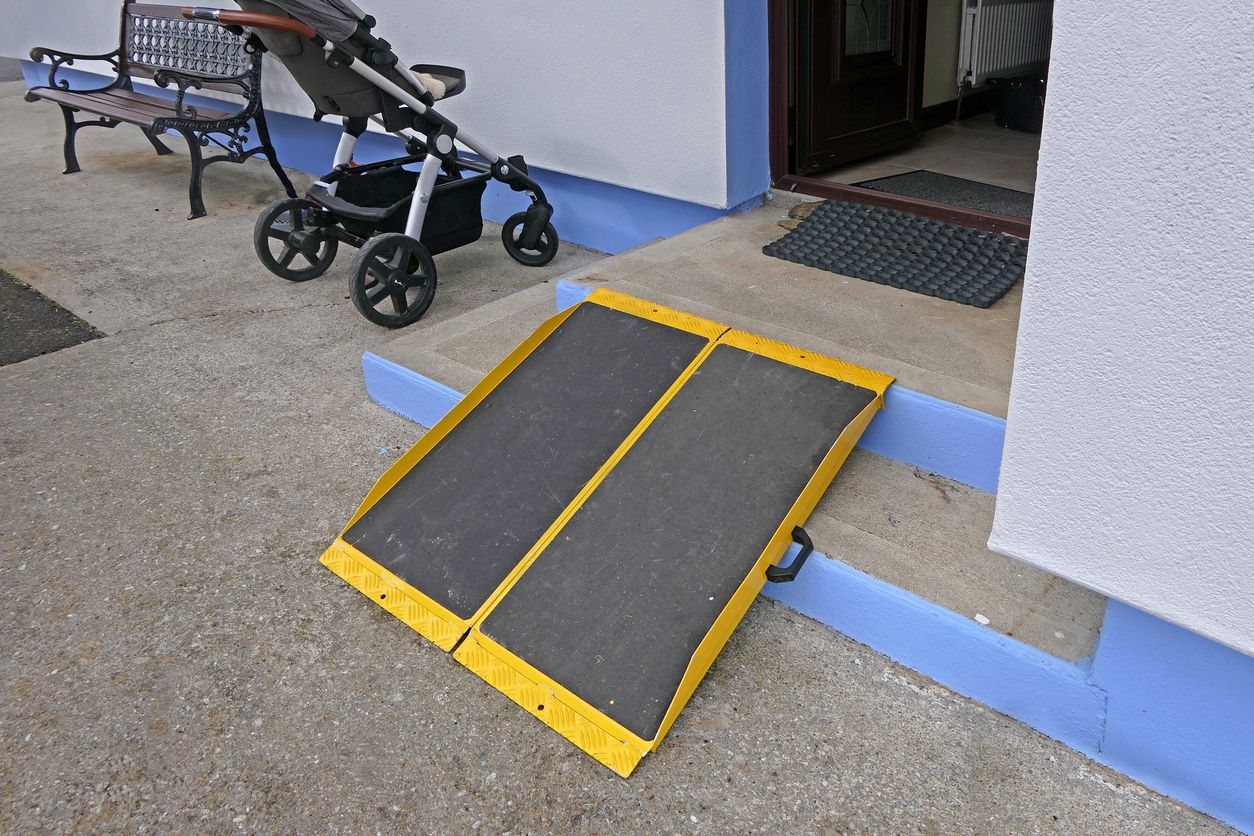
Is A Portable Wheelchair Ramp Safe For Everyday Use?
Wheelchair ramps can improve mobility for your care recipient. They allow people who use wheelchairs easier access to homes and vehicles. Portable ramps can be safe to use if installed and used correctly.
If you think your loved one could benefit from portable wheelchair ramps, consider the safety issues first. Also keep the costs in mind. Medicare generally doesn’t cover wheelchair ramps because they’re considered home modifications.
Here, we’ll talk about:
- What a wheelchair ramp is
- How it can benefit a care recipient
- The potential safety issues
- How to use portable ramps safely
Looking for more information about improving mobility for someone you care for? Check out this link to find out if you have free access to additional Trualta caregiver resources.
What Is A Portable Wheelchair Ramp?
A wheelchair ramp helps people who use wheelchairs to access elevated areas. Ramps are used to navigate around stairs, into buildings or rooms, and to get into vehicles.
A portable wheelchair ramp is designed to be lightweight and movable, so you can set it up and use it temporarily. Portable ramps can be used in various places and settings where a wheelchair user needs access. They’re typically made of lightweight materials, like durable aluminum.
You might use portable wheelchair ramps to get a wheelchair in and out of a vehicle, for example. In this situation, you set up the ramp to help someone get into the vehicle. You then take the ramp down, fold it, and store it in the vehicle to be set up and used again at the destination.

What Are The Benefits Of Using A Portable Ramp?
The main benefit of using portable wheelchair ramps is to improve accessibility and mobility. People who use wheelchairs as mobility aids cannot use stairs unless they have people willing and able to lift them. Most caregivers can’t do this at all or safely.
If your loved one needs a wheelchair or other mobility device to get around, a portable ramp can open up access to new places. The portability of vehicle ramps or threshold ramps makes them more versatile and cost-effective than permanent ramps. They don’t require structural modifications to the home.
Portable van ramps open up opportunities to go to more places. If you and your loved one don’t have access to public transportation, a vehicle might be your only option. Using a portable single fold ramp could be less costly than installing a lift in the vehicle.
What Are The Safety Issues With Portable Wheelchair Ramps?
Portable wheelchair ramps have many benefits, but it’s important to consider safety. There are safety concerns if you choose the wrong ramp, install it incorrectly, or use it incorrectly.
Angle Of Incline
The slope of a ramp should be appropriate for the location where you use it. Too steep, and your loved one could roll backwards and be hurt. The Americans with Disabilities Act (ADA) recommends a maximum slope of 1 inch of rise for every 12 inches of ramp length.
Ramp Surface
A ramp’s surface can be unsafe if it lacks adequate traction. It should be slip-resistant even when wet. Even a good surface with traction can become dangerous if it isn’t kept clean and free of debris.
Handrails
Handrails are important to prevent the wheelchair from tipping over the side. If your loved one can walk but needs a ramp for extra assistance, the handrails are especially important for stability. Ramps that rise more than six inches should have handrails on both sides.
Capacity
It’s important to choose the right ramp for the job. Capacity is how much weight it can bear. Some ramps are designed for heavier electric wheelchairs. Others are only intended for lighter manual chairs.
Landing Surfaces
Portable wheelchair ramps can be installed and used in various spots. It’s important to set them up so that the landings at the bottom and top of the ramp are stable and level. Otherwise, the ramp could wobble or even tip over.
Set Up & Use
A sturdy ramp with all the safety features can still be unsafe if used improperly. If it is not set up according to directions, it could wobble, collapse, or break and hurt the user. You can also cause your loved one to get hurt if you use a ramp in an inappropriate way. For example, if you use a ramp that is too short for a given height, the incline will be too steep.
Caregiver Safety
It’s also important to consider your safety when using an entry ramp. When using and loading ramps, you should be able to fold and lift them safely. Try out models before buying them to be sure they aren’t too heavy.
Shop with reputable medical supplies companies and check for product safety alerts to be sure you’re getting a safe product.
How To Use Portable Ramps Safely
First, be sure you’ve chosen a high-quality ramp with the right weight capacity for your loved one and their wheelchair. It should be wide enough to accommodate their chair and have an appropriate incline for where you want to use the ramp. Ensure the surface has good traction and is clean, and that the ramp has handrails.
Set Up The Ramp Correctly
Because it’s portable, you’ll be setting up and taking down the ramp more than once. To ensure safety, take the time to do it correctly every time. Follow the instructions that came with the ramp. Ensure the two landings are stable and even. Secure the ramp to the landings according to instructions.
Prepare The Ramp & The Chair
Once the ramp is set up, make sure it and the wheelchair are ready to be used safely. Clear any objects or debris off the ramp and away from the landings. There should be enough room for the chair to maneuver at the top and bottom. Be sure your loved one is secure in their chair before ascending or descending the ramp. Use seat belts or anti-tip features if available.
Ascend & Descend With Care
When using the ramp, go slowly and with care. Center the wheelchair on the ramp to prevent getting too close to either edge. If necessary, ask another person to support your loved one in the chair as you push them up or down.
Paying For A Portable Ramp
Because Medicare doesn’t cover the costs of a portable wheelchair ramp, you might want to look into other funding sources. A private insurer might cover some or all of the cost, but many plans do not.
Ramps, even portable ramps, can be considered home modifications. Eldercare Locator and the Administration for Community Living are both good resources for home services and modification resources.
Wheelchair ramps can be useful and safe tools for caregivers and their care recipients. Be aware of all the safety considerations before purchasing or using a portable ramp. Your loved one can benefit, but only if you use it safely.
Don’t forget to check out this link to find out if you have free access to additional Trualta caregiver resources.
References
- https://www.healthline.com/health/medicare/does-medicare-cover-wheelchair-ramps#medicare-coverage
- https://www.access-board.gov/ada/guides/chapter-4-ramps-and-curb-ramps/
- https://www.braunability.com/us/en/blog/accessible-living/outdoor-wheelchair-ramp.html
- https://www.nsm-seating.com/journal/installing-wheelchair-ramps-know-the-safety-aspects/
- https://eldercare.acl.gov/public/resources/factsheets/home_modifications.aspx
- https://acl.gov/sites/default/files/news%202017-03/Home_Modification.pdf