Music Therapy For Dementia: What The Research Says
Music therapy is a growing field. It uses musical interventions to achieve specific goals for patients of all types, including those with dementia. Many senior living, assisted living, and dementia care facilities now offer music therapy because of its many benefits.
Whether they get involved in one-on-one or group music therapy, your loved one could see improved memory, a better mood, and more. Here, we answer several important questions about it:
- What is music therapy?
- How does music affect the brain?
- What are the research-backed benefits of music therapy?
- Can music help even those with severe dementia?
- Does music benefit caregivers, too?
- How can I get music therapy for my loved one?
- How can we pay for music therapy?
Interested in learning more about caring for someone with dementia? Check here to see if you have free access to the Trualta learning library and community of caregivers.
What Is Music Therapy?
Music therapy uses music and musical interventions to improve well-being and accomplish specific goals. It’s led by a trained music therapist. According to the American Music Therapy Association, music therapy can help people express their feelings, manage pain, improve communication, and boost memory.
Music therapists have completed specialized training. They customize music interventions to help their patients with specific goals and needs. Active music therapy interventions might include:
- Listening to music to relax or evoke specific feelings
- Singing or playing instruments
- Composing music or writing lyrics
- Dancing or moving to music
- Improvising with music
- Talking about or discussing music and lyrics
Music therapy is formal and therapeutic. There is a therapeutic relationship between the patient and the therapist, just like in other types of therapy.
Music therapists work with all types of patients to improve mental, emotional, social, cognitive, and even physical wellness. Patients are managing a range of conditions, including dementia.
Music & The Brain
You might have noticed that your loved one remembers music from their past, even when they struggle to remember other things. According to research, the area of the brain responsible for music memory is different from the area associated with other memories.
The musical memory area of the brain isn’t as impacted by cognitive declines. This helps explain why your loved one can still remember those favorite old songs, even on bad days.
Music can trigger emotions in older adults. An old favorite song might help your care recipient feel happy or less distressed because it triggers happy memories. Another song might remind them of a bad memory and associated feelings.
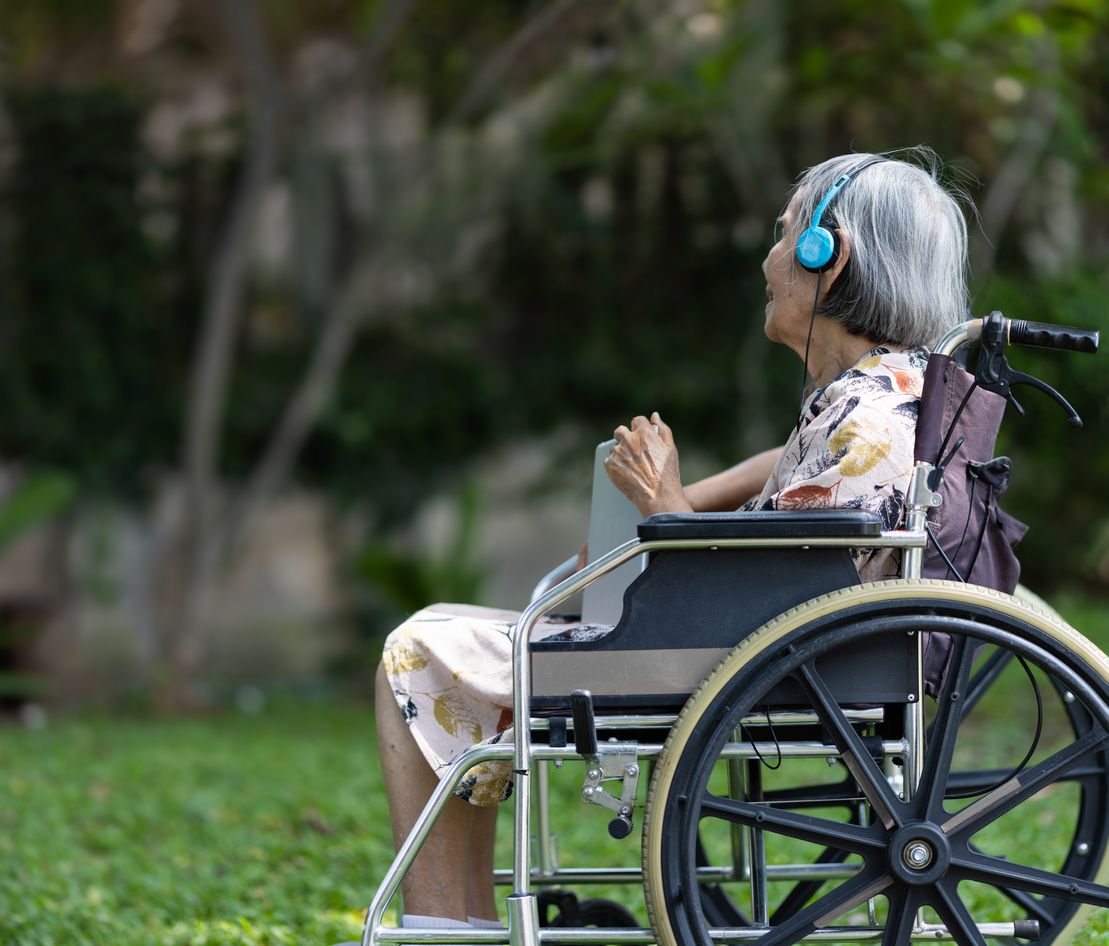
Music also acts on the brain’s reward system. It pushes the brain to release dopamine. Dopamine is a type of compound, called a neurotransmitter, that makes you feel good. Whether you have dementia or not, music affects the brain. Music listening has the potential to make you feel nostalgic, happy, or relaxed.

The Benefits Of Music Therapy For Dementia Patients
Music affects the brain in young people and healthy individuals as well as older adults with dementia or Alzheimer’s disease. Many studies have found that there are specific benefits of music therapy interventions for older adults with dementia.
Music Improves Mental Health
A large review evaluated 82 separate studies on music therapy and dementia. The authors of the review found several clear benefits of music therapy for dementia patients. The most important was an improvement in mental health symptoms.
The patients involved in music therapy, according to the review, saw improvements in anxiety and depression. There were some improvements in agitation among patients. The patients were also less apathetic after participating in a music activity of the intervention.
Some of the interventions used in the studies from the review include:
- Song writing
- Directed music listening
- Relaxation exercises with music
- Discussing lyrics to songs
- Moving or dancing to music
- Instrument lessons with adaptations as needed
- Singing
The review authors found several other benefits to music therapy for dementia patients. Improving mood and mental health symptoms was important. They also saw that patients in music therapy had better cognitive functioning, memory, daily functioning, and overall quality of life.
Music Reduces Agitation
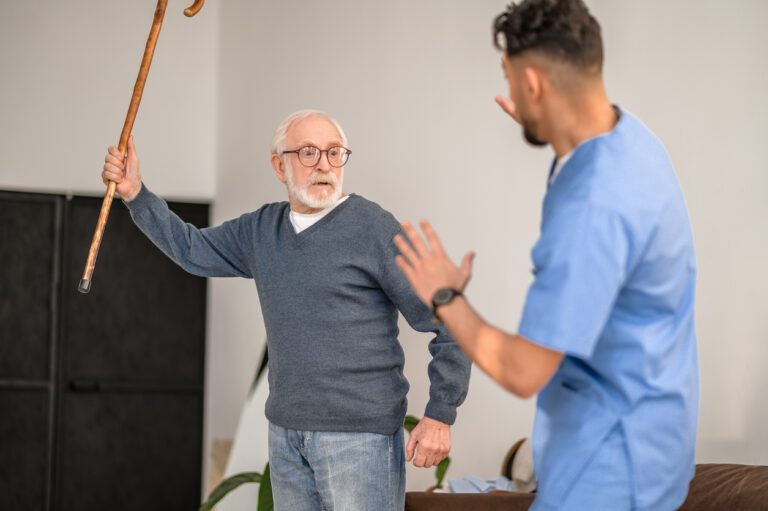
Agitation and distress are common and challenging dementia symptoms. Some patients even become aggressive and angry, posing a danger to themselves and others. Being able to reduce and manage agitation improves wellness and quality of life for both patients and caregivers.
Music therapy and even informal music listening and participation have been shown to reduce agitation. Music improves mood overall. Listening to and interacting with familiar music is particularly important. It often leads to a pleasurable response: smiling, laughing, or dancing. Singing along with familiar songs boosts mood and helps people feel less distressed.
Music Therapy Improves Language & Communication
The same large review mentioned above also found studies to show that music therapy could improve patients’ verbal fluency. Singing, songwriting, and reading and discussing lyrics all helped.
People with dementia often struggle with verbal fluency. This means they have difficulty finding the right words to express themselves. Music therapy helps improve this, allowing patients to choose and use words more quickly and effectively. This boosts their communication skills overall, helping them interact better with others.
Music Improves Memory
Memory loss is one of the key dementia symptoms. Anything that can improve memory is welcome for both the patient and their caregivers. One study looked at the benefits of music therapy for people with certain conditions, including dementia.
This study, like others, found that music could boost mood and reduce mental health symptoms like depression. It also found that music therapy can improve memory, at least in people with mild Alzheimer’s disease or mild cognitive impairment. Unfortunately, those with advanced dementia did not see a memory improvement.
In the large review paper, the authors found a few more studies that proved music therapy could boost memory. Four of the studies they reviewed showed patients with significant memory improvements after a musical intervention. The most clear improvements came from studies that used multiple types of music based interventions.
Music Therapy Leads To Better Cognitive Functioning
Cognitive decline caused by dementia includes memory loss, difficulty with communication, problem-solving, planning, and concentration, and confusion, disorientation, and poor judgment.
There are several ways to measure cognitive ability and functioning. Some studies have shown that music therapy can improve several of these, not just memory. A review of eight of these studies involved nearly 700 dementia patients.
Some of the improvements seen in patients in the study included memory, abstract reasoning, spatial orientation, language processing, problem-solving, and attention. The studies also showed that patients had improved mood and mental health symptoms after music therapy.
It’s important to note that the studies showed different results with different types of music therapy. Patients who were actively involved in therapy sessions (making music, dancing) had more cognitive improvements. Those who participated in receptive therapy (only listening to music) still had benefits but were not as significant.
Another interesting finding from the review involved the type of music used in interventions. Only one of the reviewed studies showed no cognitive benefits to patients. In this study, the therapist chose the music, whereas the patients chose the music in the studies that showed benefits. It is clear that preference is a big part of getting the most out of music therapy.

Music Therapy Benefits Caregivers Too
As a caregiver, you can also benefit from music therapy. At the most basic level, when your care recipient feels better, so do you. Their improved mood and other factors make your role as a caregiver easier.
Caregivers can also benefit more directly from music therapy sessions. A study published in 2022 looked at how music interventions could help both dementia patients and their caregivers.
The study involved several patients in two different memory care facilities. The researchers used a 12-week music therapy intervention with the patients and caregivers. Led by music therapists, the patients and caregivers listened to live concerts and then participated in breakout sessions.
The researchers found that dementia patients who participated in the program had improved social behaviors. They interacted better with their caregivers, made more eye contact, were calmer, and were more focused during interactions.
The caregivers in the study reported feeling less stressed. They felt they could better connect with the care recipients, and their relationships improved.
Using Music Informally
Dementia patients can benefit from formal music therapy with a trained professional. They can also benefit from using music informally without a therapist. As a caregiver, you can use music to help your loved one.
Here are some important tips to consider:
- Choose familiar music and music your loved one likes. This will help them respond positively to it. If possible, you can let them choose what to listen to.
- Match the music to the mood you want to create. If your care recipient is feeling down and sad, choose something upbeat. If they are agitated, choose soothing, quiet music.
- Avoid using music from a source with commercial breaks. The interruptions can be confusing or distressing for your loved one.
- Encourage your loved one to interact with the music: sing along, tap their feet, or even dance.
- Use music without other distractions to reduce the risk of your loved one being overwhelmed. Turn off the television and other sources of sound.
How To Get Music Therapy For Your Loved One
Using music informally in your daily lives together can be helpful for you and your care recipient. However, if you have specific goals or want the most benefits from music, it’s best to work with a trained music therapist.
Your loved one’s medical team is a good resource. They might have music therapists on staff or know of trusted therapists. The Certification Board for Music Therapists is another good resource. Use the Board’s certification directory to find a qualified therapist in your area.
Not all states license music therapists. It’s important that you get a recommendation or find a therapist with adequate training and certification. The professional requirements for working as a music therapist include a four-year college degree in music therapy.
Paying For Music Therapy
Music therapy is a medical intervention, much like physical therapy or talk therapy. Many people can benefit from it, but insurance coverage lags behind the research. Some private insurance plans cover music therapy, but many still do not. Or, they cover it on a case-by-case basis.
Talk to your loved one’s doctor about prescribing music therapy, and then talk to their insurer. It might not be explicitly covered in their plan. If you can show that the care recipient’s doctor recommends music therapy as a medically necessary service, the insurer may cover it.
Medicare reimburses the costs of music therapy under the heading of activity therapy and as part of Partial Hospitalization Programs. You must meet certain criteria to get reimbursed:
- A doctor must prescribe the therapy.
- The therapy must be necessary and reasonable.
- It must be goal-oriented and part of a treatment plan.
- The individualized music therapy goals must include improvements in symptoms. Maintaining the current functioning level is not enough to qualify.
Medicaid might be another funding source if your loved one qualifies for the program. States vary in covering music therapy, so check with your state’s agency that administers Medicaid. It would be covered under a Home and Community Based Waivers program.
Remember, even if you can’t access a music therapist, your loved one can still benefit from music. Let them choose what makes them happy to listen to and enjoy music together. It will help them and strengthen your relationship at the same time.
Are you interested in learning more about how to care for someone with dementia? Check if you have free access to the Trualta learning library and community of caregivers.
References
- https://www.musictherapy.org/about/musictherapy/
- https://core.ac.uk/reader/55765731?utm_source=linkout
- https://pmc.ncbi.nlm.nih.gov/articles/PMC7709645/
- https://pmc.ncbi.nlm.nih.gov/articles/PMC8846327/
- https://alzres.biomedcentral.com/articles/10.1186/s13195-023-01214-9
- https://journals.lww.com/alzheimerjournal/abstract/2022/10000/musical_bridges_to_memory__a_pilot_dyadic_music.6.aspx