Exploring AAC Devices For Autism With Your Child
Communication is essential in everyday life. Yet, it can be a big challenge for children with autism. While every child’s abilities are unique, many children struggle to use spoken language consistently and reliably.
Augmentative and alternative communication (AAC) provides another way to make communication clearer. AAC is a broad term for tools and strategies that support or replace speech. AAC gives children dependable ways to express their thoughts, needs, and feelings. It’s recognized as an evidence-based approach that can strengthen learning, reduce frustration, and foster social connection.
For family and caregivers, understanding AAC is an important step in supporting a child’s communication journey. In this article, we’ll review:
- What is an AAC
- Different types of AAC technology
- Benefits of AAC for children with autism
- How AAC supports communication development
- Key considerations when exploring AAC
Interested in learning more about autism, communication devices, or general caregiving? Check if you have free access to Trualta.
What Is An AAC?
AAC stands for Augmentative and Alternative Communication.
- “Augmentative” means adding to existing speech.
- “Alternative” refers to communication methods used when speech is limited or absent.
In both cases, AAC provides an additional way for a person to express themselves and share their thoughts, feelings, and needs when speech alone is insufficient.
AAC includes the strategies, systems, and tools that support or replace spoken language. It’s not a single product or technique but a complete communication system that involves how a person expresses themselves, how others respond, and how both sides build understanding.
The approach is flexible and tailored to each person’s strengths and communication goals. AAC can include:
- Gestures
- Facial expressions
- Symbols
- Writing
- Assistive technology
Different Types Of AAC
There are many forms of AAC, each designed to meet the specific communication needs of the child. AAC can be grouped into:
- Unaided methods
- Aided systems
Unaided AAC
Unaided AAC uses only the body to communicate. It includes:
- Gestures
- Facial expressions
- Body language
- Manual signs
These methods are used without the need for external tools. For example, a child might use a “thumbs up” for yes and a “thumbs down” for no.
Aided AAC
Aided AAC involves external supports and can be divided into three categories based on the level of technology used.
1. Low-tech AAC includes tools that don’t rely on electricity or software. These are simple, affordable, and easy to use across home, school, and community settings. Examples include:
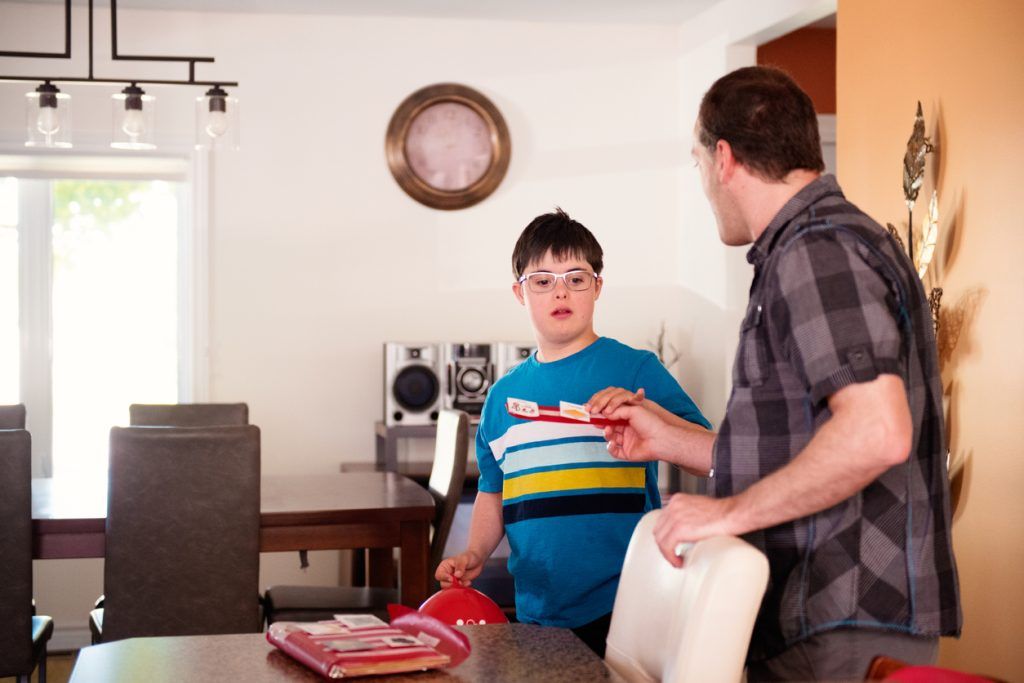
- Picture exchange systems (PECS)
- Communication boards
- Written words
2. Mid-tech AAC provides limited electronic support. These devices often have recorded messages or a small number of programmable buttons that produce speech when pressed. They’re useful for children starting to explore AAC or who need a straightforward communication method.
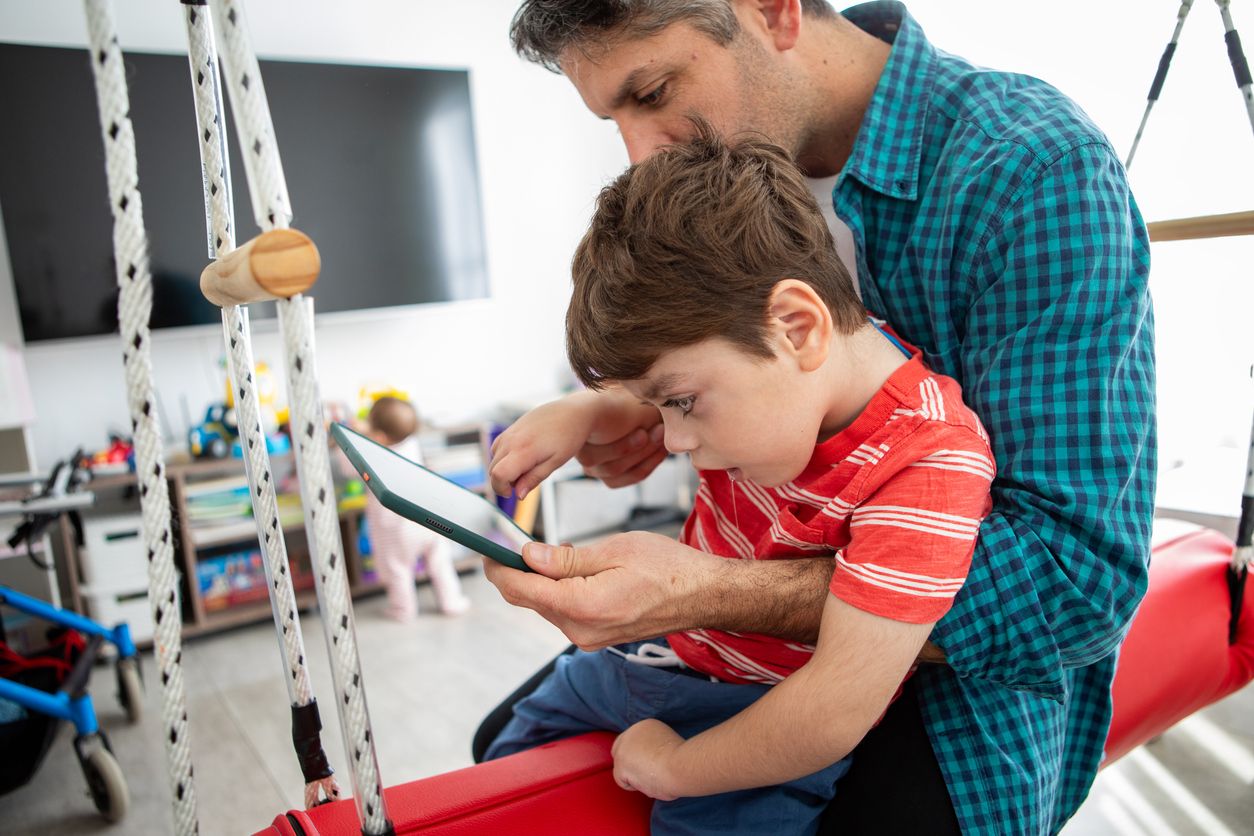
3. High-tech AAC uses digital technology such as tablets, smartphones, or dedicated speech-generating devices. These systems allow users to select symbols, words, or letters that the device converts into speech. They can store large vocabularies, adapt to motor abilities, and grow with the child’s language development. With ongoing advances in technology, AAC tools are becoming more intelligent and accessible. For example:
- AAC app examples include Proloquo2Go, LAMP Words for Life, and TD Snap.
- Advanced systems may also use eye-tracking or switch access for children with limited physical movement.
Many children benefit from using more than one type of AAC. For example, a young child might use a picture board at school and a more complex speech-generating app at home. The best AAC system is the one that fits the child’s abilities, comfort, and communication goals, whether it’s simple or highly advanced.
Benefits Of AAC For Children With Autism
Autism spectrum disorder (ASD) affects how children use and understand language. This does not mean a lack of understanding or desire to communicate. It means that speech is not always a reliable or consistent way to share thoughts and needs.
AAC provides an alternative to spoken language, offering children clear, consistent, and accessible ways to express themselves.
Benefits of AAC use include:
- Reduced frustration and difficult behaviors: Reliable communication decreases stress for both the child and caregivers. Being able to express needs and emotions helps prevent frustration.
- Improved social interaction: AAC helps children participate in conversations, play, and peer activities that might otherwise be challenging.
- Greater independence: Having a dependable way to communicate supports decision making and self-advocacy, reducing reliance on caregivers, educators, or family members.
- Enhanced learning: AAC increases participation in school, therapy, and daily routines by giving children a way to engage more fully.
- Support for speech development: Some worry that AAC might delay speech, but research shows it can help children develop verbal language once communication becomes easier.
AAC gives children with autism a reliable way to connect, learn, and participate more fully in their environment.
4 Ways AAC Supports Communication Development
AAC supports children with autism by teaching the skills needed for effective communication. Beyond offering an alternative to speech, it helps children understand, practice, and use language in everyday situations.
1. Builds Understanding
AAC combines visual symbols with spoken words. When a child hears a word and sees its symbol at the same time, they form stronger connections between sounds and meaning. This visual support makes language easier to understand and remember, especially for children who process information better through sight.
2. Teaches How To Communicate
Therapists, teachers, and caregivers use AAC during daily interactions to model how to:
- Ask for items
- Make choices
- Answer questions
This direct demonstration shows children how communication works and how actions, symbols, and words can be used to share ideas and get responses from others.
3. Expands Ways To Communicate
AAC provides a reliable method for expression when speech is limited or unclear. Children can use pictures, symbols, or words on the device to request help, share their thoughts, or participate in conversations. This success helps them experience the value of communication and encourages more frequent interaction.
4. Promotes Consistency Across Settings
AAC can be used in all environments, such as therapy, home, and school. Using the same system across settings gives the child a consistent way to communicate, regardless of where they are or who they’re with. This repetition helps transfer communication skills to new situations and supports independent use over time.
FAQ: Exploring AAC
| Question | Answer |
| When should you consider AAC? | An AAC device can benefit any child whose speech doesn’t meet their daily communication needs. It’s not limited to children who are nonverbal. Even if a child can say some words, AAC can help them share thoughts, feelings, and more complex ideas. There are no prerequisites for starting. Any child who struggles to communicate effectively should be considered for AAC. Research suggests that earlier introduction to AAC intervention is most effective, but it’s never too late to begin. |
| How should you choose an AAC? | A speech language pathologist (SLP) or AAC professional can assess your child’s language, motor, and sensory abilities to recommend the most suitable system. In addition to communication ability, they’ll also consider factors such as age, developmental level, and personal interests. If professional support is not available right away, think about your child’s goals, motivation, and comfort with different tools. AAC needs often change as children grow, so expect some trial and error when finding the right fit. Regular adjustments help keep the system effective over time. |
| How should you introduce AAC to a child with autism? | Family members and caregivers play an essential role in helping children learn to use AAC successfully. The goal is to make communication natural and part of daily life. Use these tips: – Model communication: Use the AAC device while speaking to your child. Modeling shows how speech connects to symbols and helps the child learn how to use the system naturally. Before teaching, make sure you understand how the device works. – Use AAC in daily routines: AAC works best when it’s part of everyday interaction, not a separate task. Use it during meals, play, reading, and outings. With repetition, children learn that their device is a reliable way to share, connect, and be understood. – Promote consistency across environments: Individuals who regularly interacts with the child, such as teachers, siblings, and peers should know how to respond when the AAC system is used. Consistency across people and settings helps children use AAC more confidently. – Be patient and consistent: Learning to use AAC takes time. Celebrate small progress and keep providing opportunities to communicate. Track new words and note when communication is most successful. This helps identify growth and guides future updates to the device or strategy. |
Key Takeaways
- AAC stands for Augmentative and Alternative Communication. It includes tools and strategies that support or replace speech among users with communication challenges.
- AAC helps children with autism communicate clearly by giving them reliable ways to express their needs, thoughts, and feelings.
- There are many types of AAC, from gestures and picture boards to an advanced speech generating device or app.
- AAC reduces frustration and improves connection, helping children participate more fully at home, school, and in social settings.
- AAC supports language learning by pairing symbols and spoken words to build understanding.
- Choosing the right AAC system depends on your child’s strengths, comfort level, and goals, often guided by an AAC assessment done by a speech-language pathologist.
- Caregiver involvement is key. Using AAC during daily routines, modeling communication, and encouraging consistency help children succeed.
References
- SpeechTherapy.Org (2025). AAC Devices for Autism: Empowering Communication Options
- Davidoff, B. E. (2017). AAC With Energy—Earlier. The ASHA Leader, 22(1), 48–53.
- Schlosser, R. W., & Wendt, O. (2008). Effects of Augmentative and Alternative Communication Intervention on Speech Production in Children With Autism: A Systematic Review. American Journal of Speech-Language Pathology, 17(3), 212–230.
- Syriopoulou-Delli, C. K., & Eleni, G. (2021). Effectiveness of Different Types of Augmentative and Alternative Communication (AAC) in Improving Communication Skills and in Enhancing the Vocabulary of Children with ASD: a Review. Review Journal of Autism and Developmental Disorders, 9(4).
- Trembath, D., Iacono, T., Lyon, K., West, D., & Johnson, H. (2013). Augmentative and alternative communication supports for adults with autism spectrum disorders. Autism, 18(8), 891–902.