Portable vs. Fixed Bathroom Commode: Pros & Cons
A commode is one of many bathroom aids that can make daily living activities safer, easier, and more comfortable for your loved one. When choosing a commode, some factors to consider include:
- Your loved one’s mobility status
- The living space and situation
- The length of time somebody will use the commode
In this article, we will explore the difference between a portable and fixed bathroom commode and examine the pros and cons of each.
To learn more about medical equipment, helping in the bathroom, and other caregiving tips and tricks, check if you have free access to Trualta’s learning library.
Let’s Compare
Portable Bathroom Commode
A portable bathroom commode is a commode chair with a frame, four wheels, and a back that serves as a portable toilet. An individual can transfer onto the commode chair and be wheeled into the bathroom to void over the existing toilet.
Due to its easy mobility, this commode chair can also be wheeled into an individual’s bedroom and positioned right by their bed to make the transfer on and off easier.

Pros: Portable Bathroom Commode
There are many reasons why someone might choose a portable bathroom commode for their loved one. Some reasons include:
- Accessibility and mobility. A portable commode is easily accessible and can be wheeled to any room, making it an ideal option for those with impaired mobility or decreased endurance.
- Space considerations. Because the portable commode is not permanently positioned over the toilet, it can be wheeled and stored in a different location, saving space in the bathroom.
- Easy cleaning. Its portability allows for easy cleaning of the device and the area around the toilet because you can wheel it away once you’re done.
- Doubles as a shower chair. Some portable commodes on wheels can also double as a shower commode chair. You can wheel your loved one into your walk-in shower after voiding, and they can take their shower with warm water.
Cons: Portable Bathroom Commode
Although this option allows for ease of mobility, there are some drawbacks to portable commodes, including:
- Safety considerations. The wheels on the portable commode must always be locked when a care recipient is transferring on and off the commode. If this is accidentally forgotten, it could lead to a fall at home.
- Concern for durability. Often, portable commodes are made of lightweight material to allow for ease of mobility when pushing at home, which might make them a less durable option.
Fixed Bathroom Commode
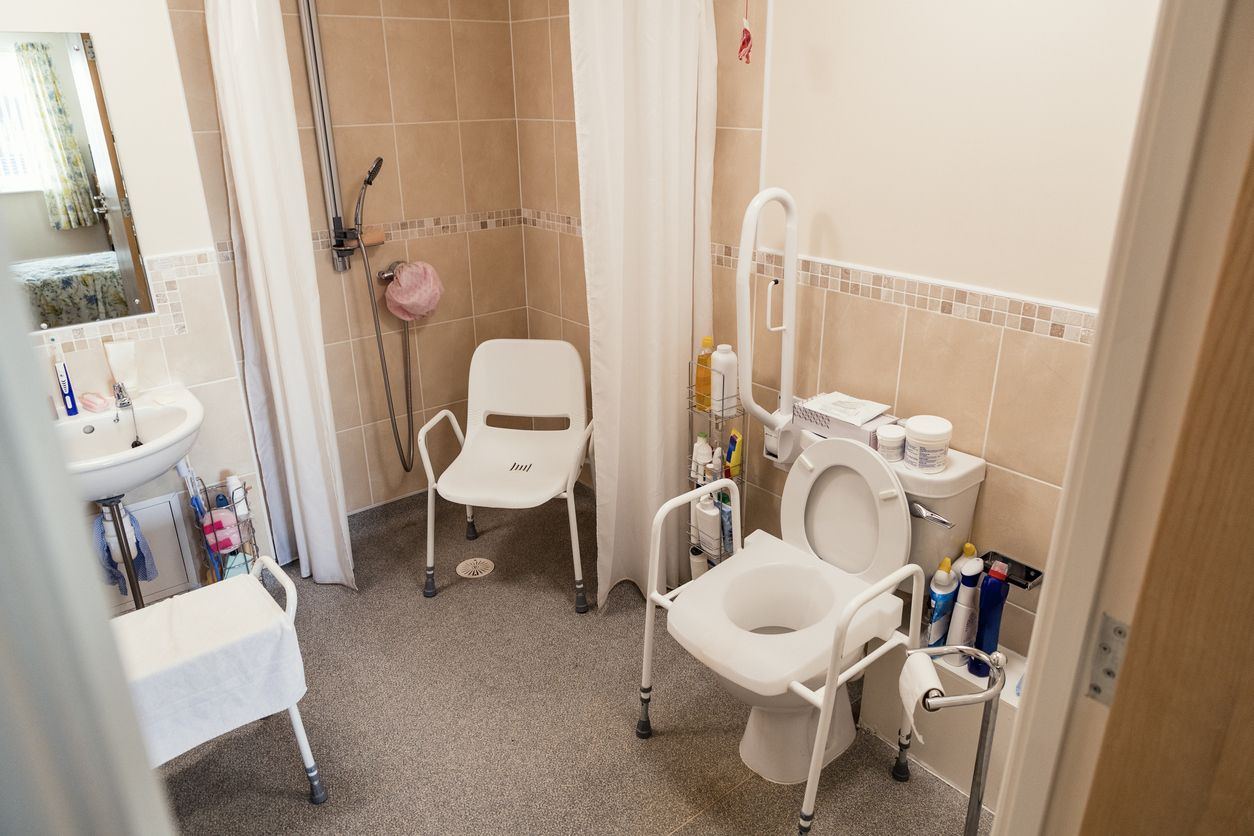
A fixed commode has a frame, four legs, handles, and sometimes a padded seat. It sits above the existing toilet seat and serves as a raised toilet seat for individuals when they go to the bathroom.

Pros: Fixed Bathroom Commode
In some cases, a fixed bathroom commode may be the more appropriate choice for your loved one. Here are some benefits for this type of commode:
- Increased stability. A fixed commode is often made of more durable materials than a rolling commode. Additionally, it’s installed and positioned right above the toilet for use, making it a more stable option for your loved one.
- Safety. A fixed bathroom commode has four legs, often with anti-skid tips, making it a safe and sturdy equipment.
- Permanent solution. The fixed commode offers a permanent option for someone who will need extra support when transferring to standing from the toilet for the foreseeable future.
Cons: Fixed Bathroom Commode
Drawbacks of a fixed bathroom commode include:
- Less mobility. A fixed commode is not mobile. It can’t be wheeled or moved into a different room in the house. This means that the user must be able to walk into the bathroom to use the commode. It may not be the best option for those with low mobility levels.
- Space considerations. A fixed commode would be permanently positioned over the toilet, which can take up extra space in the bathroom.
Conclusion
When choosing a commode, consider:
- The user’s mobility status
- The living environment
- How long someone will use the commode
By reviewing the pros and cons of both a fixed and rolling commode, you can make the best decision to optimize your loved one’s safety and comfort during their daily tasks.
Don’t forget: If you want to learn more about medical equipment, helping in the bathroom, and other caregiving topics, check if you have free access to Trualta’s learning library.
References
- Agtahomecare. (n.d.). Aluminum commode with wheels vs. traditional models. Agtahomecare. Retrieved March 30, 2025, from https://www.agtahomecare.com/blog/post/aluminum-commode-with-wheels-vs-traditional-models#:~:text=The%20inclusion%20of%20wheels%20facilitates,or%20living%20area%20without%20assistance.
- Essential Aids. (n.d.). Buying a commode chair: What you need to know. Essential Aids. Retrieved March 30, 2025, from https://www.essentialaids.com/blog/buying-commode-chair-what-know.html
- Home Medical Equipment. (n.d.). Commode chairs. Home Medical Equipment. Retrieved March 30, 2025, from https://www.home-med-equip.com/catalog/commode-chairs.html
- Rehabmart. (2023, February 28). How to choose the best shower commode. Rehabmart. Retrieved March 30, 2025, from https://www.rehabmart.com/post/how-to-choose-the-best-shower-commode?srsltid=AfmBOorslZ1Zqh3OMQSSpqkkBi-YvW0Q2YgnWBhrVSSZe1HT8z10HbRZ