Preparing Your Home For Non Weight Bearing Recovery
After your care recipient has an operation, organizing your home is probably the last thing on your mind. However, making your home a safe place is an important part of your care recipient’s recovery. If your care recipient has non weight bearing restrictions after an operation, their environment plays a key role in sticking to them and preventing further injury.
At Trualta, we know how overwhelming this can feel. That’s why we have resources dedicated to caregivers who are managing transitions from hospital to home. Check if you have free access.
What Is Non Weight Bearing?
Whether your care recipient had a planned surgery or an operation after a fracture, the surgeon may order weight bearing restrictions. These are rules that dictate how much body weight a person can put through a certain body part, like their arm or leg. You might hear it called the:
- Affected limb
- Operated limb
- Injured limb
Your care recipient must follow these rules for a certain time frame, like 6 weeks after the surgery, so that the operated area can heal properly. Your care recipient’s surgeon will decide this. If they don’t follow these rules, the operation may fail.
Non weight bearing means that no body weight can be put through the affected limb at any time. This includes while standing up or sitting down. If they are non weight bearing in their:
- Arm: They can’t lean on it
- Leg: They can’t stand on it. They will likely need to rely on an assistive device like a walker to help them move around.
As they heal, their surgeon may change their weight bearing status to:
- Toe touch weight bearing (if lower extremity)
- Partial weight bearing
- Weight bearing as tolerated
- Full weight bearing
5 Tips To Prepare Your Home For Non Weight Bearing
Non weight bearing can present unique challenges to daily activities and mobility. These tips can help you feel more prepared for bringing your care recipient home and helping them safely move around.
For the purposes of this article, we’ll discuss home preparations for a person who is non weight bearing on their lower extremity. Keep in mind that non weight bearing orders can also be for the upper body. Many of these tips will still apply.
| Talk to your care recipient’s occupational therapist or physical therapist for recommendations that meet your care recipient’s specific needs. These healthcare professionals are trained in understanding: 1. How other health conditions affect your care recipient’s abilities and safety during recovery 2. How to assess the home for safety and accessibility and make recommendations 3. Falls prevention techniques 4. Mobility and weight bearing 5. Equipment and assistive device needs |
1. Plan Around Stairs
Stairs can present a barrier to your care recipient’s ability to safely get into and around the home. You’ll need to make a plan for avoiding them if your care recipient is non weight bearing on their affected limb. Here’s what you can do:
- Talk to the healthcare team. Depending on your care recipient’s injury, cognition, balance, and upper body strength, they may be able to use stairs. An occupational therapist (OT) or physical therapist (PT) will assess their abilities and tell you what is safe.
- Make temporary changes. Arrange a bedroom on the same floor as the bathroom so they can avoid stairs. Rent a removable ramp for outdoor stairs.
- Plan for discharge. If they can’t manage stairs into the home, organize medical transportation into the house.
- Use existing equipment. If your care recipient already has a stair lift or ramp, ensure they are in working order before they arrive home.
- Consider temporary living options. Is there a more accessible place they can stay while they have non weight bearing restrictions?
2. Organize Equipment
Depending on your care recipient’s abilities, cognition, and the type of surgery, they may be prescribed mobility equipment to use during their recovery. This equipment is designed for your care recipient to put their weight on to offload their injured leg. For example:
- A metal frame walker
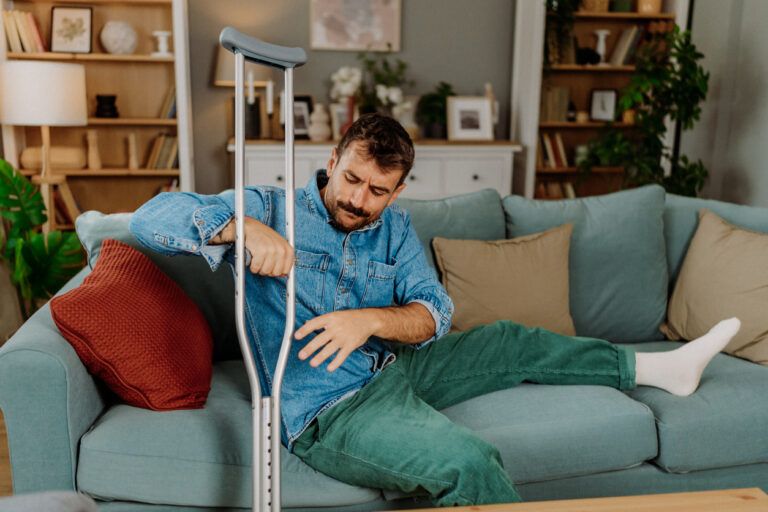
- Crutches
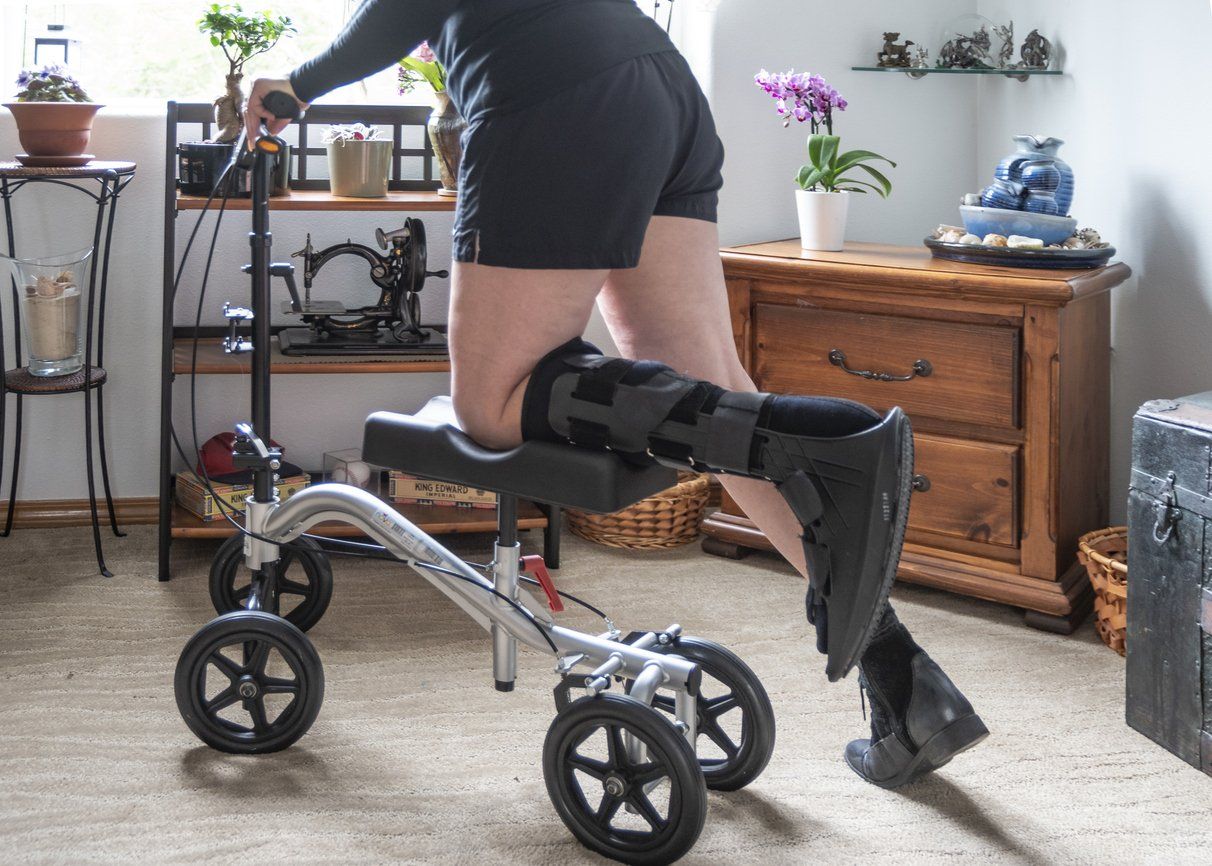
- A knee scooter
- A cane
- A wheelchair
Create a wide path for mobility equipment. You may need to move plants or side tables out of the way to make room for a walker or wheelchair. Talk to an OT or PT on the healthcare team to ensure you and your care recipient know how to use this equipment, including during transfers, with non weight bearing restrictions.

3. Prevent Injury & Falls
A fall could lead to disastrous injury or worse. Use these tips to prevent falls.
- Help them remember. New equipment can be tricky to remember if they’re not used to it. Position the walker right at their bedside, in their line of sight, so that they remember to use it. Some people might benefit from colored tape near the hand grip or a sign that says, “Use your walker”.
- Install or rent safety equipment. For example, a toilet safety frame, a bedside commode, grab bars in the shower, or a tub transfer bench. Talk to an OT for recommendations that suit your home and your care recipient’s needs.
- Ensure their bed and chairs are a good height for standing up and lowering down easily.
- Remove clutter and obstacles like cords or loose rugs on the floor. Fix loose floorboards or uneven flooring. Avoid slips by adding treads to the stairs or nonslip suction mats to the shower floor.
- Include adequate lighting. Ensure lights are bright, especially in hallways, on stairs, and in doorways. Use nightlights or motion-sensor lighting at night to light the way to the bathroom.
- Make it accessible. Move regularly used items out of upper or lower cabinets so they don’t have to reach. Put them somewhere at waist height, like a countertop.
4. Stock Up & Prepare
Discharge can be an overwhelming time. While they’re still in the hospital, stock up on supplies they’ll need so you won’t have to worry about shopping while adjusting to everything else. For example:
- Shower supplies
- Shaving supplies
- Grocery shopping
Doing chores ahead of time can also take away some stress. You can prepare by:
- Cleaning the house
- Preparing meals that are easy to reheat and serve
- Washing clothes, towels, and bed linens
- Running errands
5. Get In Touch
If the home is large or you won’t be there all the time, ensure your care recipient has an easy way of reaching you. For example, a charged cell phone, pager, or even a bell. If you’re concerned about an emergency happening while you’re out of the house, talk to the healthcare team about a wearable medical alert device.
Want to learn more about transitioning home from the hospital or making your home safer for your loved one? Check if you have free access to Trualta.
References
- https://medlineplus.gov/ency/patientinstructions/000167.htm
- https://orthonc.com/uploads/pdf/Weight-Bearing_Restrictions.pdf
- https://www.uhd.nhs.uk/uploads/about/docs/our_publications/patient_information_leaflets/orthopaedics/non_weight_bearing_after_orthopaedic_surgery.pdf
- https://www.uhn.ca/Arthritis/Documents/Recovering-Complex-Foot-Ankle-Surgery.pdf