Transfer Pole vs. Grab Bars: What’s Better For Home Mobility?
The CDC states that nearly 3 million Americans go to the emergency room each year due to falls. Navigating the home can be particularly challenging for individuals who use a wheelchair or experience difficulty with balance. This is especially true for higher-risk areas of the home, like the bathroom.
Ensuring safe movement during daily routines such as getting on and off the toilet, getting in and out of bed, or transferring in and out of a wheelchair is essential to preventing injury.
In this article, we’ll discuss two common home mobility aids that support safety and independence during daily activities: Transfer poles and grab bars. While both tools enhance stability and reduce fall risk, they have slightly different features that may be better suited for different home spaces or needs. Understanding the benefits and features of each can help caregivers make an informed decision about what’s best for their care recipient’s safety and mobility at home.
Interested in learning more caregiver tips to keep your loved one safe? Check if you have free access to Trualta.
Who Can Benefit From A Transfer Pole Or Grab Bar?
Anyone at risk of a fall could benefit from a transfer pole or grab bar. Some examples include:
- Seniors
- Someone with a diagnosis like dementia, COPD, or heart disease
- Someone who has had a stroke
- Someone who is recovering from surgery
- Mobility patients who have recently had an injury, like a broken bone
- Someone who has a history of falls
Your care recipient’s healthcare team can help you decide whether home safety equipment will be beneficial to increase safety and independence. An occupational therapist can even visit your home and provide detailed observations and recommendations to ensure safety equipment is tailored to your care recipient’s specific needs in the home environment that they’re in.
How A Transfer Pole Can Help
A transfer pole, also called a ceiling transfer pole, is a vertical support that helps people with limited mobility or balance issues move more safely. It can be installed in places like the bedroom or bathroom to provide a sturdy handhold when changing positions, such as:
- Moving from lying down to sitting up in bed
- Moving from sitting on the toilet to standing
Holding onto the pole adds stability and can help someone become more independent by reducing the amount of help they need from a caregiver. Some poles have extra features like:
- Handles or curve grab bar for easier use
- Adjustable height
- Anti-slip textures
- Trapeze bars to assist with pulling up from a lying position
Unlike wall-mounted grab bars, transfer poles are typically tension-mounted between the floor and ceiling, requiring no permanent installation. This makes them a flexible option for various home environments, including rental units where modifications might be restricted.
One of the key advantages of transfer poles is their versatility. Because they don’t need to be anchored to a wall, they can be installed virtually anywhere in a room – even in open spaces like the center of a bedroom or next to a recliner or chair where a wall grab bar wouldn’t be feasible. Their compact design with 360 degrees of accessibility allows them to fit into narrow or confined spaces, like between a sink and a toilet in a small bathroom.
It’s important to note that while tension-mounted transfer poles offer ease of setup and portability, they must be installed with extra care. Improper installation of the pole position or place of the pole, such as on high-pile carpet, uneven floors, or installation in a shower or tub, can compromise the pole’s stability, increasing the risk of falls rather than preventing them. It’s crucial to follow the manufacturer’s guidelines closely or seek professional help from an installation service to ensure secure placement. When in doubt, transfer poles can always be permanently installed with screws and into ceiling beams for added security and peace of mind.

How A Grab Bar Can Help
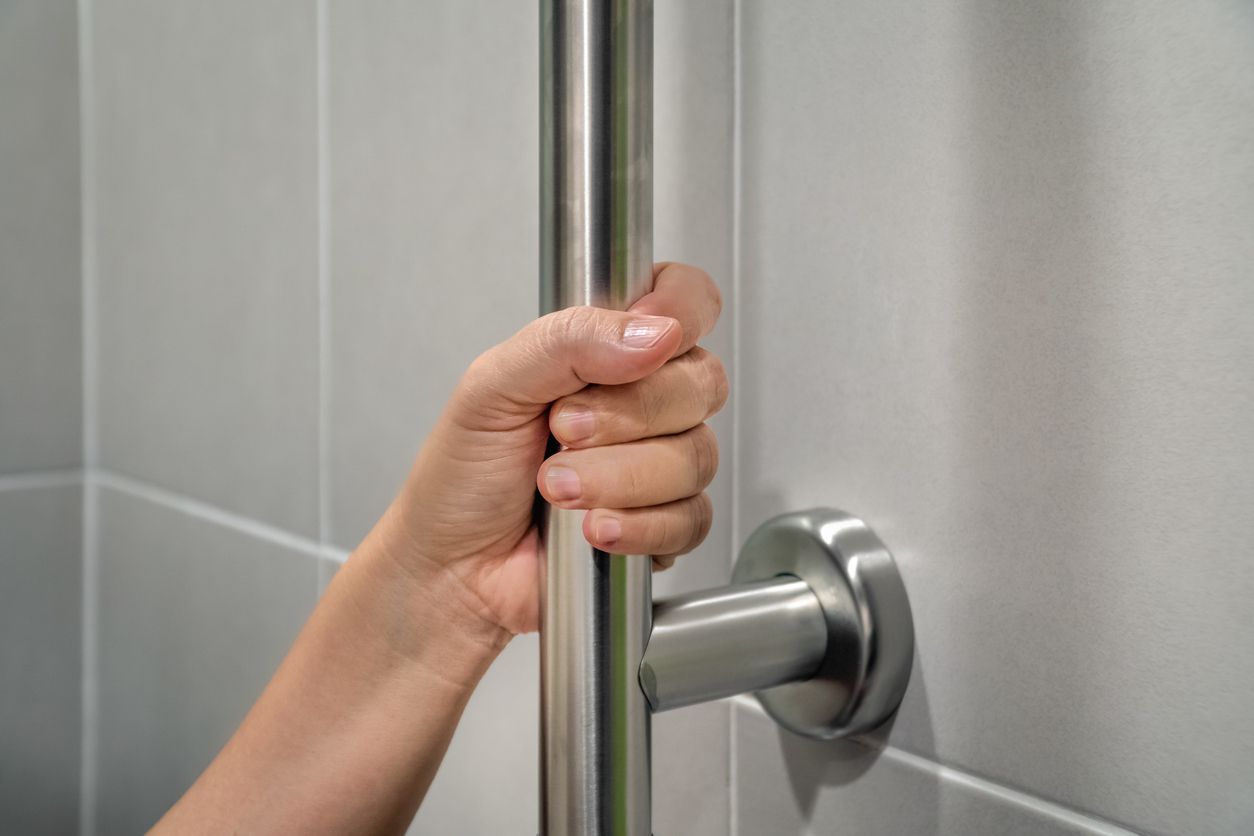
Grab bars are sturdy bars mounted horizontally, vertically, or diagonally on walls to help individuals stay steady during daily activities and transfers. They’re most often used in bathrooms, where they can be installed inside showers or next to toilets to lower the risk of falls and injuries. Grab bars provide essential support. People can hold onto them while moving, during tasks, or if they lose balance, helping them stay safe and independent.
Grab bars come in various lengths, finishes, grip textures, and shapes to accommodate different needs and preferences. Some grab bars are also designed to support significant weight loads, offering even more security for those who need it most.
Unlike transfer poles, grab bars must be securely installed into wall studs or with strong anchors to ensure stability. While grab bars with suction cup installation are available, they are not recommended due to their risk of unmounting when applying force, like when being pulled on during a slip, or pushed on while sitting or standing up.
A grab bar with permanent installation can be ideal for individuals with ongoing or long-term mobility needs. However, this also means that their placement is limited by wall location, which may not always align with the most convenient or needed position in a room. That said, when installed correctly, grab bars offer reliable, fixed-point support that can significantly improve safety and independence, especially in the bathroom, where many falls occur.

Transfer Pole vs. Grab Bar
A transfer pole and a grab bar are effective pieces of equipment that help provide stability and safety during home mobility. If you’re stuck deciding between which to try, here is a checklist that can help you compare their features:
| Features | Transfer Pole | Grab Bar |
| Assists with safe transfers | ✅ | ✅ |
| Reduces the need for caregiver assistance | ✅ | ✅ |
| Must be wall-mounted with studs | ✅ | |
| Can be tension mounted | ✅ | |
| Portable | ✅ | |
| Can be installed in an open space | ✅ | |
| Permanent installation option | ✅ | ✅ |
| Supports multiple transfer directions | ✅ | ✅ |
| Can be installed in a high-pile carpeted room | ✅ | |
| Available in multiple ergonomic designs | ✅ | ✅ |
| Can be used for toilet transfers | ✅ | ✅ |
| Can be used for showering | ✅ | |
| Can be used for bed transfers | ✅ | ✅ (Limited to the location of the bed and the design of the bar) |
Interested in more bathroom safety tips? Check if you have free access to Trualta.
References