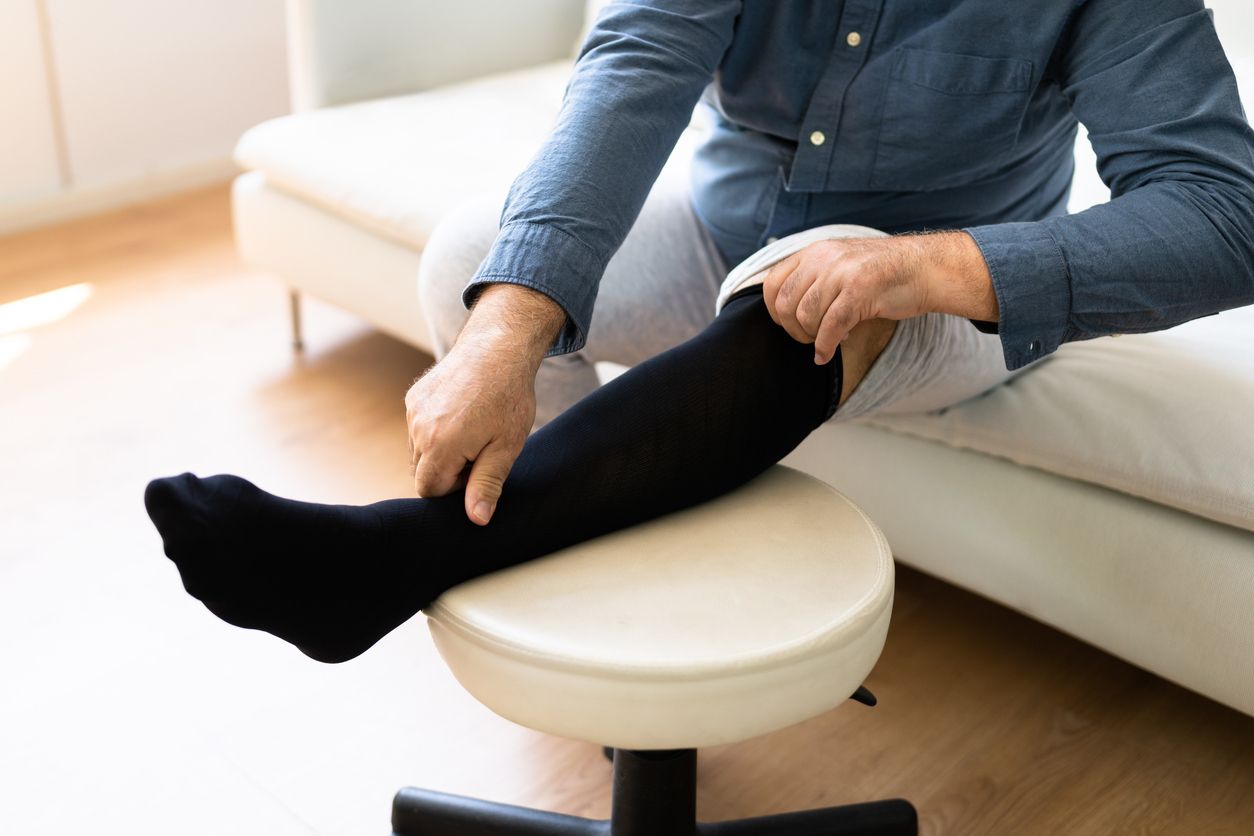
Medical Compression Socks: Avoid Common Caregiver Mistakes
If your care recipient wears medical compression socks, it can sometimes be hard to put them on or remove them on their own. They might need your help. But how do you know if you’re doing it properly?
Helping with activities of daily living can be more challenging than it sounds. At Trualta, we have educational tools and resources to support you with these caregiving tasks. Check if you have free access.
What Are Medical Compression Socks?
Compression socks may also be called compression stockings or graduated compression stockings. They are a tighter fit than normal socks, providing gentle pressure to the feet and legs. They can serve a variety of purposes, including:
- Providing general comfort
- Reducing tired achy legs or leg pain
- Improving blood flow
- Preventing blood and fluid from pooling in the legs
- Reducing swelling
- Supporting relief from deep vein thrombosis, skin ulcers, and varicose veins
There are two different types of compression socks:
- Medical compression socks. These require a doctors prescription. They provide compression therapy to treat conditions like vein damage, blood flow problems, or swelling after surgery. They have a firmer compression on the legs than non-medical stockings, with compression classes ranging between 20-40mmHg.
- Non-medical compression socks. These provide general comfort for the person wearing them and don’t require a doctors prescription. It’s still a good idea to talk to a doctor before stopping or starting to wear them. These support stockings provide lower pressure, with compression classes ranging between 8-20mmHg.
In this article, we will be focusing on medical compression stockings.
6 Common Compression Stocking Mistakes & How To Avoid Them
You may be thinking to yourself that compression socks are just a tighter version of a normal sock–what’s there to learn about them? In fact, there’s a lot more to compression stockings than you’d think, and a few places where mistakes can happen. Let’s review some common compression stocking mistakes and how to avoid them.
1. Not Choosing The Right Size
Compression stockings come in different sizes, lengths, and pressures. You need to measure your care recipient’s leg to get the right size for them. Here are some tips:
- Measure their legs in the morning. Their legs will have the lowest amount of swelling. This helps create a more accurate measurement.
- Ensure proper positioning. While measuring, ensure your care recipient is seated in a chair with their knees bent at 90 degrees.
- Measure the right places with a measuring tape:
- Around the ankle
- Around the widest part of the calf
- Distance from the heel to the top of the calf
- Pick the right size. Check the sizing on the packaging or website. Match it with your care recipient’s measurements. Don’t fold socks over that are too long. This can be dangerous and restrict circulation.
2. Not Inspecting Skin Or Circulation
If your care recipient has skin irritation or has poor circulation in their foot before putting on the socks, it can get worse. It’s important to check their skin and circulation before putting on the socks. You can:
- Check the skin for redness, chafing, or pressure sores. Put a dressing on any open wounds.
- Ensure skin is clean and dry. Lotion or other moisture can make it harder to pull on compression garments.
- Check the temperature and color of their toes.
- Talk to a doctor if your care recipient’s toes are numb, dark, or painful, or if they have skin irritation.
3. Not Putting Them On Properly
Compression socks are harder to put on than regular socks–but it will get easier with practice!
- Don’t try to put them on while standing. Ensure your care recipient is sitting on a flat surface or lying down.
- Pull the compression sock inside out. When you put the toe of the sock on your care recipient’s toes, the compression sock now can roll up the leg right-side out.
- Ensure the compression socks are high enough on the leg. This can depend on the type of sock. Pull it up as far as it will go, but the sock doesn’t cover the knee. That can restrict mobility.

4. Not Assessing The Fit
After you put on the socks, it’s important to ask your care recipient if they feel any discomfort or pain. The socks should feel tighter than normal socks in order to work.
You should also check the fit of the socks to avoid cutting off circulation. If there are any issues, remove the sock and try again. Ensure:
- The sock is straight and lying flat on their leg
- There are no wrinkles, bunching, or rolling down
- They can move their leg well, especially at the knee and the ankle
5. Not Following The Wearing Schedule
The doctors prescription will include a wearing schedule, which tells your care recipient how long they need to wear the compression stockings during the day.
- Not wearing them for long enough means they’re not benefitting their medical condition or symptoms properly.
- Wearing them for too long or at the wrong time can cause problems. For example, wearing them while sleeping is usually not recommended, as lying flat requires less work fighting gravity to get blood to the heart.
6. Not Replacing Socks
Compression socks should be replaced every 3-6 months to ensure proper compression. Patients should also meet with their doctor every 6 months or so to ensure the compression class is still meeting their needs.
Want to watch videos to better understand or chat with a care coach for more guidance? Check if you have free access to Trualta.
References
- https://www.healthlinkbc.ca/health-topics/compression-stockings-how-use-them
- https://myhealth.alberta.ca/Health/aftercareinformation/pages/conditions.aspx?hwid=abk2202
- https://caregiver.com/articles/whats-on-your-feet/
- https://www.caringtouchmed.com/top-5-mistakes-to-avoid-with-compression-stockings/