

How To Prevent A Stroke: Tips For Caregivers
Are you supporting someone who’s had a stroke or is at risk for having one? You may be wondering whether it’s possible to reduce the risk of developing a second stroke. Or, if you’re caring for a family member who’s just had a stroke, you may be asking yourself, “Could this happen to me, too?”.
In this article, we will explore:
- What a stroke is (ischemic vs. hemorrhagic)
- Lifestyle changes for stroke prevention
- The importance of regular check-ups and diabetes management
- How to recognize stroke symptoms using the B.E. F.A.S.T. method
Check if you have free access to Trualta for more stroke and caregiving resources.
What Is A Stroke?
A stroke can happen in one of two ways:
- Ischemic stroke. A blockage, such as a blood clot, stops blood flow to part of the brain.
- Hemorrhagic stroke. Caused by a bleed in the brain due to a broken blood vessel.
Improving the health of your heart and blood vessels can lower your chance of having a stroke. Good cardiovascular health helps prevent problems like high cholesterol, blood clots, and high blood pressure, which can lead to a stroke.
Lifestyle Changes For Stroke Prevention
Although there are some stroke risk factors you can’t modify, there are many lifestyle choices you and your care recipient can make to protect cardiovascular health and reduce the risk of premature stroke.
Diet
Creating healthy habits often starts with diet. When preventing stroke, remember to:
- Limit salt to avoid high pressure
- Opt for plenty of fruits and vegetables
- Increase your fiber intake
- Avoid foods high in saturated fat and trans fat
Exercise
Regular physical activity can help lower cholesterol and blood pressure levels. The surgeon general at the Centers for Disease Control and Prevention recommends 2 hours and 30 minutes of moderate-intensity physical activity for adults each week. That equals approximately 20-25 minutes of exercise a day.
Start by exercising for a few minutes each day and making it part of your routine. This can help you stay consistent.
Involve your care recipient in regular exercise as much as possible to encourage each other. Always check with your healthcare team about which exercises are right for you. Some ideas include:
- A brisk walk around the neighbourhood
- Dancing around the house to your favorite music
- Playing catch with your kids
- Joining a fitness group
- Following an online video workout
Stress-Relief
As a caregiver, you have a lot on your plate. High levels of prolonged stress can increase your blood pressure and make you more prone to the narrowing of your arteries. It’s important to recognize severe stress, so you can manage it early and use strategies that help prevent stress.
Some stress-relief strategies that are well-suited for busy caregivers are:
- Prioritizing time for breaks, even if that means a couple of minutes between care tasks.
- Connecting with others, especially caregiver peers in your community or in online support groups.
- Prioritizing tasks in your schedule and automating as many tasks as possible to make your physical and mental load lighter.
- Being honest about needing help and asking for it proactively.
- Practicing proper sleep hygiene to ensure you’re getting enough high quality sleep.
- Scheduling mental health appointments if you’re experiencing challenges with managing stress, burnout, anxiety, or more.

Quit Smoking & Limit Alcohol
Smoking tobacco can triple your risk of developing a stroke, as it can accelerate the formation of blood clots. Alcohol can lead to higher blood pressure, which is another stroke risk factor.
Discuss the risks of smoking and drinking with your care recipient and express your concerns in a non-judgmental way. Contact your healthcare provider for tailored smoking cessation strategies.
Regular Check-Ups
Attending regular medical check-ups can ensure you stay on top of monitoring cholesterol and blood pressure levels. In addition, this provides you with the opportunity to have regular discussions with your doctor about stroke prevention tips specifically recommended for you.
You can help your care recipient attend regular medical check-ups by:
- Helping them schedule their medical appointments and using strategies like calendars and other reminders to ensure they aren’t forgotten.
- Arranging reliable transportation to appointments.
- Addressing their concerns about appointments, if they have any, to help increase their comfort.
Diabetes Management
High blood sugar due to diabetes can harm blood vessels. This increases the risk of stroke. If you or the person you care for has diabetes, or is at risk for it, monitor blood sugar levels. Work with your primary care team to create a diabetes treatment plan. This plan should include medication, a healthy diet, and ways to help you or your loved one stick to the treatment.
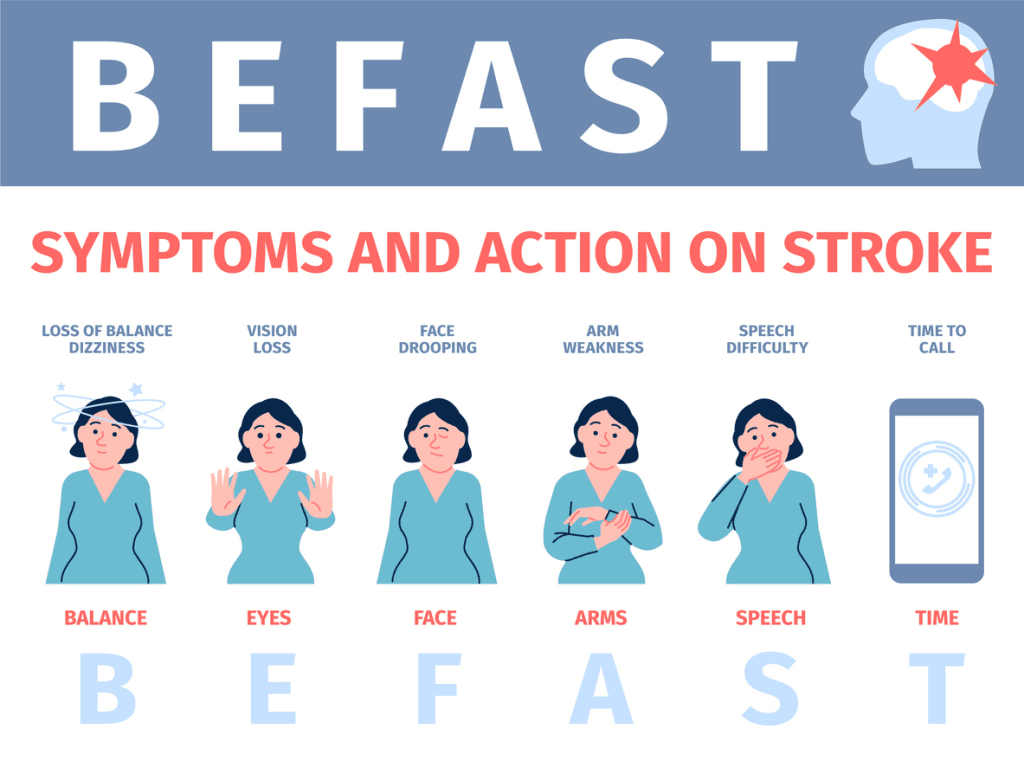
Get Familiar With B.E. F.A.S.T
It’s important to still know the symptoms of a stroke so you can jump into action quickly and improve health outcomes. B.E. F.A.S.T. is an easy-to-remember mnemonic of common stroke symptoms so you can recognize when to seek immediate medical treatment.
If you notice any one of these signs in yourself or your care recipient, call 9-1-1 immediately:
- B – Balance. Sudden trouble with balance and coordination.
- E – Eyes. Sudden blurred or lost vision in one or both eyes.
- F – Face. Drooping of the face on one side, seen most easily when smiling.
- A – Arms. Numbness or weakness in one arm.
- S – Speech. Slurred speech or difficulty forming a simple sentence.
- T – Time. Time to call 9-1-1 immediately.
References
- Centers for Disease Control and Prevention. (2024). Preventing stroke.
- Geiger, D. (2024). Know the signs of stroke – be fast. Duke Health.
- Harvard Health. (2022). 7 things you can do to prevent a stroke.
- Heart and Stroke Foundation of Canada. (n.d.). Lifestyle risk factors.
- Live to the Beat. (n.d.). Move more.
National Heart Lung and Blood Institute. (2023). What is a stroke?


