
Mnemonic for Stroke: B.E.F.A.S.T. Explained
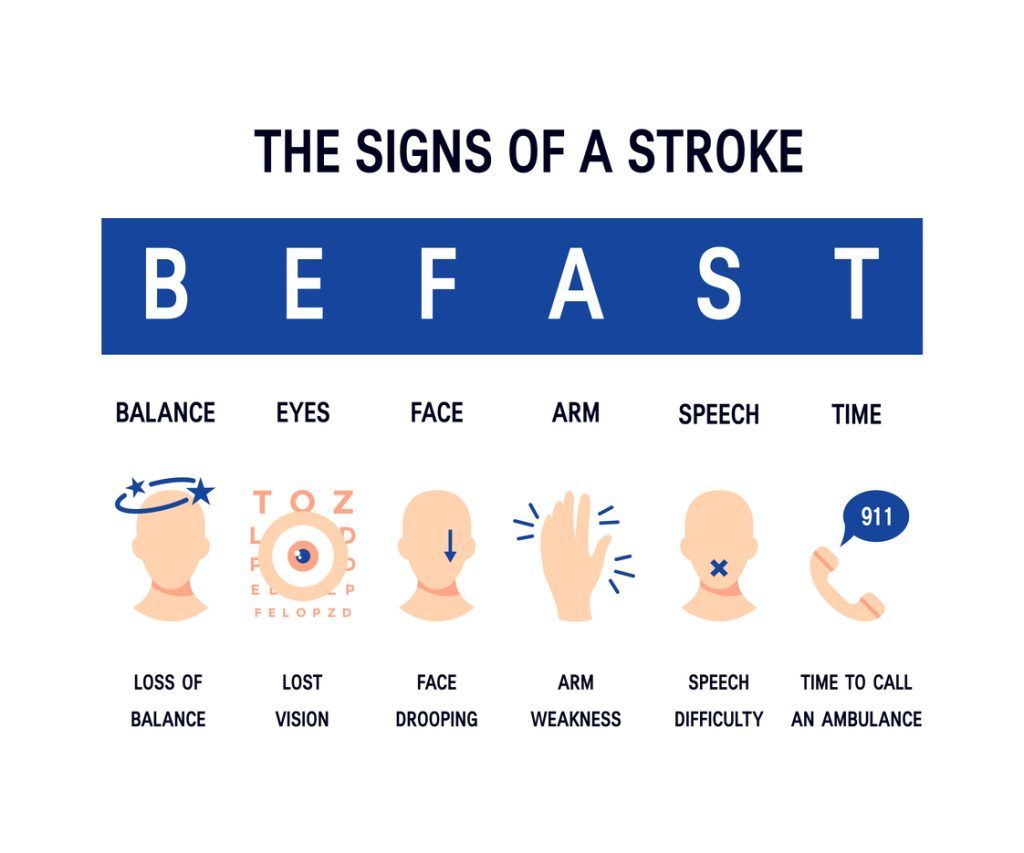
“BE”ing “FAST” takes on a whole other meaning when it comes to taking action in the event of a stroke. B.E. F.A.S.T. is a short and easy-to-remember mnemonic that helps you quickly identify signs of a stroke.
Having a stroke is a medical emergency that requires immediate intervention. Continue reading to see how B.E. F.A.S.T can help you recognize when it’s time to call 9-1-1.
Looking for more resources like this? Check to see if you have free access to Trualta.
B.E. F.A.S.T
Call emergency services if you see any one of these common stroke symptoms:
B – Balance
The person has sudden trouble with balance and coordination.
E – Eyes
The person has sudden blurry vision or has lost sight in one or both eyes.
F – Face
The person’s face is drooping on one side. Ask the person to smile to identify drooping more clearly.
A – Arms
The person has numbness or weakness in one arm. Ask them to raise their arms to identify arm weakness more clearly.
S – Speech
The person has slurred speech or is hard to understand. Ask the person to repeat a simple sentence to identify this symptom more clearly. Pay attention to see if they have repeated your sentence correctly.
T – Time
The T in B.E. F.A.S.T. reminds you that it’s time to call 9-1-1 immediately if you notice any stroke symptoms listed in the mnemonic above.
Don’t hesitate to call for help even if you feel unsure. These are all signs of a potential stroke.
Why Is B.E. F.A.S.T. Important?
When a stroke happens, every minute counts. Experts estimate that nearly 2 million brain cells die each minute that treatment is delayed. The longer a stroke goes untreated without medical care, the more severe the damage can become.
A stroke occurs either when blood flow to the brain is blocked (such as by a blood clot) or when there is sudden bleeding in the brain. Without oxygen and nutrients, brain cells quickly begin to die, and pressure on brain tissue can increase. As time passes, more areas of the brain can be damaged, leading to worsening symptoms and a more difficult recovery.
Using the B.E. F.A.S.T. method helps people recognize stroke symptoms quickly and get medical help right away, improving their chances of better outcomes.
| Check if you have free access to Trualta for more information about caring for stroke patients. |
References
- Aroor, S., Singh, R., & Goldstein, L. B. (2017). Be-fast (balance, eyes, face, arm, speech, time). Stroke, 48(2), 479–481.
- Geiger, D. (2024). Know the signs of stroke – be fast. Duke Health.
- Hogge, C., Goldstein, L. B., & Aroor, S. R. (2024). Mnemonic utilization in stroke education: Fast and BEFAST adoption by Certified Comprehensive Stroke Centers. Frontiers in Neurology, 15.
- National Heart Lung and Blood Institute. (2023). What is a stroke?
- Saver, J. L. (2005). Time is brain—Quantified. Stroke, 37(1), 263–266.