

Activities For Dementia Patients & Their Grandchildren
Spending time together can be a great way for dementia patients and their grandchildren to build meaningful connections.
Due to changes in cognitive function, dementia can make it challenging for people to:
- Follow complex instructions and conversations
- Remember new information
- Complete tasks requiring mobility or high physical skills
As a caregiver, you can help your care recipient with dementia select activities that match their abilities and personal interests.
In this article, we’ll explore 3 categories of activities that encourage meaningful bonding between dementia patients and their grandchildren. We’ll also highlight expert tips that ensure your care recipient and their grandchildren are as supported as possible when selecting and completing activities together.
Want more information like this? Check if you have free access to Trualta.
Types Of Activities
Organic Activities & Daily Routines
There are many activities that your care recipient with dementia and their grandchildren are already doing that can create meaningful opportunities for bonding and connection. Dementia patients and young children often find comfort in familiar activities that are already part of their routine.
Here are some simple routine activities that can become valuable bonding opportunities:
- Cooking and meal preparation: Encourage your care recipient to rediscover a favorite recipe or meal they could share with their grandchild. Help them look up the ingredients or steps required to prepare the recipe, and assist them to prepare it together. Peeling vegetables, chopping, pouring, stirring, and even storytelling are just a few opportunities to create lasting memories together.
- Sharing a snack or meal: This can be a low-pressure way to spend a few enjoyable moments together. You can encourage your care recipient and grandchild to spark a conversation or enjoy a quiet, routine moment together.
- Gardening: Grandchildren and grandparents with dementia can create lasting memories together by gardening. They can collaborate on choosing plants, herbs, or flowers to grow, organizing seeds, digging in the soil, and watering the garden bed. This activity allows for continued bonding as they work together to tend to the garden or potted plants over time.
- Laundry: Simple household tasks like laundry can be just the thing for dementia patients and grandchildren who benefit from a simpler activity to enjoy together. For example, folding clothes, matching socks, or simply tossing laundry in the washing machine or dryer can be fun. Doing this chore together can make it much more enjoyable than completing it alone.
- Walking the dog: Taking care of family pets or enjoying a walk with the dog together can offer opportunities for conversation, companionship, a sense of purpose, and light physical activity. Remember that dementia patients may find it challenging to find their way on a walk, even in previously familiar locations, due to challenges with memory recall. In these cases, consider whether it would be age-appropriate for the grandchild to guide the way, consider a GPS or tracking device they can keep with them, or go with them.
- Brushing or styling hair: Turn this regular activity into an enjoyable bonding moment. They can take turns styling and brushing each other’s hair before the day gets started or as an afternoon pick-me-up.
Quiet Bonding
Your care recipient with dementia and their grandchildren may prefer quiet activities they can enjoy together.
- Watching a movie or show: This low-pressure, enjoyable activity allows quiet bonding and connection.
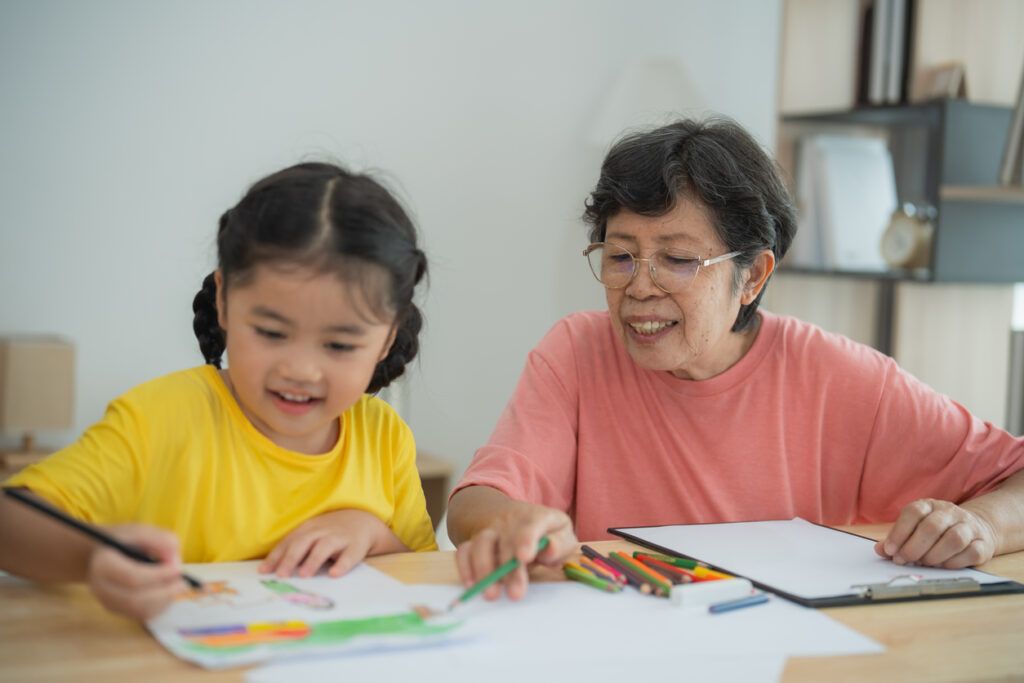
- Coloring or painting: Offer a variety of markers, crayons, paint, and coloring sheets that your care recipient and their grandchild can enjoy while coloring or painting together or side-by-side.
- Reading: Promote cognitive stimulation by encouraging your care recipient with dementia to read a story book to their grandchild. Dementia patients with older grandchildren may prefer to pick a chapter book or series to read together that they can discuss after each few chapters. As another option, they can each read their own books side-by-side on the couch or outside in nature on a park bench.
- Spa day at home: Promote quiet relaxation by setting up a mini spa day at home. For example, they could paint nails, do face masks, or enjoy a warm water foot soak with epsom salts and scented soap.
- Puzzles: Jigsaw puzzles, word searches, or sudoku can promote bonding as they problem-solve together and support cognitive stimulation as they work through challenging brain games.
- Making jewelry: This creative activity can be completed with a variety of materials, such as beads, dry pasta (penne or another pasta shape with holes), or charms. Dementia patients and their grandchildren can build cherished memories and beautiful creations while developing fine motor skills, too! Challenge cognitive development further by encouraging them to follow and repeat patterns with different materials or colored beads.
Fun & Play
Many happy memories start with play and fun. Here are some activities to get you started:
- Board games or card games: Simple games to enjoy together could be Go Fish, Crazy 8s, Connect 4, Snakes and Ladders, or Jenga.
- Building blocks: Build a building block set together or work from scratch to make small and big creations alike.
- Doing a seasonal craft: Creative activities like these can allow for fun, playful, and silly moments as they cut, paste, color, and decorate together.
- Making a sensory bin: Offer different materials for dementia patients and their grandchildren to create a sensory bin. Some examples include using dry rice, pasta, beans, sand, or salt and small items with different textures and colors like stones, shells, small toys, and pom poms. A dementia patient may enjoy selecting items to make the sensory bins together and exploring the various sights and textures as they go along.
- Using playdough: Spark creativity in this sensory activity that is enjoyable for all ages. Level this up even more by finding a playdough recipe for them to make together and play with afterward.
- Listening to music: Encourage them to select songs they can sing along and dance to together to create fun, lasting memories.
- Blowing bubbles: This engaging activity allows for simple, sensory-rich fun as they take turns blowing and popping bubbles and watching them float.
- Playing pretend with toys: Encourage grandchildren to show off their favorite toys and play pretend with their grandparents, and watch their creativity and imagination flourish.
- Playing dress-up: Help them choose outfits for one another and have a mini fashion show for the family.
Expert Tips
As a caregiver, you can support your care recipient as a dementia patient and their grandchildren to enjoy their activities even more by:
- Following each of their leads to find activities they both enjoy or find interesting.
- Adapting activities to make them easier or more challenging as appropriate. For example:
- Suggesting seated activities for dementia patients who fatigue quickly.
- Setting up the activity as much as possible beforehand to reduce the planning or problem-solving needed in the moment.
- Suggesting a time of day for the activity when both dementia and their grandchildren feel best.
- Making simple variations for the activities available so they may select and adapt in the moment.
- Using tools or equipment to make activities easier. For example, using adapted utensils when cooking or preparing meals.
- Staying nearby to assist with modifying or adaptating the activities in the moment. Memory loss, confusion, agitation, and even aggression are possible for dementia patients as they experience increasing cognitive decline. Being close by allows you to jump in should either your care recipient or your grandchild feel frustrated or like they need a break.
Don’t forget to check if you have free access to Trualta for more information like this.
References


