
Exercises For Stroke Patients At Home
Supporting a loved one after a stroke often comes with many questions, especially around how to help them regain strength and function safely at home. Many stroke survivors experience lasting changes in their movement, balance, and coordination, which can affect their ability to manage daily living tasks. As a caregiver, knowing how and when to encourage exercise is one of the most important ways you can support the recovery process.
Exercise plays a central role in stroke recovery. It helps improve physical strength, balance, and brain function. It also lowers the risk of future strokes and other health problems. When practiced regularly, stroke exercises can improve mobility, increase independence, and enhance overall quality of life.
In this article, we’ll review:
- Why exercise is important after a stroke
- The types of exercises that are most helpful during recovery
- Practical tips to help you and your loved one get started at home
Want to learn more about stroke recovery, exercises, or general caregiving? Check if you have free access to Trualta’s learning library and caregiver support groups.
Why Is Exercise Important After a Stroke?
One of the most important parts of the recovery process is regular physical activity. Exercise supports a process called “neuroplasticity”. This is the brain’s ability to form new connections and adapt after injury. These changes can help a person:
- Regain movement
- Improve coordination
- Restore function over time
Exercise also plays a role in mental and emotional recovery. It can improve mood, reduce the risk of depression, and increase confidence and independence. Physical activity also supports brain function and memory skills, both of which may be affected after a stroke.
4 Types Of Exercises After A Stroke
Depending on the area of the brain affected, stroke survivors experience varying changes in strength, movement, coordination, balance, speech, or memory. Because of this, recovery needs vary from person to person, and no two rehabilitation plans will look the same.
Before starting any exercise program, it’s essential to consult with a healthcare provider such as a doctor or physical therapist. Stroke recovery looks different for everyone, and a personalized plan ensures exercises are safe and effective.
In the next section, we’ll review some of the most common types of stroke exercises used in rehabilitation.
1. Aerobic Exercise
Many stroke survivors have low levels of cardiovascular fitness. This can limit mobility, lead to more time spent sitting, and increase the risk of another stroke. As a caregiver, encouraging gentle aerobic activity is one of the most effective ways to support long-term recovery.
Aerobic exercise involves continuous, low-impact movement that raises the heart rate and improves circulation to the brain, heart, and muscles. It supports brain function, improves heart health, and helps rebuild stamina. Common forms of aerobic activity that can be safely adapted during stroke rehabilitation include:
- Walking
- Swimming
- Cycling
In most stroke rehabilitation programs, aerobic training often focuses on gait training, the structured process of relearning how to walk. Walking is a key part of recovery and one of the most common goals for stroke patients, as it supports mobility and independence. Gait training, or walking, may be done with or without a mobility aid, depending on the healthcare provider’s recommendation. Caregivers can help by encouraging safe, short walks at home, gradually increasing the distance as endurance improves.
When walking is limited, alternatives include:
- Stationary cycling: Using a stationary bike can provide a steady cardiovascular workout with less joint stress. A bike with back support or foot straps may improve comfort and safety.
- Water-based activity: Exercises in a shallow pool, such as walking through the water, can reduce joint strain and make movement easier for individuals with weakness or stiffness.
Aerobic exercise intensity should remain light. Your loved one may feel their heart rate increase, but they should still be able to speak comfortably during the activity.
2. Balance Exercises
Stroke may affect your loved one’s balance and stability, increasing the risk of falls. Balance training is a key part of recovery and helps retrain the body to stay steady during sitting, standing, and walking. These exercises improve coordination, reduce fall risk, and promote greater confidence during daily movement.
Balance exercises should be performed daily, beginning with short sessions and gradually increasing over time. Depending on ability, training can be done in seated, standing, or walking positions. A safe environment and close supervision are strongly recommended, especially in the early stages of recovery.
Below are examples of stroke exercises that can be used to improve balance:
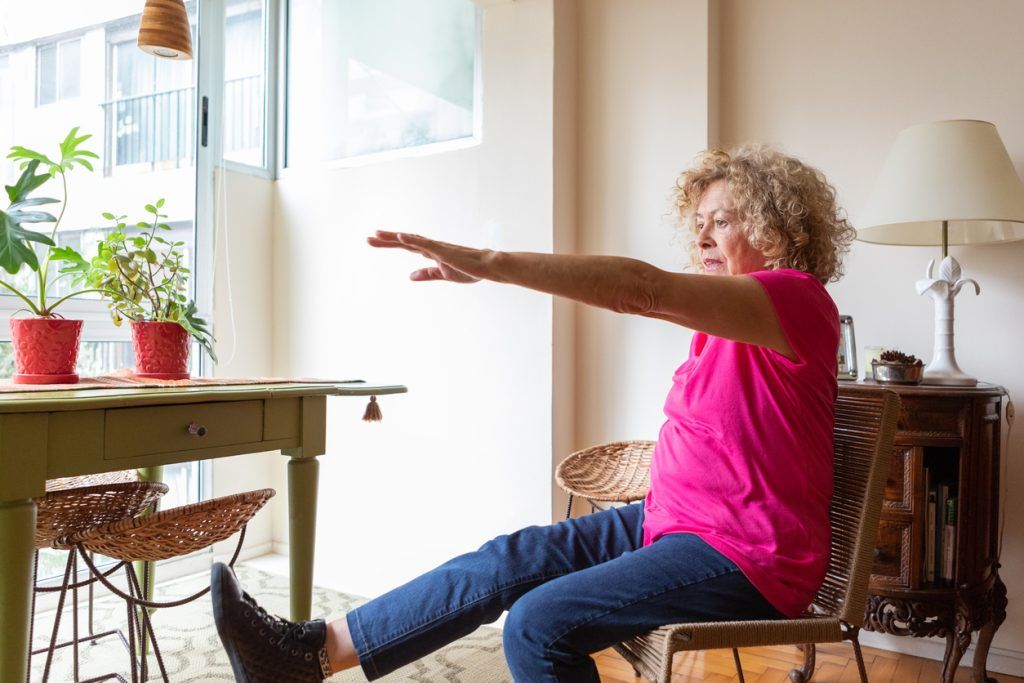
- Sit and reach: While seated upright, have your loved one slowly reach one arm forward or to the side, just beyond their base of support. This engages the core muscles and improves control during seated activities such as dressing or eating.
- Standing weight shift: With feet shoulder-width apart, guide them to shift weight slowly from one leg to the other. This builds leg strength and encourages equal weight-bearing, particularly when one side of the body is more affected.
- Stepping practice: If able, practice placing weight on one leg and stepping forward, backward, and sideways with the other. Make sure your loved one holds onto a stable surface for safety. This exercise mimics everyday movement and helps build confidence when recovering from small losses of balance.
3. Strength & Coordination Exercises
After a stroke, it’s common to experience weakness and reduced motor control, particularly in the arm, leg, and hand opposite the side of the stroke. Strength and coordination exercises play an important role in rebuilding movement, supporting independence, and making everyday activities like standing, reaching, and dressing safer and more manageable.
Below are examples of stroke exercises commonly used to improve strength and coordination:
- Sit to stand: From a stable chair, practice standing up and sitting down using the legs as much as possible. This builds leg strength, improves functional mobility, and mimics a key movement used daily.
- Bicep curls: Bend and straighten the arms using light weights or resistance bands. This exercise builds upper body strength and supports tasks like lifting, reaching, or carrying objects.
- Finger opposition: Touch the thumb to each fingertip on the affected hand, one at a time. This improves fine motor control, coordination, and dexterity for tasks such as buttoning or writing.
- Ball squeeze: Hold a soft ball in the affected hand and gently squeeze, then release. Repeat several times to build grip strength and increase hand control.
Start with two to three sets of ten to fifteen repetitions, three to five times per week.
4. Mobility Exercises
After a stroke, inactivity can lead to stiffness, limited range of motion, and spasticity. These issues often cause discomfort and hinder movement. Mobility exercises are designed to keep the joints moving, reduce stiffness, and support more active forms of rehabilitation.
Examples of mobility exercises include:
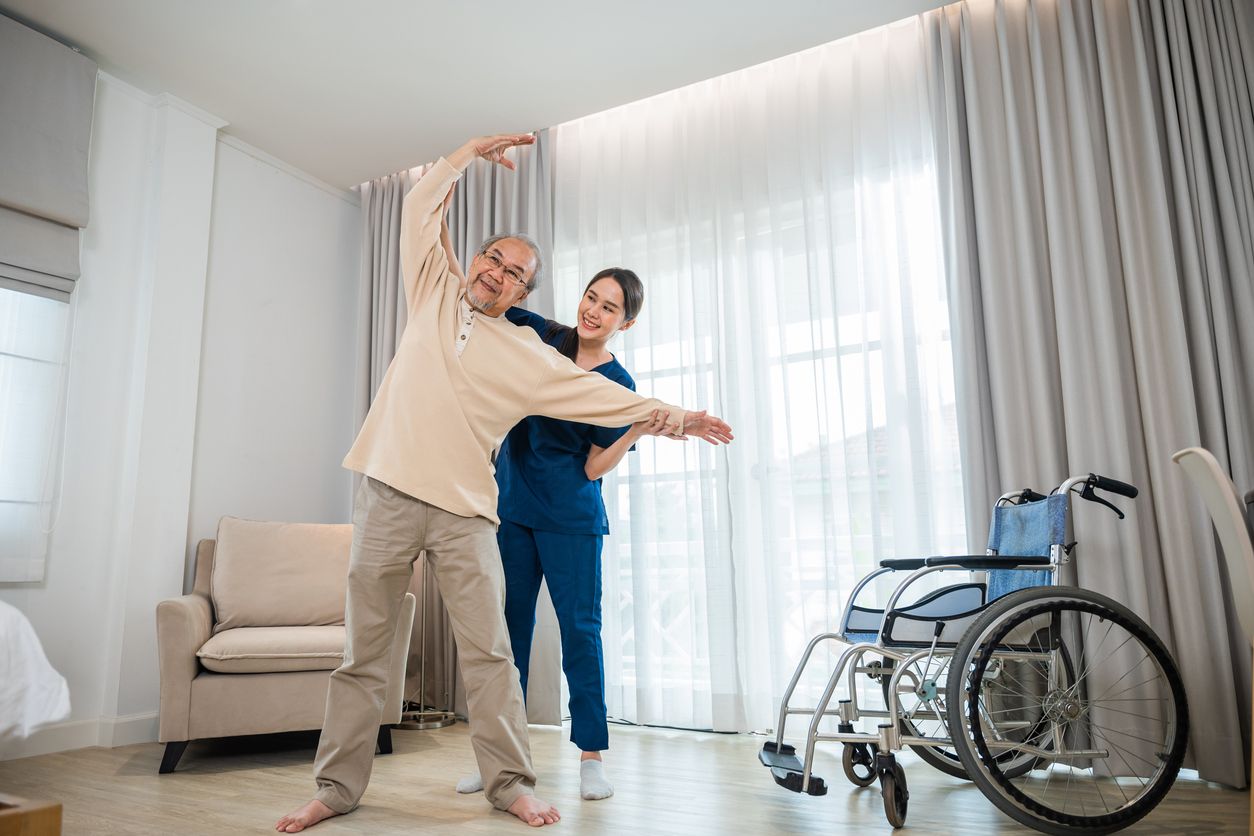
- Overhead arm reach: Have your loved one gently lift both arms overhead as far as comfortable, then lower them. This helps maintain shoulder flexibility and supports upright posture, especially if one side is more affected.
- Wrist circles and bends: Using the affected hand, slowly rotate the wrist in circles or gently bend it forward and back. These movements help maintain wrist mobility and reduce tightness.
- Leg extension and knee bend: While seated or lying, ask them to slowly straighten one leg, then bend the knee. This helps preserve flexibility in the hips and knees and promotes circulation.
- Ankle pumps: In a seated or lying position, encourage slow pointing and flexing of the feet, or moving into gentle ankle circles. This supports blood flow and reduces stiffness in the lower legs.
Start with one set of ten repetitions and aim to complete these movements daily.
Other forms of exercise may also be recommended depending on the person’s needs. A brain exercise, such as problem-solving tasks, or speech therapy may be included alongside physical movement to support memory, communication, and overall recovery.
Getting Started With Stroke Exercises At Home
Starting an exercise routine after a stroke can feel overwhelming, but small, consistent efforts over time lead to meaningful progress. Most stroke survivors will need to exercise for several months to see improvement, which is why building a safe, realistic routine is essential.
Begin at the current level of ability. Exercises should match what your loved one can safely do now, not what they were able to do before the stroke. Movements should be slow and controlled, with rest between sets to avoid fatigue. Including a gentle warm-up and cool-down can help reduce discomfort and prepare the body for movement.
It’s important to consult a healthcare provider about where to start and how to adjust exercises. They can help guide a program that supports safe, effective recovery at home.
Conclusion
Exercise plays a central role in stroke recovery. It:
- Supports physical function
- Improves brain function
- Promotes greater independence over time
A well-rounded program should include:
- Aerobic activity
- Balance training
- Strength and coordination work
- Gentle mobility exercises
It’s important to consult with a healthcare provider to ensure that exercises are appropriate and safe for your loved one’s current level of ability. The key to meaningful progress is consistency. Small amounts of movement each day can make a lasting difference in the rehabilitation process.
To learn more about caring for a stroke survivor, check if you have free access to Trualta.
References
- Eng, J. J. (2010). Fitness and Mobility Exercise Program for Stroke. Topics in Geriatric Rehabilitation, 26(4), 310–323.
- Stroke Association. (n.d.). Exercises for stroke survivors.
- Gordon, N. F., Gulanick, M., Costa, F., Fletcher, G., Franklin, B. A., Roth, E. J., & Shephard, T. (2004). Physical Activity and Exercise Recommendations for Stroke Survivors. Circulation, 109(16), 2031–2041.
- MacKay-Lyons, M., Billinger, S. A., Eng, J. J., Dromerick, A., Giacomantonio, N., Hafer-Macko, C., … Unsworth, K. (2019). Aerobic Exercise Recommendations to Optimize Best Practices in Care After Stroke: AEROBICS 2019 Update. Physical Therapy, 100(1).


