

Dialysis Tubing: Caregiver Guide
Dialysis is a treatment for people with end stage kidney disease (also known as kidney failure). It helps remove waste, toxins, and excess fluid from the body when the kidneys can no longer do the job. While some people go to a dialysis clinic, many patients now perform dialysis at home with the support of a trained caregiver.
If you’re a caregiver helping with dialysis at home, it’s important to understand how the equipment works. One part of that equipment may include tubing. This guide explains:
- What dialysis tubing is
- The types used in different contexts
- What you need to know to support your loved one safely
If you’re interested in additional resources or want to connect with other caregivers in a similar situation, check if you have free access to Trualta.
What Is Dialysis Tubing?
The term dialysis tubing can mean different things depending on the setting:
- In scientific labs, dialysis tubing refers to a special type of tubing made from a semi permeable membrane. It’s sometimes called Visking tubing. This kind of lab equipment tubing is used to demonstrate how waste and fluids move through a filter, similar to how dialysis works in the body. It allows small molecules like salts and water to pass through, while blocking larger molecules like proteins.
- In clinical and home dialysis, tubing refers to the medical tubes used to carry fluid to and from the body. These tubes do not act as filters. Instead, the actual filtering happens either inside a machine (for hemodialysis) or inside the patient’s own body (for peritoneal dialysis).
Medical Dialysis Tubing
Most patients who do dialysis at home receive peritoneal dialysis (PD). In this type of dialysis, the patient’s own abdomen acts as a natural filter. While you won’t work with membrane tubing, you will handle:
- Tubing that delivers and drains fluid (called dialysate) into and out of the abdomen.
- Dialysis bags that hold clean dialysate and collect used fluid after it absorbs waste from the body.
- Tubing clips or clamps used to securely close off tubing ends and prevent leaks.
- Catheters, which are flexible tubes inserted into the body (into a vein for hemodialysis or the abdomen for peritoneal dialysis). Note: The catheter is different from tubing, as it stays in the body and is not made of filtering material.
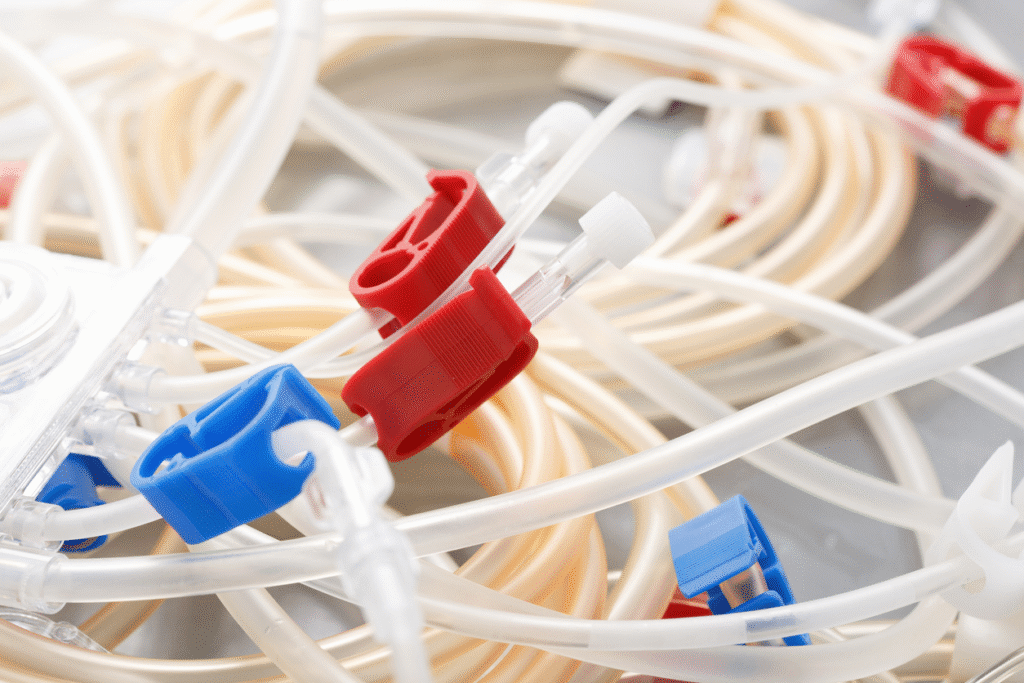
Managing Dialysis Tubing & Other Components As A Caregiver
If you’re helping a care recipient with the in-home dialysis process, you’ll likely be involved in managing supplies and handling some or all parts of the treatment process. Your role may include keeping track of equipment, assisting with dialysis sessions, and making sure everything is clean, safe, and working properly.
Before you begin, your loved one’s healthcare team will provide thorough training. They’ll show you exactly how to use the supplies, how to stay sterile, and what to watch for during each treatment.
Here are some important tips to keep in mind:
- Follow your training closely. Stick to the instructions you received from the care team. These guidelines are designed to protect both you and your loved one.
- Keep your hands clean. Always wash your hands thoroughly or wear gloves when handling tubing, catheters, or other equipment.
- Inspect tubing before use. Check for cracks, pinholes, or any signs of damage. Never use damaged tubing. Report any issues to your loved one’s medical team right away.
- Avoid kinks and pinches. Make sure the tubing is laid out smoothly and doesn’t get bent or squeezed, as this can block fluid flow during dialysis.
- Monitor the tubing during treatment. Keep an eye on the equipment throughout the session to ensure everything is flowing properly and safely.
- Dispose of used supplies correctly. Follow the instructions from your care team for throwing away single-use items. If you’re using any reusable equipment, clean and store it exactly as directed.
- Check the access site daily. Look at the catheter area for signs of infection, such as redness, swelling, warmth, or pain. If you notice any of these, contact the healthcare team immediately.
Taking these steps helps prevent infection and keeps your loved one’s treatment running smoothly. As a caregiver, your attention to cleanliness and detail makes a big difference in their safety and comfort at home.
Key Takeaways
- Dialysis tubing is a semi permeable membrane used in lab settings to show how diffusion and osmosis work, two natural processes that help explain dialysis.
- While dialysis tubing is mostly used for laboratory use and demonstrations, understanding how it works can help caregivers grasp the principles behind actual dialysis treatment.
- Home caregivers won’t use dialysis tubing membranes directly, but they will manage plastic tubing, dialysis supplies, and other components like catheters and fluid bags during treatment.
- Caregivers should always follow their training and maintain proper hygiene and safety protocols when handling any dialysis-related equipment or lab equipment at home.
For additional information on caring for someone with kidney disease, check if you have free access to Trualta.
References
- Fresenius Kidney Care. (n.d.). Your Role in At-Home Peritoneal Dialysis Treatment.
- Fresenius Kidney Care. (n.d.). Getting a Peritoneal Dialysis Catheter.
- National Kidney Foundation. (n.d.). Taking Care of Your Peritoneal Dialysis (PD) Catheter.


