Do They Leave Ports In Your Arms For Kidney Dialysis?
Dialysis is a treatment for kidney failure. Many patients with end stage chronic kidney disease need this treatment when their kidneys have too little function left. As the caregiver for someone undergoing dialysis, it’s important to understand the procedure and all its components.
In this article, we explain:
- The types of dialysis
- Different dialysis access points (also known as ports)
- Why ports are left in the arm for kidney dialysis
- Tips for living with dialysis access and how to care for them
Check if you have free access to Trualta for more information on caring for someone with kidney disease.
About Kidney Disease & Dialysis
Chronic kidney disease is a progressive condition. End stage, or stage 5, kidney disease, also known as kidney failure, occurs when the kidneys have less than 15% of normal function left.
At this stage, patients with kidney disease need a transplant. Patients not eligible for a transplant or waiting for an available donor kidney need dialysis to replace the lost function of their damaged kidney. In some cases, a patient may choose conservative management over dialysis for various personal and health reasons.
What Is Dialysis?
Dialysis is a treatment for kidney failure. Healthy kidneys filter waste and excess fluid from the blood. They are also crucial for maintaining normal blood pressure and electrolyte balance. Dialysis replaces these functions for damaged and diseased kidneys.
There are two primary types of dialysis: hemodialysis, which can be performed at home or in a dialysis center, and peritoneal dialysis, which is mostly used in the home.
Hemodialysis
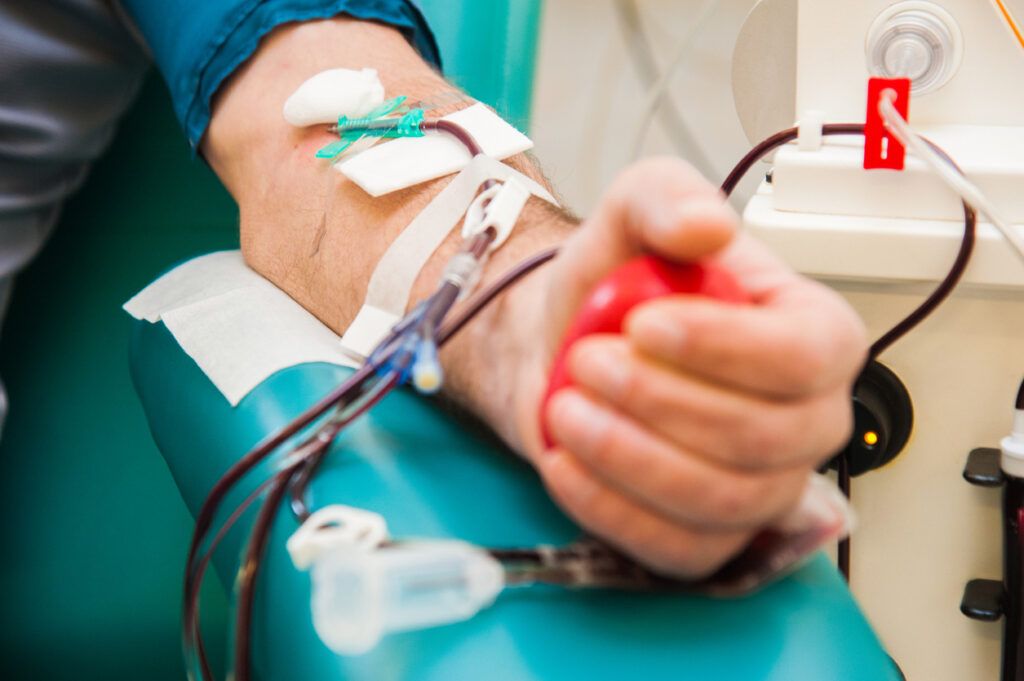
Hemodialysis uses a machine to filter the blood through a dialyzer. The machine and dialyzer act like an artificial kidney. The patient’s blood travels into the dialysis machine, waste and fluids are removed, and the blood goes back into the patient.
Hemodialysis requires a vascular access site, which is typically in the arm. Patients undergoing in-center hemodialysis normally undergo the treatment at least three times each week. Patients who undergo hemodialysis at home do the treatment five to seven times per week, which typically results in better outcomes.
Peritoneal Dialysis
Peritoneal dialysis uses the patient’s own body to filter their blood. Peritoneal dialysis catheter placement is in the patient’s abdomen, also known as the peritoneal cavity. The catheter fills the abdomen with dialysate, a special dialysis solution.
As blood flows naturally to the abdomen, the dialysate pulls out waste particles and extra fluid. The filtering occurs through a layer of tissue in the abdomen called the peritoneum.
Peritoneal dialysis can be done with or without a machine. It’s done at home multiple times a day. This type of dialysis requires an implanted port in the abdomen through a minor surgery.
What Are The Hemodialysis Ports?
Both hemodialysis and peritoneal dialysis patients must undergo a minor procedure for port placement before dialysis sessions can begin. A port is a dialysis access site.
- In hemodialysis, the port allows blood to leave the body, go through the machine, and re-enter the body.
- In peritoneal dialysis, the port is used to fill and empty the abdomen of dialysate and waste fluid.
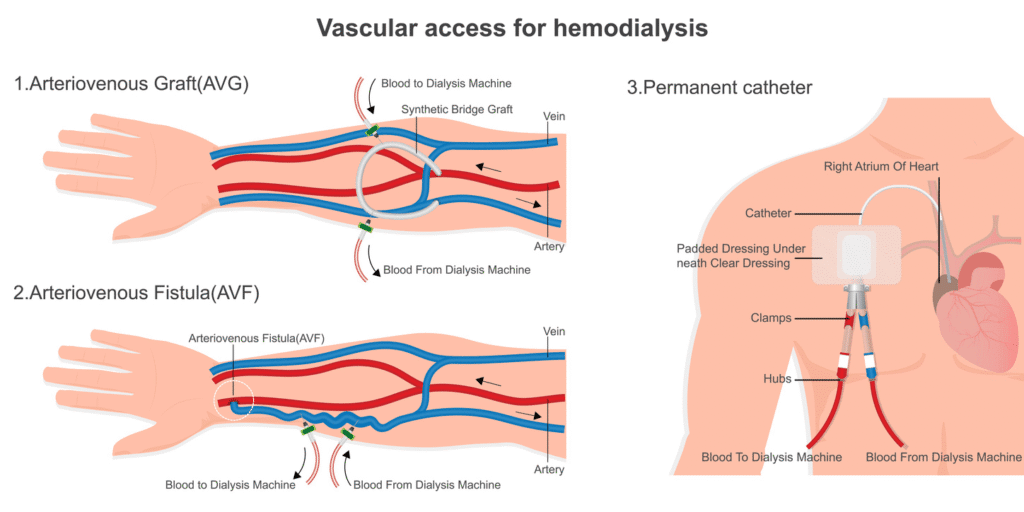
Only hemodialysis uses ports in the arm. These ports are mostly permanent, remain in place between treatments, and are used each time the patient undergoes dialysis. There are three types of hemodialysis ports:
1. Arteriovenous Fistula
To create a dialysis fistula, a surgeon joins an artery and a vein in the patient’s arm. This creates a larger blood vessel so blood can flow more quickly out of and back into the body for dialysis.
This is the preferred type of access site for hemodialysis for a few reasons:
- It lasts longer than other types of ports.
- It’s less likely to get infected.
- Blood clots are less likely to form in a fistula.
- A fully formed and healed fistula provides excellent blood flow for dialysis.
The fistula can take a few weeks to fully form after the procedure used to create it. This means that many patients need a temporary type of dialysis access they can use while the fistula forms and heals.
2. Arteriovenous Graft
An AV graft uses a flexible tube to connect an artery and a vein in the arm. It acts much like a fistula, but doesn’t last as long. It’s also more likely to lead to complications like clotting or infections.
There are a couple of benefits of grafts over fistulas for some patients. One is that it can be used sooner. While a fistula needs several weeks to heal enough for dialysis, a graft can be used within a couple of weeks of the procedure.
A graft is also a better choice for some patients due to their blood vessels. Patients with smaller or weak veins may not be good candidates for a fistula. Also, in some patients, an attempted fistula never fully matures enough to be used for hemodialysis. These patients can benefit from a graft.
3. Catheter
A catheter is a less desirable vascular access option for dialysis than a fistula or graft, but it is necessary in some patients and certain situations. Hemodialysis catheters aren’t designed to last very long and are typically for temporary use. Patients may need a catheter while waiting for their graft or fistula to be ready for use.
A hemodialysis catheter is for venous access. Also known as a central venous catheter, it’s a flexible Y-shaped tube placed inside a large vein. Common places for this type of catheter placement are in the neck, chest, and upper thigh or groin area. Tunneled catheters are used for access, which means they are situated under the skin.
Dialysis Access Surgery: What To Expect
Regardless of the type your loved one gets, the implanted port procedure should be simple. It’s typically done on an outpatient basis. Most dialysis access sites are in the arm, but the doctor will determine the best location.
Before the procedure, the vascular surgeon uses ultrasound or other tests to find the best blood vessels for access. The procedure can be done under sedatives with local anesthesia or general anesthesia. Talk to your loved one and their doctor about the best option.
The procedure shouldn’t take long, and your loved one should be able to go home the same day. They will have some pain and swelling at the vascular access site. Keep the area comfortably elevated to help reduce swelling.
Follow the surgeon’s or doctor’s instructions for limitations in the first few days. Generally, your loved one should rest and keep the site dry. Look daily for signs of a problem: ongoing pain and swelling, redness, pus, and a fever.
Living With Dialysis Access
Dialysis can be disruptive to daily life and normal activities. Depending on the type your care recipient receives, dialysis takes place a few times a week, daily, or multiple times each day. However, living with an access port in the arm does not have to be a major part of the disruption if you know how to care for it properly.
How To Care For A Hemodialysis Access Site
One of the most important aspects of living with dialysis is caring for the access site. Good care keeps it healthy and functioning for longer.
- Clean the access area regularly with water and antibacterial soap.
- Look at the site daily for signs of infection: redness, swelling, pain, warmth, and discharge.
- Look for signs of other issues with the fistula or graft. These include bulging under the skin, peeling skin, and bleeding.
- Listen and feel for good blood flow through a graft or fistula. You can do this by gently placing your ear over the access or by using a stethoscope if you have one. You can also feel the area to determine that blood is flowing through it. Ask your loved one’s doctor to demonstrate these techniques so you know what to listen for or feel.
- Contact your loved one’s doctor or other care team professional as soon as you recognize an issue with a dialysis access.
Tips To Help Your Loved One Live With Dialysis Access
It can be an adjustment living with an access site and with regular dialysis. Help your loved one cope with this significant lifestyle change with good care and these additional tips:
- Avoid heavy lifting or any exercise that strains the access site. Switch to less strenuous exercises and those that don’t involve the arm.
- Talk to your loved one’s doctor about any water activities. It may or may not be fine to let the site get wet for periods of time.
- Watch their sleeping or resting position. They should avoid resting their head or putting pressure on that arm.
- Avoid tight clothing or jewelry on the access arm.
- Don’t use a blood pressure cuff or allow blood draws on the access arm. If necessary, get your loved one a medic bracelet to notify healthcare professionals they might see without you.
- Help manage their overall health with regular checkups and by maintaining a recommended diet and fluid intake.
Many patients newly living with dialysis can also benefit from emotional support. A kidney failure diagnosis and adjusting to dialysis can trigger mental health issues. Help them enroll in a kidney disease or dialysis support group. Talk to their doctor about therapy or counseling if necessary.
Living with chronic kidney disease can be challenging, but patients can still enjoy a good quality of life. If you care for someone who needs to begin dialysis, learn more about this type of treatment and your role in helping them get the most out of it. Check if you have free access to Trualta for more information.
References
- National Kidney Foundation. (n.d.). Hemodialysis Access.
- MedlinePlus. (2023). Hemodialysis access procedures.
- Azura Vascular Care. (2019). Living with a dialysis access.