Types Of Heart Tests Every Caregiver Should Know
Caring for a loved one includes helping them manage health conditions. If your loved one has cardiovascular disease, they’ll likely need one or more heart tests, including simple tests used in routine screening and more invasive or time-consuming tests.
As a caregiver, it’s important to understand the types of heart tests your care recipient might need. This allows you to prepare them for the tests, explain why they are needed, and answer any questions.
In this blog, we talk about:
- Who needs heart tests
- The most common heart tests
- Why your loved one might need these tests
Want to learn more about caring for someone with heart disease? Check if you have free access to Trualta.
Who Needs Heart Tests?
Doctors use heart tests for various reasons:
- To diagnose heart disease and related conditions
- To make decisions about the prevention and treatment of heart disease
- To determine if a condition is worsening or if a treatment is helping
Most people can benefit from routine and basic heart tests to screen for health issues. These include blood tests to check blood cholesterol levels and blood pressure measurements.
More sophisticated or invasive tests, like cardiac catheterization, are usually reserved for patients with worrying symptoms or risk factors for heart disease. There are many different heart diseases and cardiovascular diseases with a range of symptoms. Some signs your loved one might have an issue that requires testing include:
- Chest pain
- Shortness of breath
- Getting tired easily during activities
- Dizziness, lightheadedness, and fainting
- Racing, slow, pounding, or fluttering heartbeat
- Blue skin
- Swelling in the legs, hands, or feet

Basic Heart Health Tests
Most people, including healthy adults, can benefit from regular heart health screenings. These are basic tests that many patients get at yearly checkups. They screen for issues that might not yet be showing worrying symptoms.
Blood Tests
A technician uses a needle to withdraw a small amount of blood, typically from a blood vessel in the arm. A patient’s blood test can reveal cholesterol, triglyceride, and glucose levels, which impact cardiovascular health.
Your loved one might also need a blood test if their doctor suspects they had a heart attack. Proteins from the heart get into the bloodstream after a cardiac event and are revealed in blood tests. A blood test can also show levels of C-reactive protein, which indicates inflammation in the coronary arteries.
Blood Pressure Measurement
A simple blood pressure test can reveal high blood pressure, also known as hypertension. Hypertension does not cause symptoms, so it’s important to measure it regularly. Blood pressure monitors are inexpensive and can be used at home for regular monitoring.
Imaging Tests
Doctors can perform several different heart tests to examine the heart and blood vessels. They typically use these tests to diagnose heart and cardiovascular conditions.
Chest X-Ray
Chest X-rays are often used to image the lungs, but they can also be useful as a type of heart test. Fluid in the lungs, for example, can indicate heart failure. An X-ray can also show the doctor the size and shape of the heart. It may also show calcium deposits on the heart or blood vessels, which can indicate several issues, like damaged heart valves.
Echocardiogram
An echocardiogram is an ultrasound imaging test. Ultrasound tests are noninvasive. The health technician applies a gel to the area to be imaged and moves a wand over the skin. It delivers sound waves that bounce, or echo, off structures inside the body, creating an image.
Doctors use this image of the heart or blood vessels to diagnose various heart diseases, such as:
- Congestive heart failure
- Coronary artery disease
- Heart valve diseases
- Heart muscle issues
The ultrasound images can also measure blood flow through the heart and blood vessels.
Ultrasound can also be used to image blood vessels for signs of heart disease or other cardiovascular issues. For example:
- An abdominal aorta ultrasound images the large blood vessel that leads away from the heart. This imaging test looks for abdominal aortic aneurysms, or weak spots that can rupture. Older men with risk factors are likely to need this test.
- A carotid ultrasound images the arteries in the neck to look for signs of atherosclerosis, or hardening of the coronary arteries. Atherosclerosis here increases the risk of stroke. Your loved one might need this test if they have risk factors for stroke or have had stroke symptoms.
Cardiac CT Scan
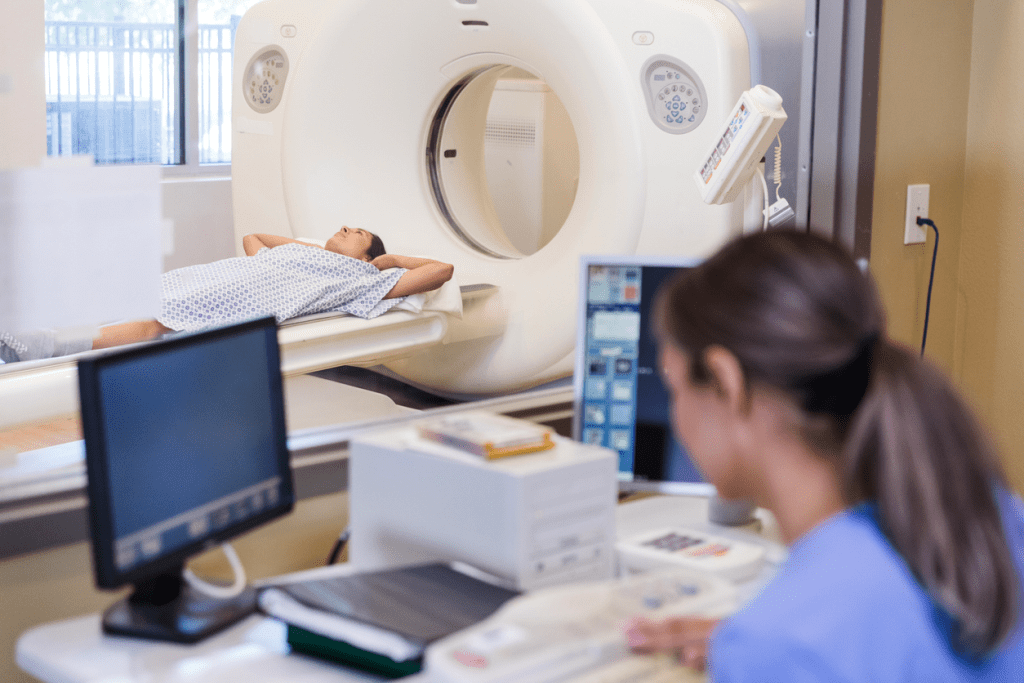
A computed tomography (CT) scan is a special type of X-ray imaging that produces more detailed internal images of the body. To undergo a CT scan, your loved one will lie on a table that moves through a donut-shaped machine. The donut spins around the table, taking X-rays at different angles. The procedure is completely painless.
A cardiac CT scan is useful for examining the heart’s structure in detail and finding arterial blockages around the heart. Your loved one might be sent for a cardiac CT scan after their doctor sees heart problems on a chest X-ray.
Your loved one may need a coronary calcium scan, which uses the CT machine to look for calcium deposits in an artery. This can be an early sign of coronary artery disease.
Cardiac MRI
MRI stands for magnetic resonance imaging. Like a CT scan, this test is painless, but it can be more distressing for some patients. It requires sliding inside a large machine shaped like a tunnel.
The patient must lie still in a small space with loud sounds, which can cause anxiety and distress in some patients. If your loved one is anxious, their doctor might suggest a medicine before the test to help them relax. It’s also important to notify the doctor or technician of any metal your loved one has inside their body.
A cardiac MRI provides a detailed image of the heart. It can be used to help diagnose:
- Heart defects
- Arrhythmia
- Heart attack
- Heart failure
- Coronary heart disease
Myocardial Perfusion Scan
Also known as a thallium scan or nuclear cardiac test, this test helps doctors see blood flow to the heart. The patient receives an intravenous injection of a radioactive material called thallium. A special camera takes pictures of the heart to produce images of where the thallium goes. The thallium will not accumulate in areas with poor blood flow.
A myocardial perfusion scan can be done at rest, but your loved one might also be asked to do some exercise during the test. Although this test involves radioactive material, the amount is small and poses a low risk.
Other Heart Tests
Your loved one might undergo one or more of these tests, which measure the heart in different ways and do not involve imaging. These tests can be useful for diagnosing many heart conditions.
Electrocardiogram (ECG)
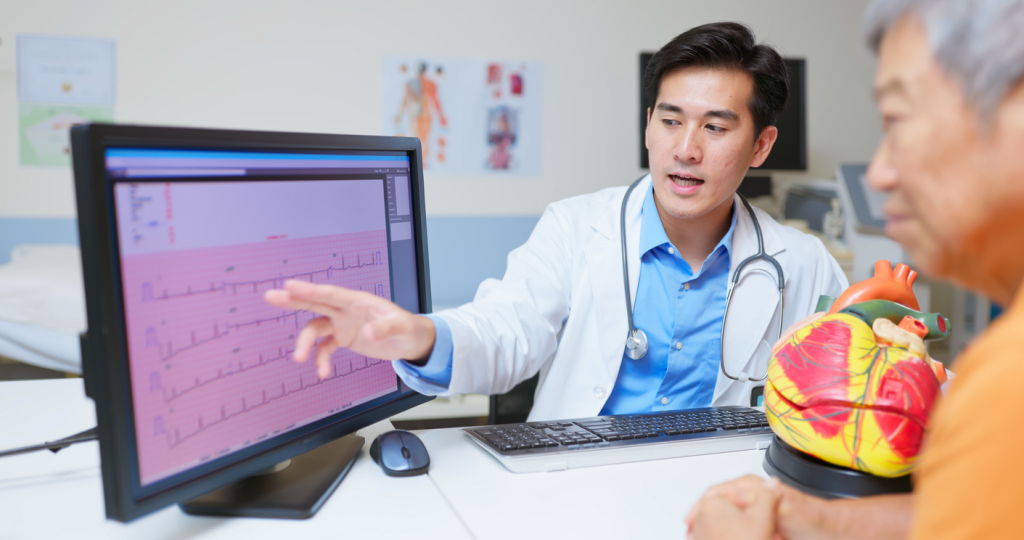
An ECG (also sometimes called an EKG) is a test that measures and records electrical activity in the heart. It can also measure heart function through heart rate and rhythm. Doctors often use ECGs as part of regular screenings for certain patients. ECGs can also be used by doctors for diagnosing:
- Atrial fibrillation
- Arrhythmia
- Heart attack
- Heart failure
- Cardiomyopathy
An ECG test is painless. The patient lies on an examination table while the doctor or technician applies sticky electrodes to the skin on the chest, legs, and arms. The electrodes collect information that is displayed on a computer for the doctor to read.
Stress Test
A stress test uses an ECG to measure the heart’s beat and electrical activity before, during, and after exercise. Performing the tests when the heart is working harder than at rest can be useful for diagnosing certain conditions.
To perform a stress test, the doctor hooks the patient up to an ECG via electrodes. The patient then exercises on a treadmill or a stationary bike to raise the heart rate to a target range. In addition to the ECG, the patient may also wear a blood pressure monitor and a blood oxygen monitor.
Your loved one may need a stress test if they’re experiencing abnormal heart rhythm, chest pains, dizziness, or shortness of breath. A stress test can be used to diagnose:
- Arrhythmia
- Coronary heart disease
- Heart failure
- Angina
Holter Monitoring
A Holter monitor is a small, wearable electrocardiogram device that measures electrical activity in the heart and heartbeat rhythm, strength, and regularity. The patient wears the device for a period of time, often 24 hours, while doing normal activities. Electrodes attach to the skin so the device can measure and record electrical activity.
Wearing a Holter monitor can be a little disruptive, but not painful. Your loved one’s doctor might order this test to help diagnose arrhythmia or atrial fibrillation or to check the progress of treatments for an irregular heartbeat.
Tilt Test
Your loved one might need a tilt test if they feel dizzy, have fainting spells, or experience heartbeat abnormalities. To perform this test, the patient lies on a table that slowly tilts the body. A nurse or technician measures the patient’s blood pressure and heart rate throughout the process to see how they change as the table tilts.
Minimally Invasive Heart Tests
Most heart tests are non-invasive, but aren’t always adequate for diagnosing a patient’s condition. Your loved one might need one of these more invasive but safe and simple tests.
Transesophageal Echocardiography (TEE)
A TEE is a type of echocardiography that uses ultrasound to get a more detailed picture of the heart than a standard echocardiogram. To perform this test, the doctor inserts the echo transducer into the esophagus. Attached to a thin, flexible tube, it goes in the mouth, down the throat, and into the esophagus.
TEEs are often used to:
- Look for blood clots in the heart
- Look at the heart valves
- Follow the progress of heart valve disease
Undergoing a TEE can be uncomfortable or distressing. Your loved one may receive some medication first to help them relax.
Coronary Angiogram
A coronary angiogram uses contrast dye and X-rays to image the insides of the coronary arteries. To do this, the doctor inserts a catheter, a long, thin, flexible tube, into an artery. They usually insert the catheter in the arm or groin area and feed it to the arteries around the heart. This procedure is called cardiac catheterization and is necessary for coronary angiography.
A cardiac catheterization with a coronary angiogram is the most reliable test for diagnosing coronary artery disease. It allows the doctor to find narrow or blocked areas in the arteries. Your loved one may need this test if they’re having troubling symptoms or have had a heart attack. They will receive a sedative before the procedure to relax.
If you have additional questions about heart screenings and tests your loved one needs, talk to their doctor or other healthcare professionals on their medical team.
References
- Mayo Clinic. (n.d.). Heart disease.
- American Heart Association. (2024). Heart-health screenings.
- Johns Hopkins Medicine. (n.d.). Your guide to common heart tests [PDF].
- MedlinePlus. (n.d.). Heart health tests.