Complications Of Diabetes: A Caregiver Guide
Caring for someone with diabetes is an important role, but it can also feel like a lot to manage. Diabetes affects the whole body, and without good control of blood glucose (sugar), it can lead to long-term health problems. These health problems are known as complications of diabetes.
As a caregiver, you may help with meals, medication reminders, doctor’s appointments, or simple daily habits. You may also be the first one to notice when something isn’t quite right. Because of this, understanding the complications of diabetes can help you act quickly, prevent emergencies, and support healthier daily routines.
This article will explain:
- What is diabetes?
- The major complications of diabetes
- How you can help your care recipient prevent complications
If you find the information in this article helpful, consider using your free access to Trualta for more resources.
What Is Diabetes?
Before looking at the complications of diabetes, it helps to understand the two main types: ‘Type 1 diabetes’ and ‘Type 2 diabetes’. Caregivers may support people with either condition and knowing the difference can help you provide safer, more confident care.
Type 1 Diabetes
Type 1 diabetes is an autoimmune condition. This means the body’s immune system attacks the cells in the pancreas that make insulin. Insulin is the hormone that helps move sugar from the blood into the cells for energy.
People with Type 1 diabetes cannot make insulin at all. Because of this, they need insulin every day, either from injections or an insulin pump, to stay alive.
Type 1 diabetes usually begins in childhood or early adulthood, but it can appear at any age. Insulin is always required. Blood sugar can rise and fall quickly, so regular monitoring is essential, and skipping insulin is dangerous and can lead to a life-threatening condition called diabetic ketoacidosis (DKA). Stress, illness, or changes in activity can affect blood sugar levels.
Type 2 Diabetes
Type 2 diabetes happens when the body does not use insulin well (called insulin resistance) or does not make enough insulin. It is the most common type of diabetes, with about 90 – 95% of people with diabetes having Type 2 diabetes.
Many people with Type 2 diabetes keep making insulin, but their bodies can’t use it effectively. Over time, the pancreas may become too tired to keep up.
Even though Type 1 and Type 2 diabetes have different causes, both can lead to complications if blood sugar stays high for long periods. Both require:
- Monitoring
- Healthy eating
- Medication or insulin
- Regular check-ups
- Awareness of symptoms
| Remember: Good blood sugar control is the most important factor in preventing or slowing complications. |
Why Complications Of Diabetes Happen
To understand complications, it helps to know how diabetes works. Diabetes causes a person’s blood sugar (also called glucose) to stay too high. The body needs glucose for energy, but when levels stay high for long periods, the extra sugar in the body starts to damage blood vessels and nerves. This can ultimately cause different parts of the body to struggle.
When projected over many years, high blood glucose can cause stress to organs (e.g., vision loss, kidney failure) and cause narrowed blood vessels (cardiovascular disease) which impairs blood flow. It can also slow down healing, especially in peripheral regions, which results in things like foot problems. There are also changes in mood and energy, as well as weakened immune function, making infections more likely.
The good news is that many complications of diabetes develop slowly. This means you often have time to notice early signs and get help. Good blood sugar control, healthy meals, regular activity, and scheduled check-ups all make a major difference.
9 Major Complications Of Diabetes
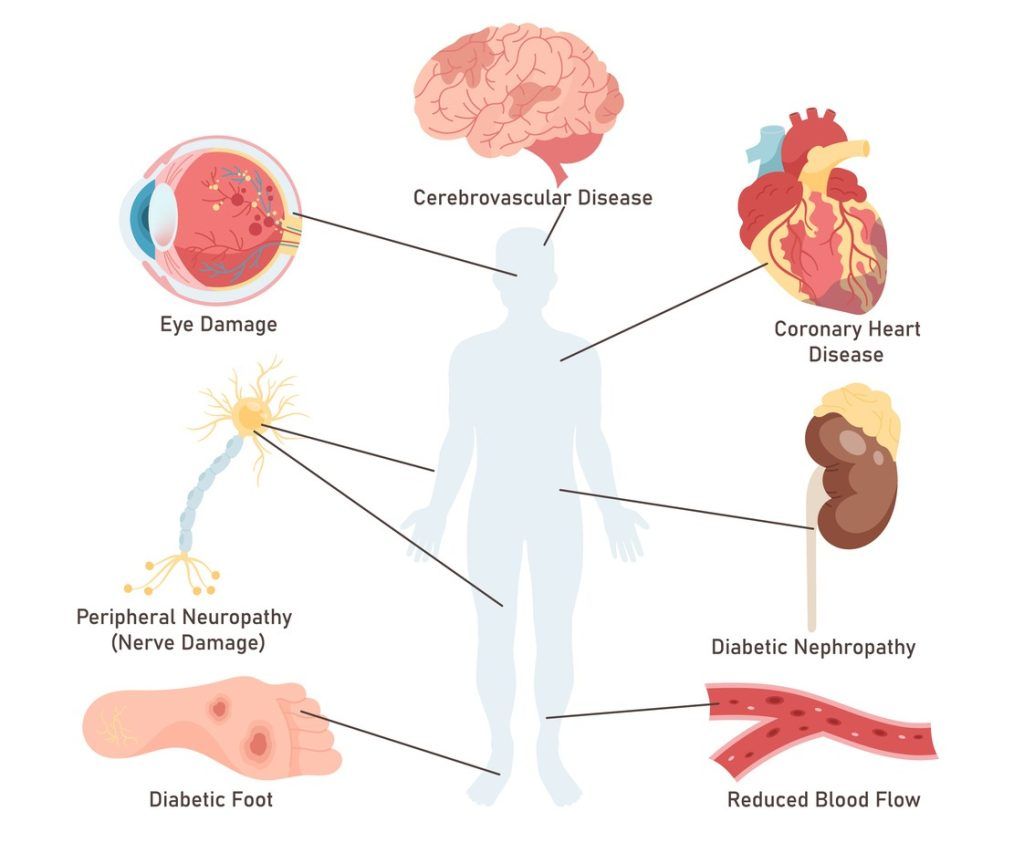
The following sections explain the most common and serious complications of diabetes, along with practical steps caregivers can take to address them.
1. Cardiovascular Disease And Stroke
Heart disease is the number one cause of illness and death in people with diabetes. High blood sugar damages blood vessels, and when combined with high blood pressure or high cholesterol, the heart has to work much harder. Over time, this raises the risk of heart attacks, chest pain, and stroke.
The main signs to watch out for that could signal cardiovascular disease include:
- Shortness of breath
- Chest pressure or pain
- Sudden fatigue
- Swelling in the legs
- Fast or irregular heartbeat
- Dizziness or fainting.
Call emergency services right away if you see symptoms of a stroke: drooping face, trouble speaking, sudden weakness on one side.
Even small lifestyle changes can help protect the heart. As a caregiver, the best ways to help include:
- Supporting daily medications for blood pressure, cholesterol, or heart health
- Preparing meals lower in salt, sugar, and unhealthy fats
- Encouraging short daily walks or light movement
2. Eye Problems (Diabetic Retinopathy)
High blood sugar damages the tiny blood vessels in the eyes which can lead to vision loss and problems such as diabetic retinopathy, cataracts, or glaucoma. Eye complications often have no symptoms early on, which is why regular exams are essential.
The main signs and symptoms to look out for are:
- Blurry vision
- Double vision
- New floaters that appear suddenly
- Difficulty reading
- Trouble seeing at night
- Sudden vision loss
Caregivers can help by arranging yearly eye exams, even if vision seems normal. You can also watch for behaviors such as squinting or headaches during reading. Many vision problems can be treated when caught early, but late treatment may not reverse the damage.
3. Kidney Disease
The kidneys help filter waste from the blood. When high blood sugar damages the kidneys, waste products begin to build up. This condition is called diabetic kidney disease.
Kidney disease usually develops slowly, but the damage can become permanent if not caught early enough. The main signs are:
- Swelling in the ankles, feet, or hands
- Foamy urine
- A need to urinate at night more often
- Fatigue or weakness
- Poor appetite
Caregivers can ensure that their patients get yearly kidney blood tests and urine tests, support low-salt meals if recommended, encourage hydration, watch for swelling or sudden weight gain, and help with medications that protect the kidneys, such as ACE inhibitors.
4. Nerve Damage (Diabetic Neuropathy)
Nerve damage is one of the most common complications of diabetes. High blood sugar harms the nerves, especially those in the legs and feet, which can lead to foot problems. This can cause tingling, numbness, burning, or pain. Because sensation can decrease, the person may not notice cuts or injuries, such as a foot ulcer. Severe diabetic neuropathy can also affect digestion, bladder function, or sexual health.
Caregivers can help by:
- Completing daily foot checks
- Supporting good blood sugar control
- Helping choose comfortable, well-fitting shoes
- Reporting symptoms early
- Keeping skin moisturized (but avoiding lotion between the toes).
5. Foot Problems
Foot problems are a major concern because nerve damage and poor blood flow can cause slow healing. A small blister can turn into a serious infection, like a foot ulcer.
Symptoms include redness or swelling, cracks, cuts, or blisters, ingrown toenails, calluses or corns, and open sores that don’t heal.
Daily foot inspections are crucial, as is keeping the feet clean and dry, making sure shoes fit well, and never ignoring a wound on the foot.
| Important: Even small foot problems should prompt a call to a doctor, because infections can spread quickly in people with diabetes. |
6. Skin Infections
Diabetes raises the risk of skin infections, slow-healing wounds, and dry skin. Poor circulation and weak immune responses make the skin more vulnerable to these problems. Signs of skin infections are:
- Red or warm patches
- Itchy or scaly skin
- Slow-healing sores
- Cracked heels.
The best way to prevent these concerns is by practicing good skincare. For example, encouraging daily hygiene, keeping skin moisturized, staying alert for the first signs of infection, and using mild soaps and warm (not hot) water.
7. Gum Disease And Dental Issues
High blood sugar can feed bacteria in the mouth, which increases the risk of gum disease, infections, and tooth problems. Diabetes-related dry mouth can also lead to cavities. Signs such as red or bleeding gums, bad breath, loose teeth, dry mouth, and pain when chewing should be investigated further.
As a caregiver, you can:
- Encourage brushing twice a day
- Support flossing
- Schedule dental check-ups every six months
- Watch for gum swelling or color changes
8. Mental And Emotional Health Problems
Managing diabetes daily is stressful but a fundamental necessity. People may feel overwhelmed by checking their blood sugar, taking medications, or managing symptoms. This can lead to burnout, anxiety, or depression. Caregivers often notice mood or behavior changes before the person does.
Watch out for:
- Changes in sleep habits
- Withdrawing from family or hobbies
- Iritability or sadness
- Trouble concentrating
- Loss of interest in self-care
Strive to listen without judgment, encourage small breaks or fun activities, keep routines simple and predictable, and seek professional help when needed.
9. Low Blood Sugar (Hypoglycemia)
Low blood sugar can happen if a person takes too much medication, skips meals, exercises more than usual, or drinks alcohol. It can come on quickly and may lead to danger if not treated fast.
Look out for:
- Shakiness
- Sweating
- Confusion
- Irritability
- Trouble speaking
- Loss of balance
You can give a fast-acting source of sugar such as fruit juice, glucose tablets, or a regular (not diet) soda. If symptoms don’t improve within 10-15 minutes, call a healthcare provider or the emergency services.
Call a doctor or emergency services if the person has difficulty breathing, chest pain, sudden weakness or numbness, confusion or slurred speech, high fever with infection, vomiting that lasts more than a few hours, severe abdominal pain, or signs of stroke or heart attack. Never hesitate to seek help, as prompt action can save a life.
How Caregivers Can Help Prevent Complications
A caregiver’s support can make everyday life easier and safer for someone with diabetes. The following habits and strategies will help prevent complications of diabetes and build a routine of steady health:
- Medication. Support their medication routine by keeping things organized, refilling prescriptions early, and using reminders or pillboxes.
- Good eating habits. Encourage healthy meals that strive for lean proteins, vegetables, whole grains, low salt and sugar foods, and balanced portion sizes. Small swaps like water instead of juice or baking instead of frying can make a big difference.
- Exercise. Promote safe physical activity, as even light exercise can improve blood sugar control, strengthen the heart, boost mood, and support weight management.
- Being vigilant. Monitor changes by keeping an eye on blood sugar patterns, changes in energy levels, and the onset of new symptoms.
- Organization. Help with appointments by scheduling visits, driving or attending with the person, taking notes or asking questions, and tracking test results.
Conclusion: The Caregiver’s Role Matters
You may not realize it, but caregivers often make a big difference in preventing complications of diabetes.
Your support can:
- Reduce hospital visits
- Improve quality of life
- Lower stress
- Catch problems early
- Make diabetes management less overwhelming
Diabetes is a lifelong condition, but complications are not guaranteed. With knowledge, attention, and consistent habits, many problems can be delayed or even avoided. Your role as caregiver is a powerful one – you can help protect the health of your care recipient every single day.
References
- Kawahito, S., Kitahata, H., & Oshita, S. (2009). Problems associated with glucose toxicity: Role of hyperglycemia-induced oxidative stress. World Journal of Gastroenterology, 15(33), 4137–4142. https://doi.org/10.3748/wjg.15.4137
- Yang, T., Qi, F., Guo, F., Shao, M., Song, Y., Ren, G., Linlin, Z., Qin, G., & Zhao, Y. (2024). An update on chronic complications of diabetes mellitus: From molecular mechanisms to therapeutic strategies with a focus on metabolic memory. Molecular Medicine, 30, Article 71. https://doi.org/10.1186/s10020-024-00824-9.