
Is Caregiving Wellness or Mental Health? The Answer Could Define Your Employee Benefits Strategy
Caregiving is among the most urgent workforce issues HR leaders face today, but few are talking about it in conference rooms. One in four Americans disclose that they are actively providing unpaid care for a loved one, but the true numbers could far exceed that. Many managers or supervisors don’t get the full story of what is happening at home for fear of a career stall, or employees trying to keep it together while hiding their mental and physical exhaustion. Whether it’s caring for aging parents, a spouse with chronic illness, or a child with special needs, many of your employees go home to a second shift.
According to the Caring Company Survey, 52% of employers aren’t even keeping track of who is caregiving within their organization. This becomes a major blind spot when it comes to identifying impactful benefits.
The question people leaders should be asking their teams as they plan next year’s health and wellness package isn’t whether caregiving matters—it’s where it fits in your benefits strategy and how fast you can act.
Caregiving in Today’s Workforce: A Silent Reality
The landscape of caregiving has changed dramatically over the past decade. The latest research from AARP and the National Alliance for Caregiving shows an estimated 63 million Americans are family caregivers, representing nearly a 50% increase since 2015.
Of those caregivers:
- Most are performing care at home, often with no formal training.
- Caregiving regularly requires intensive tasks, from medical and nursing activities to daily living support such as meal preparation and personal hygiene care.
- A majority of adult caregivers are employed, juggling work responsibilities while quietly performing caregiving duties as a role they never asked for.
For HR and Employee Benefits leaders, this has real significance:
- Caregiving brings financial strain, mental stress, and physical fatigue to your workforce.
- It often leads to absences, requires job flexibility or changes in work hours.
- Many caregivers do not feel safe to disclose these responsibilities to their employers, masking the issue and hampering support efforts.
This context sets the stage for today’s big benefits question: Is caregiving a wellness issue or a mental health one? The answer and its implications matter for benefit management and workplace culture.
Who Are Your Employee Caregivers and Why It Matters
Caregivers represent a cross-section of your workforce, not just one demographic.
According to national data published in the Caregiving in the US Research Report:
- Caregivers include both men and women, and span all age groups. But a recent study suggests that men (57%) often receive more unpaid help than women (51%). It’s important to recognize the makeup of your workforce because different groups will require different supports.
- Many are part of the “sandwich generation,” raising their children and caring for an aging parent at the same time. Of that group, we have heard through many conversations that it is much easier and more acceptable to have a conversation with your supervisor about a sick child than caring for a parent with a chronic condition.
- 70% of caregivers are holding jobs while they provide unpaid care for a loved one or neighbor. Oftentimes that also comes with additional financial burdens. To keep their full time jobs, these caregivers are also hiring help; especially when their care recipient has cognitive decline, developmental or intellectual delays, or behavioral issues.
Employee caregivers often don’t self-identify, either out of pride, fear of stigma, or concern about career impact. This means many caregiving challenges go unseen and unaddressed unless benefits teams proactively bring them into view.
Caregiving and Mental Health: How HR can offer support
Mental health has rightly taken center stage in workplace culture and corporate benefits discussions. Conversations around anxiety, depression, and other topics have become more normalized. They are showing up as headline speaking sessions at industry conferences, and have become a necessary addition to benefits packages to remain competitive. Yet caregiving often is a mental health driver.
Recent behavioral health data shows caregivers report elevated anxiety, loneliness, and depression compared to non-caregivers. This aligns with Trualta’s own data. Caregiving topics like emotions, anxiety, and mental changes rank among the most engaged-with content on the platform, along with practical support topics. These trends are a clear indicator that caregivers are seeking emotional support in high numbers:
- Caregiving stress contributes to burnout. Family caregivers balance dual demands that can each feel like a full-time job and emotional strain sends people to their breaking point.
- Isolation intensifies distress. Caregivers often feel alone and unsupported, which increases anxiety and depression risk. Many share that their close circles disappear because they can no longer participate in casual get-togethers. They only have time for work and caregiving.
- Support groups reduce emotional load. Connecting with peers who have a shared experience can address feelings of loneliness more effectively, and often more economically than clinical therapy alone.
From a benefits strategy standpoint, caregiving support shouldn’t replace clinical mental health services offered in your employee assistance program, but it can meaningfully reduce reliance on them by addressing the root sources of stress and isolation.
Where Wellness and Mental Health Converge: Caregiving as a Bridge
Caregiving is human-centered. It doesn’t live in a silo and can span both wellness and mental health.
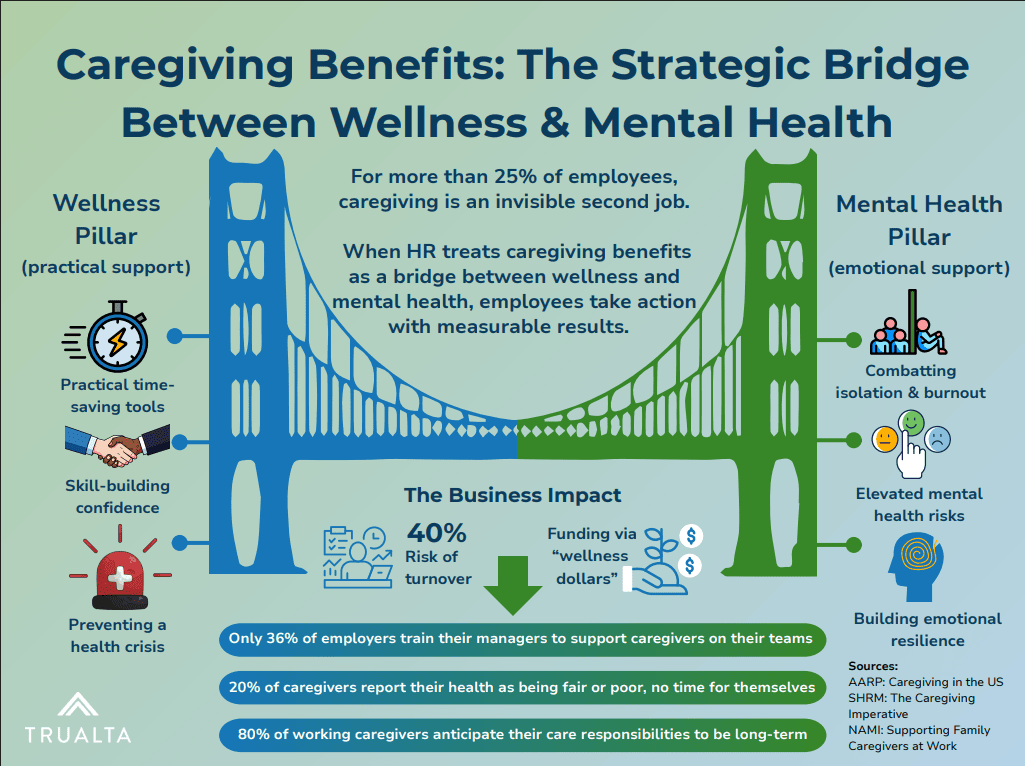
Wellness resources help caregivers create practical stability in their daily lives, giving them the confidence to manage complex responsibilities without constant disruption. Emotional support addresses the stress, burnout, and social isolation that often accompany caregiving, helping employees feel less alone and more resilient. Together, these forms of support protect mental health while enabling employees to stay focused, engaged, and productive at work. Rather than treating caregiving as either/or, the strongest employer strategies treat it as a bridge.
Wellness Benefits:
- Provide practical tools
- Help employees save time
- Build new life skills
- Include preventative healthcare
Mental Health Benefits:
- Build emotional resiliency
- Can include group support and coping mechanisms
- Reduce feelings of isolation
- Help reduce and manage stress
Avoid the trap of siloed benefits, instead design a holistic caregiving benefit that supports employees both practically and psychologically.
The Cost of Inaction: Turnover, Productivity, and Workforce Risk
Beyond employee well-being, caregiving poses real business risks. Research shows that insufficient support for caregivers leads to:
- Reduced hours or workload changes
- Increased absenteeism
- Career shifts or job exits
These are costly outcomes that affect workforce stability and talent pipelines. In a recent informal poll after a Trualta support group for working caregivers, 40% reported that they ultimately had to leave their job due to caregiving responsibilities. Another 45% reported that their focus and productivity at work was affected.
When employees leave because their care needs aren’t supported, employers pay a high price in recruiting, onboarding, and lost institutional knowledge. Integrating caregiving benefits isn’t just compassionate, it’s cost-effective.
From “We Talk About Care” to “We Actually Care”
Many organizations include general statements about supporting employees—but caregiving support is a true test of that commitment. It’s visible, actionable, and tied directly to employees’ lived realities.
As you evaluate your benefits strategy, ask:
- Are caregiving responsibilities visible in workforce data?
- Do managers have the tools to support caregiving employees?
- Are benefits tailored to address both wellness and mental health needs?
The move from talking about care to providing real care sends a strong signal to your workforce: We see you, support you, and value you.
Where the Budget Comes From: Wellness Dollars and Strategic Funding
One of the biggest barriers HR teams cite is budget. But the good news is that caregiving support can often be funded without increasing premiums.
Many health plans and consultants now include wellness dollars or funds earmarked for innovative benefits. These dollars don’t inflate monthly premiums and can be used to pilot caregiving support — from platform access to coaching and support groups.
Positioning caregiving as both a wellness investment and a mental health support means your team can allocate existing funds strategically rather than needing new budget lines.
The Caregiving Moment Is Here. Will You Lead?
Caregiving isn’t coming, it’s already here. Employees are juggling work and care right now. Their engagement with tools like Trualta shows a clear demand for support in the practical, emotional, and mental realm. Whether you define caregiving as wellness, mental health support, or both—the organizations that lead here will strengthen retention, reduce burnout, and build a more resilient workforce. The future of benefits is not just about what you offer, it’s about what you enable.
References:
- AARP; (2025). Caregiving in the US Research Report
- National Alliance on Mental Illness: (2025). Supporting Family Caregivers at Work: Report
- SHRM; (2024). The Caregiving Imperative: Organizational Solutions for Supporting Caregivers and Elevating Business Performance
- Fuller, J., (January 2024). Healthy Outcomes, Published by Harvard Business School.