Skin Cancer Symptoms Caregivers Should Watch For
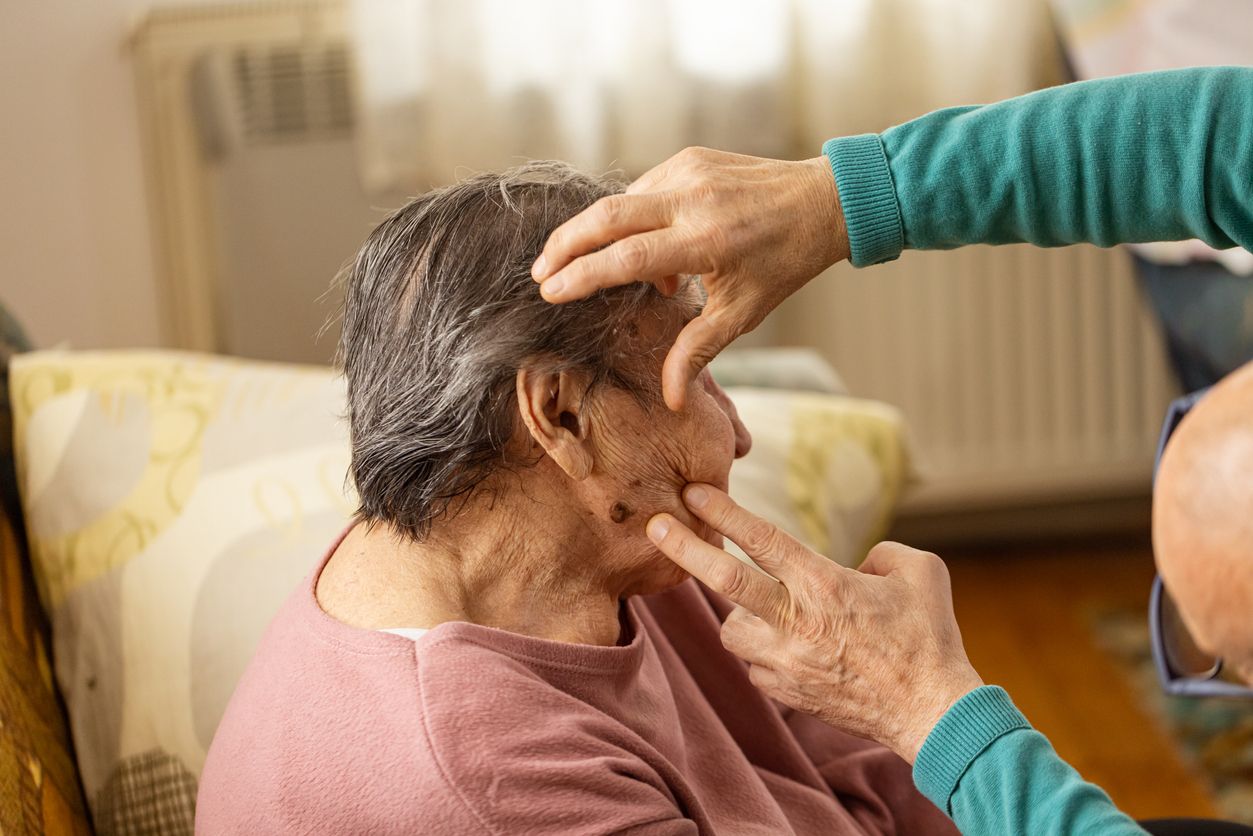
Caregiving often involves multiple responsibilities, including assisting with personal care, managing medications and appointments, and promoting daily comfort. However, there’s another important role to consider: noticing and monitoring changes in your care recipient’s body that may signal a new health concern.
Skin cancer symptoms can be easy to miss, especially when they don’t cause pain or develop very slowly. You can be the extra set of eyes that can make a difference early on.
This article will describe:
- Different types of skin cancer
- Common symptoms to recognize
- The ABCDE guide to spotting melanoma
- How to prevent skin cancer
- Caregiver tips when spotting signs of skin cancer
Looking for more information like this? Check if you have free access to Trualta.
What Is Skin Cancer?
Skin cancer is a cancer type that happens when abnormal cancer cells grow uncontrollably in skin cells. This growth can often be triggered by damage from sun exposure or UV radiation (like from tanning beds). However, genetics and other environmental factors also play a role.
In addition to watching for symptoms, caregivers should be aware of risk factors that increase the likelihood of skin cancer, such as frequent sun exposure, a history of sunburns, fair skin, older age, and a personal or family history of skin cancer.
Most skin cancers are often highly treatable, especially when caught early.
Different Types Of Skin Cancer
There are several skin cancer types, each with different risks and appearances:
- Basal cell carcinoma: Also called basal skin cancer or basal cell cancer. It’s considered a non-melanoma skin cancer. It usually develops on parts of the skin that were exposed to the sun. It may appear as a skin growth or a sore that doesn’t heal. It may also appear as a smooth, shiny lump, a pink growth with indents in the center, or red, scaly patches.
- Squamous cell carcinoma: Also called squamous cell skin cancer. It may appear as a persistent skin lesion, a growth that looks like a wart, or a scaly red patch with irregular borders.
- Melanoma skin cancer: Also called malignant melanoma. It develops from pigment-producing cells and often arises from an existing normal mole. Melanoma is typically more concerning than non-melanoma skin cancer and requires urgent care.
Common Skin Cancer Symptoms
We’ve already highlighted how skin cancer can appear in different types of cancer. Here are some other common symptoms to watch out for:
- New or changing moles
- A change in skin color, texture, or thickness
- Open sores that bleed, or don’t heal
- A raised or flat lesion with irregular borders
- Itching, tenderness, or pain in one spot of the skin
| Important: Skin changes and signs of skin cancer may be harder to see in people with darker skin tones, where redness is sometimes less noticeable. Ensure you still watch closely for dark spots, growth under nails, or sores that don’t heal. |
The ABCDE Guide To Spotting Melanoma
The ABCDE guide is a helpful tool for identifying warning signs of melanoma in moles. Caregivers can use it during routine skin checks.
A – Asymmetry
One half of a mole doesn’t match the other half.
B – Border
Edges are irregular, blurred, or ragged.
C – Color
The color isn’t the same all over.
D – Diameter
The size is often larger than a pencil eraser.
E – Evolution
The mole changes in size, shape, color, or other characteristics (like itching or bleeding)
What To Do If You Spot Signs Of Skin Cancer
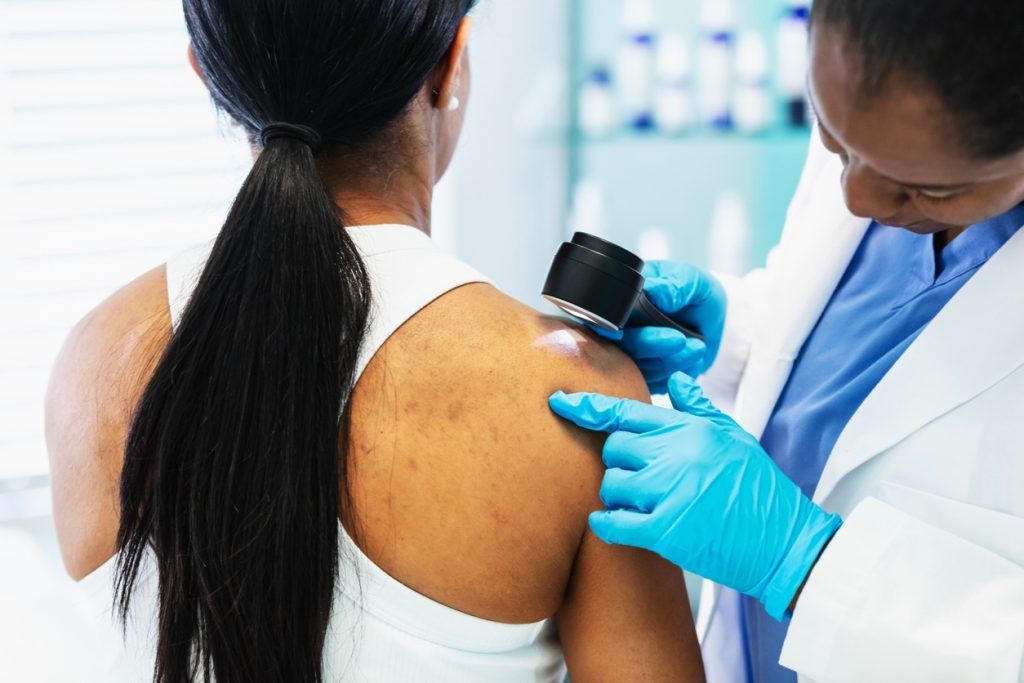
If you or your care recipient notices any common skin cancer symptoms, it’s important to discuss skin cancer screening with a healthcare provider, such as a physician or dermatologist, immediately. The American Cancer Society recommends that caregivers help care recipients perform monthly skin checks to catch changes in moles or spots early. Acting quickly when you notice changes can make a big difference, as early detection of skin cancer greatly improves treatment outcomes.
Here is a step-by-step guide on what you should do:
- Document. Take notes or photos (with consent) of what you see. This allows you to discuss symptoms with a doctor easily, and helps you track changes over time
- Contact a healthcare provider. A primary care provider can refer your care recipient to a dermatologist who specializes in skin changes and can provide an in-depth assessment.
- Diagnostic testing. A specialist may recommend diagnostic tests, like a skin biopsy, to definitively identify whether skin cancer cells are present.
- Understand treatment options. Skin cancer treatment will depend on the type, size, and stage of cancer your care recipient has. Treatment can include minor surgery, medications, radiation, or even a clinical trial. You can help your care recipient understand cancer information and weigh different treatment options.
Main Takeaways
Skin cancer symptoms can be subtle and easy to overlook. As a caregiver, you can play a key role in noticing skin changes and encouraging your care recipient to participate in skin cancer screening with a healthcare provider, like a dermatologist.
References
- American Cancer Society. (2024). Skin cancer.
- Canadian Cancer Society. (2024). Signs and symptoms of non-melanoma skin cancer.
- Cancer Research UK. (2022). Non melanoma skin cancer symptoms.
- MD Anderson Cancer Center. (n.d.). Skin cancer symptoms.