Brain Exercises for Stroke Recovery: Ideas For Caregivers
A stroke can affect many areas of a person’s life, including how they think, remember, speak, or pay attention. Research states that over half of stroke patients will experience some sort of post-stroke cognitive impairment. These challenges vary depending on the severity and location of the stroke, but they often impact daily routines, relationships, and a person’s sense of independence.
The good news? Cognition can improve over time. As a caregiver, you play a vital role in your care recipient’s cognitive recovery. In addition to physical rehabilitation, supporting their brain health is essential to helping them regain function and confidence. With time, patience, and the right activities, you can introduce simple brain exercises that help rehabilitate cognitive abilities.
These stroke recovery exercises don’t have to be complicated. Even a simple daily activity can be a powerful tool for stimulating brain function and encouraging healing. In this article, we’ll give you some brain exercise ideas to get started.
Are you looking for more resources about stroke recovery, or want to talk to other stroke caregivers? Check if you have free access to Trualta.
Why Brain Exercises Matter
When a person experiences a stroke, the brain may suffer damage that impacts their cognitive abilities. This can include difficulties with:
- Memory
- Attention
- Language
- Visual perception
- Executive functioning (like planning or problem-solving
These changes can be frustrating for the person recovering and the caregiver trying to help them navigate daily life. Fortunately, the brain has an incredible ability to adapt and change. This is a concept known as neuroplasticity.
Neuroplasticity is the brain’s way of reorganizing itself by forming new neural pathways. This means that, with practice and support, the brain can often “retrain” itself to perform tasks affected by the stroke. Engaging in targeted brain exercises is one of the ways stroke survivors can activate and strengthen these new pathways.
As a caregiver, understanding a person’s cognitive skill challenges and the variety of brain rehabilitation exercises available can help you make meaningful choices in your support. Brain activities can be tailored to improve:
- Memory and attention: supporting concentration, recall, and the ability to process information.
- Language and communication: rebuilding speech, understanding, and expression.
- Visual-spatial awareness: improving coordination, depth perception, and navigation.
- Problem-solving, planning, and logical thinking: restoring the ability to reason, make decisions, and organize thoughts.
Choosing exercises that align with your care recipient’s needs can help create a rehabilitation therapy recovery path that improves cognitive skills and emotional well-being.
Types Of Brain Exercises
Everyday Activities
These cognitive exercises are part of regular routines and daily tasks but can be adapted to support cognitive function.
1. Making a Grocery List
- What it looks like: Sit together to plan meals and write a grocery list. Make this harder by adding the challenge of staying within a set budget.
Targets: Memory, planning, and language skills.
2. Cooking a Simple Recipe
- What it looks like: Gather ingredients from around the kitchen and follow a step-by-step recipe, reading instructions and measuring ingredients.
- Targets: Sequencing, attention, working memory, motor skills, and problem-solving.
3. Folding Laundry by Category
- What it looks like: Group clothing by item type or color while folding.
- Targets: Visual-spatial awareness and categorization.
4. Watering Plants & Tending a Garden
- What it looks like: Identify which plants need water and where the garden needs extra attention. Then, plan how to do the tasks, and use fine motor skills and coordination to fulfill them.
- Targets: Attention, memory, and visual-spatial coordination.
5. Organizing a Drawer
- What it looks like: This simple brain rehab exercise involves grouping and arranging items based on use or size.
- Targets: Executive functioning, spatial reasoning, decision-making, and fine motor skills.
6. Daily Calendar Review
- What it looks like: Going over the day’s schedule, marking dates, and setting reminders for the daily routine.
- Targets: Memory, attention, and orientation to time.
7. Reading & Sorting Mail
- What it looks like: Opening and categorizing mail into “to read,” “to pay,” and “to recycle.”
- Targets: Language, organization, and logical thinking.
Quiet Activities
Your care recipient may be looking for quiet activities to do independently or during a calm afternoon.
1. Reading or Listening to Audiobooks
- What it looks like: Reading a few pages or a chapter a day, or listening to a story.
- Targets: Language comprehension, memory, and attention.
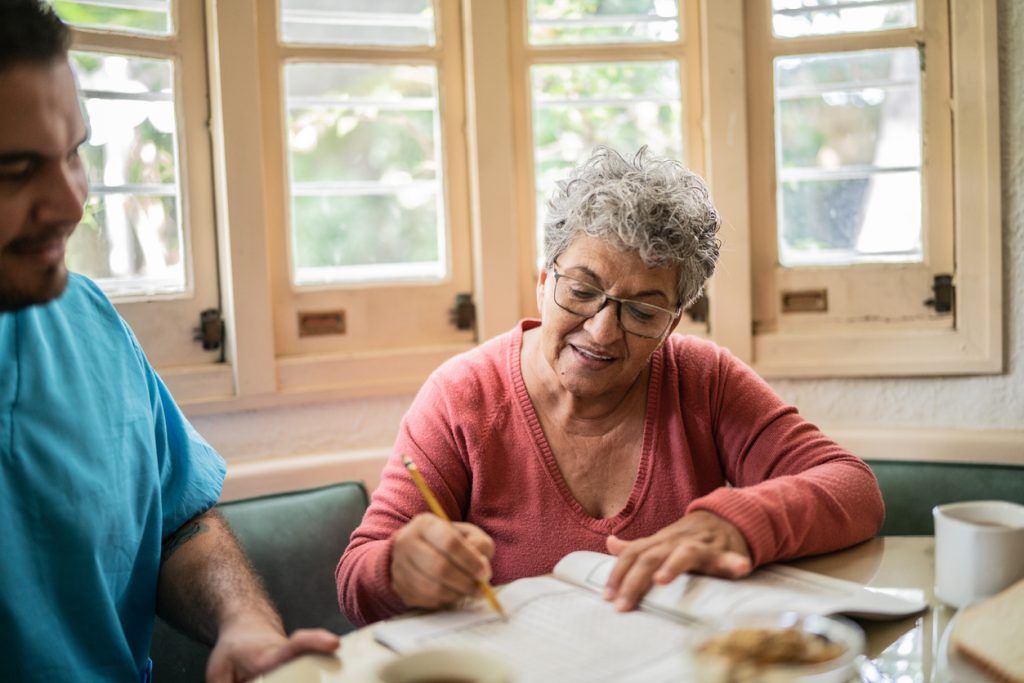
2. Word Searches or Crossword Puzzles
- What it looks like: Using pencil and paper or an app to find words or solve clues in these fun brain teasers.
- Targets: Language, visual scanning, and problem-solving.
3. Journaling or Writing Letters
- What it looks like: Writing about the day or composing a letter to a friend.
- Targets: Language and memory recall.
4. Sorting Coins, Buttons, or Beads
- What it looks like: Grouping by size, color, or type. These can then be used to create patterns, especially if sorting beads to make a bracelet or other jewelry.
- Targets: Attention, visual-spatial skills, and fine motor control.
5. Coloring or Paint-by-Number
- What it looks like: Coloring or painting based on assigned numbers or colors.
- Targets: Visual-spatial skills, attention and focus, and fine motor control.
6. Listening To Music & Identifying Songs
- What it looks like: Naming the artist, name of the song, decade, or a happy memory associated with the song.
- Targets: Memory, recognition, language, and emotional engagement.
7. Meditation or Deep Breathing
- What it looks like: 2-5 minutes of slow, controlled deep breaths, or using an app or script for a calming, mindful meditation that reduces stress.
- Targets: Attention and self-regulation.
Interactive Activities
Boost enjoyment as well as cognition and stroke recovery with these interactive and engaging activities:
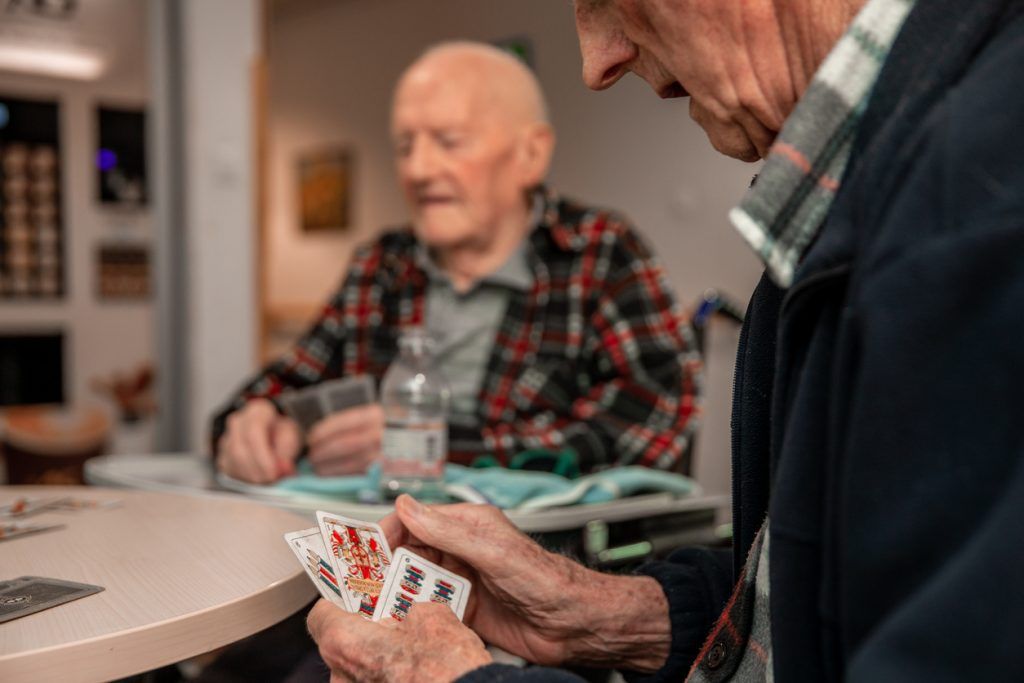
1. Playing Card Games
- What it looks like: Simple games like Uno, Go Fish, or matching games with cards encourage turn-taking, memory skills, and rule-following.
- Targets: Memory, attention, and social interaction.
2. Trivia or “Name That Tune” Games
- What it looks like: Playing a board game like Cranium or 5 Second Rule, asking general knowledge questions, or guessing a song from a short clip.
- Targets: Memory recall, language, and auditory processing.
3. Charades
- What it looks like: One person acts out a word or phrase, and the other guesses.
- Targets: Language, interpretation, and non-verbal communication.
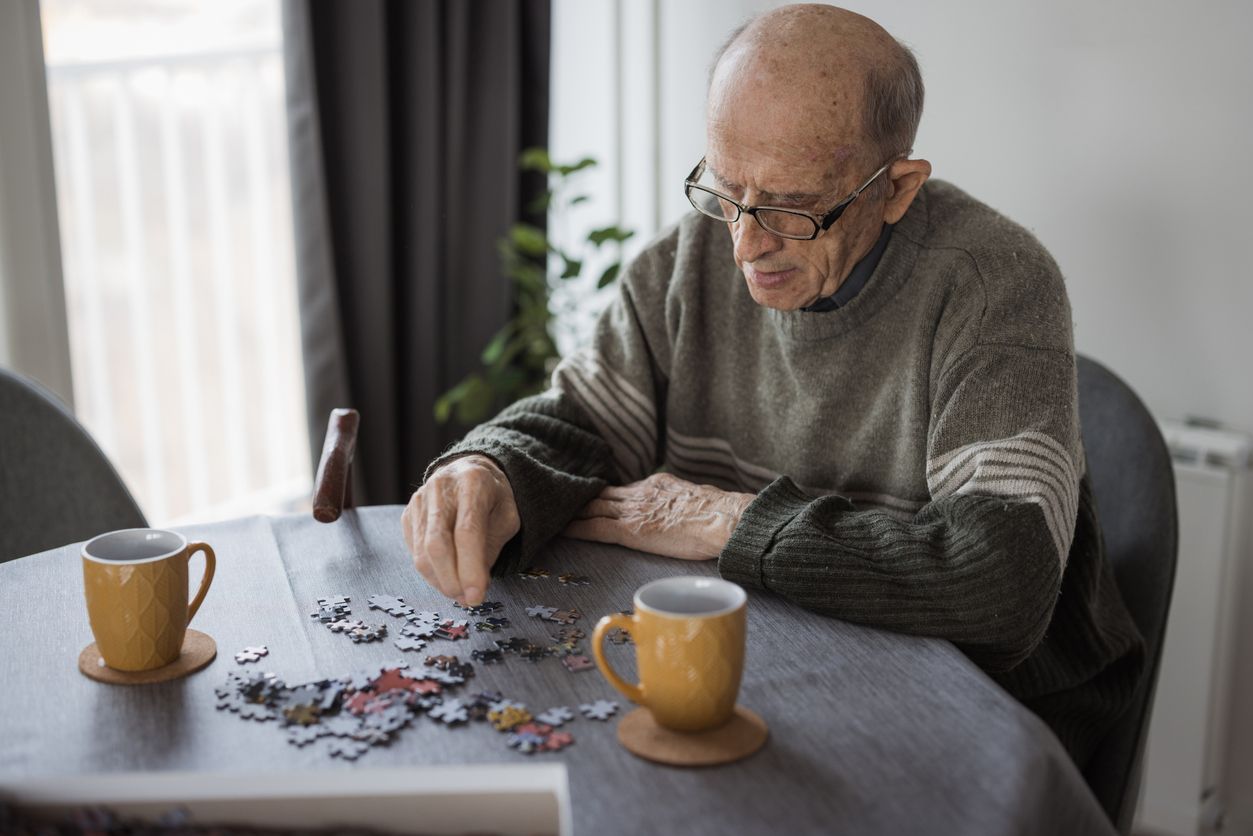
4. Building Blocks or Puzzles
- What it looks like: Doing jigsaw puzzles or building with blocks like Lego, with or without instructions.
- Targets: Visual-spatial, problem-solving, sequencing, planning, and fine motor skills.
5. Navigating to a New Destination
- What it looks like: Pick a place your care recipient might like to visit, and encourage them to guide you there by telling you the directions as you drive, walk, or take public transit together.
- Targets: Visual-spatial skills, planning, memory.
How Caregivers Can Help
As a caregiver, you play an important role in helping your care recipient with their participation in appropriate brain exercises.
You can help them by:
- Matching activities to their abilities. Modify activities to make them easier or harder depending on their physical and cognitive needs. For example, make an activity easier by setting it up beforehand and doing it with them, or add steps to the task to make it more challenging. It just takes some creativity!
- Encouraging participation and managing frustration. Stroke recovery can be overwhelming and frustrating for your care recipient. If your care recipient is trying a brain exercise that is causing frustration or anxiety, remember to validate their emotions. You can encourage them by offering light assistance, suggesting they try again another day, modifying the activity to simplify it, or encouraging them to engage in a new activity they find more enjoyable.
- Track progress and celebrate successes. Take notes about how much they accomplished and when, and acknowledge when you notice improvement. This can help them feel encouraged when they progress with a new skill.
- Seek professional help. You may be the first to notice when it’s time to bring in extra help. You should always lean on your care recipient’s healthcare team for insight on stroke recovery. This is especially true when your care recipient is experiencing significant challenges like unexpected declines in the recovery process, no improvements for a long period of time, mental health challenges, increased frustration or difficulty with tasks, or any symptoms of medical concern.
Are you looking for more resources about caregiving for a stroke patient or cognitive rehabilitation? Check if you have free access to Trualta.
References
- Aam, S., Einstad, M. S., Munthe-Kaas, R., Lydersen, S., Ihle-Hansen, H., Knapskog, A.-B., Ellekjær, H., Seljeseth, Y., & Saltvedt, I. (2020). Post-stroke cognitive impairment—impact of follow-up time and stroke subtype on severity and cognitive profile: The nor-coast study. Frontiers in Neurology, 11.
- Denslow, E. (2023). 10 cognitive exercises for stroke patients to help improve mental clarity – home recovery for stroke, brain injury and more. Flint Rehab.
- Gleneagles Hospitals. (n.d.). 12 Good Brain Exercises for Stroke Recovery.
- Stroke Association. (n.d.). Cognitive effects of stroke.
- Stroke Association. (n.d.). Neuroplasticity: Re-wiring the brain.