Activities For Stroke Patients At Home
A stroke can impact the brain in many different ways depending on the part of the brain affected. Common challenges after a stroke may include:
- Weakness or paralysis on one side of the body
- Difficulty speaking or understanding language
- Memory problems
- Emotional changes like anxiety or depression
Although a stroke can feel overwhelming, rehabiliation is possible. The brain can relearn and adapt through neuroplasticity. Neuroplasticity is the brain’s ability to form new pathways between brain cells and recover lost functions over time. An important part of this recovery involves engaging in safe and meaningful activities.
Post-stroke rehabilitation doesn’t just happen in hospitals or clinics. Many skills can be rebuilt at home through everyday activities. Whether the goal is to strengthen muscles, improve attention, or boost mood, caregivers can play a central role in providing these opportunities and encouraging participation. In this article, we’ll review activity ideas that you can encourage a stroke patient to do at home.
Looking for more stroke caregiving tips, or want to talk to other stroke caregivers? Check if you have free access to Trualta.
Physical Activities For Movement & Strengthening
Stroke survivors may experience muscle weakness, balance issues, or decreased coordination and motor function, especially on one side of the body. Keeping the body active and engaging in simple exercises and activities can help to improve strength and coordination, and prevent further decline.
| Remember always to consult your care recipient’s healthcare team to ensure it’s safe for your care recipient to participate in physical activity. |
Below are some activities that your care recipient can do at home to target their physical needs.
- Seated marching. Grab a sturdy chair that allows your care recipient to plant their feet fully on the ground. Have them sit in the chair and lift one knee at a time as if marching in place. They can also march while standing and holding onto a bar or wall for support to prevent falls. This activity supports leg strength, balance, and coordination.
- Standing heel raises. Holding onto a sturdy chair or table, have them slowly rise onto their toes and lower. Repeat this as tolerated. This can help with leg strength and balance.
- Weighted arm raises. Give the person a water bottle or light dumbbell to hold and coach them to lift their arms forward and sideways as tolerated. This can help with shoulder strength and mobility.
- A light walk. Walking can support strengthening and balance, as well as endurance and cardiovascular health, which is important for preventing a second stroke. Use mobility aids as needed, and start with short distances before increasing.
- Folding laundry. Promote coordination and fine motor skills while sorting, folding, and putting away laundry.
- Gentle stretches or seated yoga. Support flexibility and range of motion with a guided stretch or seated yoga video online.
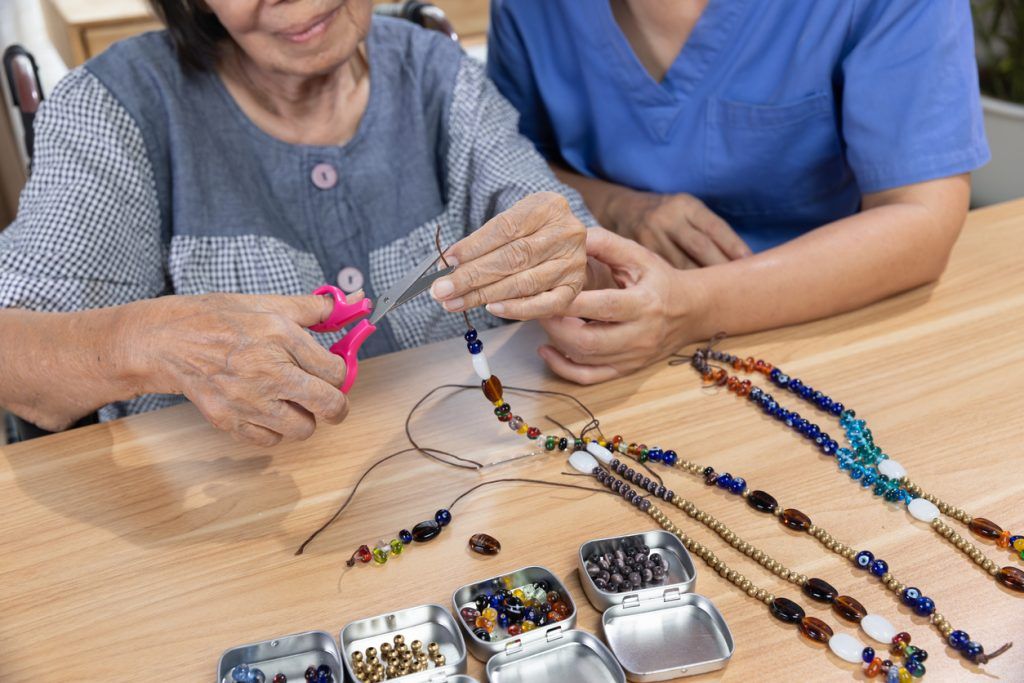
- Jewelry making. Picking up beads and threading them on a string can support fine motor skills.
Brain-Boosting Activities For Cognitive Skills
A stroke may impact cognitive skills like memory, attention, problem-solving, communication, or visual-spatial awareness. Supporting the brain through simple, engaging tasks can promote healing, independence, and cognitive rehabilitation.
Here are examples of cognitive activities to try with a stroke patient at home:
- Board games and card games. Simple games like Uno, Go Fish, matching games, Connect 4, or Snakes & Ladders can promote memory skills and attention.
- Making a grocery list. Sit together to plan meals, identify which foods are needed, and make a grocery list to promote planning, problem-solving, language, and memory skills.
- Cooking. Gathering ingredients, measuring them, and following a recipe can help promote sequencing, working memory skills, problem-solving, and even motor skills.
- Puzzles. Jigsaw puzzles or word searches can help with visual-motor skills and attention.
- Reading or listening to an audiobook. This can support language processing skills, memory, and attention skills.
- Sorting and organizing. Sorting beads or buttons, or organizing a pantry or drawer, can help with visual-motor skills, planning, and attention.
Social & Emotional Activities For Mental Health
The emotional impact of a stroke can be just as significant as the physical effects on quality of life. Many stroke survivors experience sadness, frustration, isolation, or depression. This is especially true if they’ve lost some independence or social connection. Engaging in meaningful activities helps boost mood, confidence, and a sense of purpose.
Here are some at-home activities that support emotional and social well-being:
- Phone calls with family and friends. Encourage regular check-ins over the phone or through video calls so your care recipient can stay connected and reduce feelings of isolation.
- Have a routine for connection. Connect with your care recipient at least once a day. For example, over a relaxing coffee or in the afternoon sun in the backyard. This can give them something enjoyable to look forward to every day. It also offers the opportunity for you both to connect and take your minds off the stroke recovery to-do list.
- Listening to music. Play, sing-along, and even dance to familiar tunes.
- Coloring and crafts. These can spark creativity and offer a sense of enjoyment or a happy distraction.
- Gratitude journaling. Encourage your care recipient to keep a gratitude journal where they write 1-3 things they are grateful for or are looking forward to daily. This can increase positive emotions, grounding, and mindfulness.
- Gardening. Boost enjoyment and a sense of purpose as they plant, water, and watch plants grow.
- Join an online support group. Connecting with people who can relate to their situation can help reduce feelings of isolation. They can also learn from others’ experiences.
How Caregivers Can Help With Activities
As a caregiver, your support and encouragement are essential. Even small actions can make a big difference in your loved one’s recovery and therapy treatment plan:
- Adapt activities to fit their abilities: Modify activities to make them easier or more challenging, as needed. Break tasks into smaller steps and provide help if necessary. Remember to encourage them to do as much as possible as they work to rehabilitate their skills.
- Set up the environment for success: Choose safe, quiet, and clutter-free spaces for activities, and make sure necessary tools or equipment, such as mobility aids, are within easy reach.
- Make activities part of the routine: Routine can reduce resistance to activities, especially when they’re difficult. Plan the most challenging activities during the times of day when they feel the best.
- Seek professional help when needed: If you notice a new decline, no progress during an extended period, feel unsure about what’s safe, or if your care recipient is significantly struggling with daily living, reach out to your care recipient’s healthcare team. A physical therapist, occupational therapist, psychologist, and physician can provide specific, expert advice on how to proceed with stroke recovery treatment or symptoms of concern.
References
- Aam, S., Einstad, M. S., Munthe-Kaas, R., Lydersen, S., Ihle-Hansen, H., Knapskog, A.-B., Ellekjær, H., Seljeseth, Y., & Saltvedt, I. (2020). Post-stroke cognitive impairment—impact of follow-up time and stroke subtype on severity and cognitive profile: The nor-coast study. Frontiers in Neurology, 11.
- Denslow, E. (2023). 10 cognitive exercises for stroke patients to help improve mental clarity. Flint Rehab.
- Gleneagles Hospitals. (n.d.). Brain exercises for stroke recovery.
- Heart and Stroke Foundation of Canada. (n.d). Exercise after stroke.
- Stroke Association. (n.d.). Neuroplasticity: Re-wiring the brain.