
Is Kidney Failure Treatment Without Dialysis Possible?
Chronic kidney disease is a progressive condition. This means kidney damage continues to get worse over time. Eventually, kidney disease leads to kidney failure. At this stage, kidney function is at 15% or less of normal capacity. It can be fatal if not treated.
Dialysis is the standard treatment for kidney failure, but it isn’t the only option. Patients can choose how to proceed with care. Here, we’ll talk about:
- What kidney failure is
- How dialysis works
- Two other treatment options
- How to make this difficult choice
For more information about caring for someone with kidney failure, check if you have free access to our library of caregiver resources.
About Kidney Failure & Dialysis
Kidney failure, or renal failure, is the final stage of chronic kidney disease (CKD). This is a progressive disease. Treatment usually involves treating the underlying condition and supportive care to improve kidney health.
Chronic kidney disease will not get better with just supportive care or by treating an underlying condition. The kidneys are responsible for filtering and removing waste and extra fluid from the body. Kidneys also manage blood pressure and electrolyte levels.
In chronic kidney failure, kidney function is less than 15% of a healthy kidney. This is not enough to keep a patient healthy and alive.
Patients with kidney failure need some type of treatment to restore function and prevent high blood pressure. For many patients, kidney dialysis is the obvious choice. Dialysis is a treatment that mimics or replaces natural kidney function. There are two primary types:
1. Hemodialysis
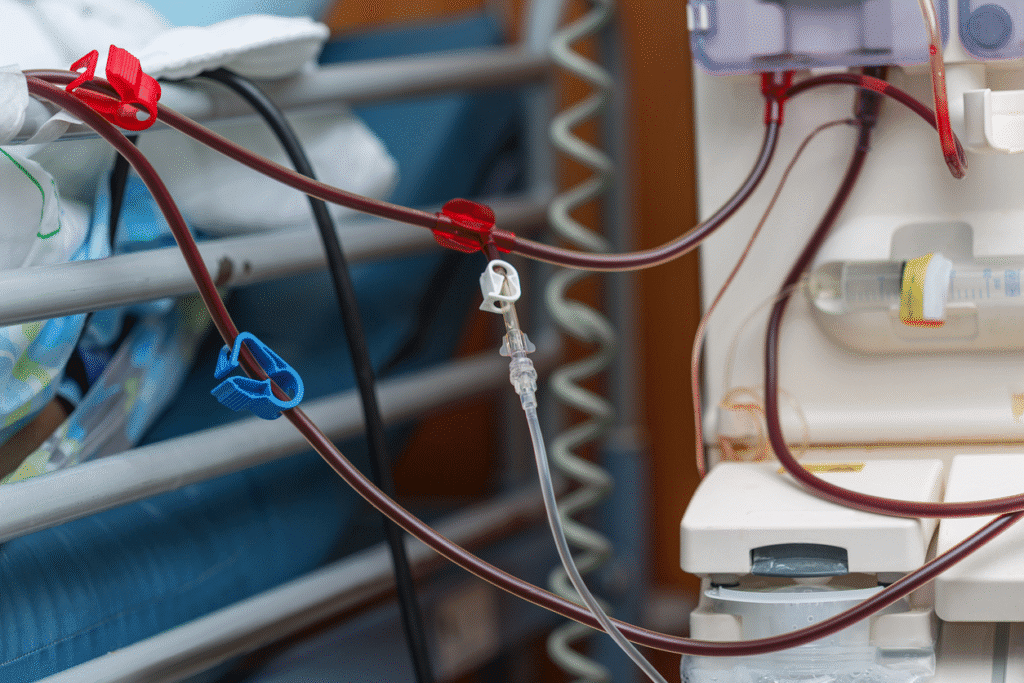
Hemodialysis uses a machine like an artificial kidney. Doctors create an access site through a vein in the patient’s arm. This allows blood to flow into the machine where it’s filtered, and then back into the body.
Patients can do hemodialysis at a dialysis center or at home. At home, kidney patients undergo five to seven treatments per week. At a center, they usually have three treatments per week. Both can be an inconvenience, but many patients prefer to do it at home if possible.
2. Peritoneal Dialysis
In peritoneal dialysis, the blood is filtered within the patient’s body. The peritoneum is tissue lining the abdominal cavity. This acts as the filter for the patient’s blood. To do this type of dialysis, the patient has an access site created in the abdomen. The doctor inserts a catheter here.
The patient does this procedure at home. They use the catheter to fill the abdomen with a filtering solution called dialysate. This draws blood into the abdomen, where it can be filtered through the peritoneum. When the filtering is complete, the dialysate drains back out of the catheter.
Patients must do peritoneal dialysis more frequently than hemodialysis, but many find it more convenient. It can be done at home, takes less time per session, and allows for a more flexible schedule. Dialysis patients can even travel with supplies and perform the procedure from anywhere.
Kidney Failure Treatment Without Dialysis
Dialysis is often the standard treatment for advanced kidney disease. This doesn’t mean patients have no other options. Some patients choose not to start dialysis at all. Others decide to stop dialysis and try something else.
There are many reasons patients decide not to undergo dialysis:
- It can be burdensome and limiting.
- Some find that the treatment lowers quality of life.
- They have many other chronic conditions.
- They decide the burden, risks, or side effects outweigh benefits.
- Waiting for a kidney transplant isn’t feasible or reasonable.
Patients, or their designated decision makers if appropriate, have a right to refuse dialysis.
Kidney Transplantation
Kidney transplantation is a surgery that replaces a damaged kidney with a healthy kidney from a donor. The donor may have passed away and registered to donate organs. A kidney from a deceased donor lasts, on average, 8 to 12 years.
A healthy kidney for transplant can also come from a living donor. People with two healthy kidneys can live normally with just one. A living donated kidney can last 15 to 20 years in the transplanted patient.
What Are The Benefits Of A Kidney Transplant?
Kidney transplantation is the closest thing to a cure for renal failure. Although the donor kidney will not last forever, it can help patients live healthy, normal lives for many years. It removes the need for burdensome dialysis treatments.
Patients with a transplanted kidney should maintain certain healthy lifestyle habits. It’s important to eat well and maintain a healthy weight. However, the limitations and restrictions are much less than for patients on dialysis.
What Are The Risks Of A Kidney Transplant?
A kidney transplant is the most effective treatment for many patients with kidney disease and renal failure. Unfortunately, the waiting list is long. According to the American Kidney Fund, patients needing a transplant wait an average of three to five years for a suitable donor organ.
Patients with kidney failure who are waiting for a donor organ typically need to undergo dialysis. This keeps them alive while they wait for a donor.
In some cases, a patient may have a living donor match that they can benefit from before they develop end stage kidney disease. This is called a pre-emptive kidney transplant, and it’s not very common.
The long wait and the need for dialysis anyway are just a couple of the risks of kidney transplantation. Others include:
- Even with a match, the patient’s body may reject the new organ.
- Patients with a transplanted kidney must take immunosuppressing drugs indefinitely. This increases the risk of illness, infections, and cancer.
- Organ transplantation is a major surgery with many potential risks. These include bleeding, blood clots, infection, and organ damage.

Conservative Management Of Kidney Failure
A second option for treating renal failure is called conservative management. The goals of conservative management are to preserve as much kidney function as possible, manage symptoms, and maintain quality of life. This is done without dialysis or a transplanted donor kidney.
Every patient’s treatment plan is unique to their needs, preferences, and health conditions. Some of the treatments and types of supportive care typically used in conservative management include:
- A kidney supportive diet
- Medications for high blood pressure
- Pain medications
- Anti-nausea medications
- Topical medications for itchy skin
- Medications for anemia
- Avoiding medications that strain the kidneys, including antacids, statins, and nonsteroidal anti-inflammatory pain medications
Patients under conservative management may eventually choose to transition to hospice care. Hospice is end-of-life care. It includes ongoing symptom management, as well as emotional support, legal and financial guidance, and spiritual support.
There are benefits to choosing conservative management. For some patients, the burden and side effects of dialysis are too high. Conservative management allows them to feel more comfortable.
The primary risk of choosing conservative management for end stage kidney disease is that the kidneys will continue to decline. Life expectancy for patients refusing dialysis can range from days to weeks.
Clinical Trials
Some patients may choose to enroll in clinical trials for end stage renal disease. A clinical trial is a research study of a new treatment. Transplants and dialysis remain the primary treatments for kidney failure, but researchers are testing other options, including medications that slow the progression of kidney disease.
The National Kidney Foundation provides up-to-date information on kidney disease clinical trials. It can also help you search for a trial your loved one might qualify for. Talk to your loved one’s medical team about the risks and potential benefits.
Key Takeaways: Choosing A Treatment For Kidney Failure
Treatment for end stage kidney disease is a personal choice. Some patients feel they must opt for dialysis. It’s important to know that you have other options. If your loved one is not a good candidate for a transplant, they can still benefit from supportive care and conservative management.
For the loved ones of the patient, rejecting dialysis can seem like giving up hope. But for some patients, it’s the right decision. Patients should talk to their loved ones and their doctors to help make this critical choice. Some patients also benefit from talking to a therapist or spiritual advisor. If your loved one isn’t sure about dialysis, they can start treatment and stop if they change their minds.
Every patient with kidney failure is unique. The choice of treatment depends on health conditions, symptoms, and patient preference.
References
- Mayo Clinic. (2023). End‑stage renal disease: Diagnosis & treatment.
- Cleveland Clinic. (2025). Dialysis.
- American Kidney Fund. (n.d.). Transplant waiting list.
- Mayo Clinic Staff. (2025). Preemptive kidney transplant.
- National Institute of Diabetes and Digestive and Kidney Diseases (NIDDK) (2018). Conservative management for kidney failure. U.S. Department of Health and Human Services.
- National Kidney Foundation. (n.d.). Clinical trials.